
Crypto and digital currencies have changed the way people think about money. What started as a small internet experiment with Bitcoin has now turned into a global financial shift. Today, countries, banks, and big companies are all trying to figure out how to fit crypto into the modern economy.
But one big question keeps coming up: Are Americans keeping up with this change, or are they slowly falling behind other countries?
The answer is not simple. In some areas, the United States is ahead. In others, it is clearly struggling. Let’s break it down in a simple way.
1. America was early, but progress has slowed down
The United States was actually one of the early countries to notice Bitcoin and crypto. Many of the biggest crypto companies, exchanges, and projects started there. American investors also played a big role in making crypto popular.
So in the beginning, America was clearly ahead.
But over time, things became more complicated.
Why?
Because of rules, confusion, and slow government decisions.
Crypto is still not clearly regulated in the U.S. There are different agencies involved, and they don’t always agree on how crypto should be treated. This creates uncertainty for businesses and investors.
When rules are not clear, companies often hesitate to grow or innovate quickly.
Meanwhile, some other countries moved faster by creating clear laws for crypto early on.
2. Americans are still strong crypto users
Even with confusion in regulations, Americans are still very active in crypto.
Millions of people in the U.S. own Bitcoin or other digital currencies. Many use crypto for:
- Investment
- Trading
- Long-term savings
- Trying out new financial tools
Big cities like New York, Miami, and San Francisco have strong crypto communities.
Also, many large companies in the U.S. have shown interest in blockchain technology. Some even accept crypto payments or invest in crypto-related projects.
So in terms of interest and adoption, America is definitely not falling behind.
People are curious, active, and willing to experiment.
3. But other countries are moving faster in some areas
While the U.S. is still debating rules, some countries are already moving ahead with real-world crypto use.
In places like parts of Asia, Europe, and Latin America:
- Crypto payments are becoming more common
- Governments are creating clear regulations
- Digital currencies are being tested for national use
Some countries are even experimenting with government-backed digital money, often called central bank digital currencies (CBDCs).
This is where the gap starts to show.
The U.S. is still discussing how to handle digital currency systems, while others are already testing and building them.
4. Regulation is the biggest challenge in America
One of the main reasons for slow progress in the U.S. is regulation.
Crypto doesn’t fit neatly into traditional financial rules. Is it currency? Is it property? Is it a security?
Different agencies see it differently. This creates confusion for:
- Investors
- Companies
- Developers
Because of this, some crypto companies have even moved their operations outside the U.S. to countries with clearer rules.
This doesn’t mean America is out of the race. But it does mean things are moving more slowly than they could.
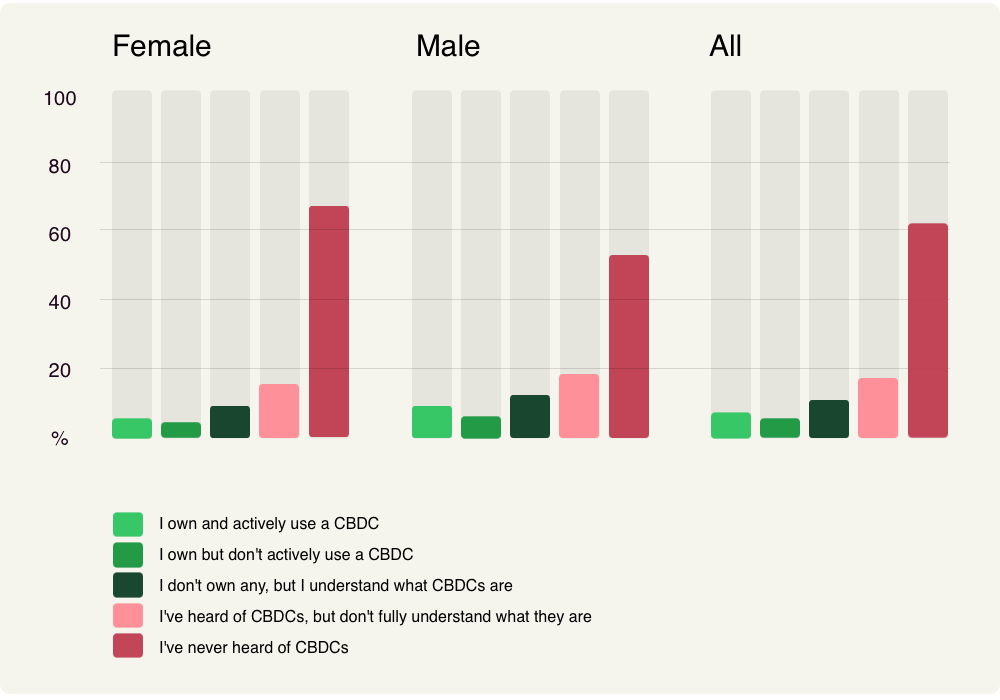
Crypto & Digital Currencies: Is the U.S. Leading or Falling Behind?
5. Americans are very cautious compared to others
Another important difference is behavior.
American investors tend to be more cautious. Many people prefer:
- Stocks
- Real estate
- Retirement accounts
Crypto feels risky to a lot of people, especially because of price swings and scams in the early years.
In contrast, in some other countries, people have adopted crypto faster out of necessity. In places with unstable banking systems or inflation, crypto is seen as a more useful tool.
So while Americans are aware of crypto, they are often slower to fully embrace it.
6. Big companies are helping push adoption
Even if individual adoption is mixed, big companies in the U.S. are playing a huge role.
Tech and financial companies are:
- Building crypto services
- Testing blockchain systems
- Offering crypto trading platforms
- Exploring digital payment systems
This is important because when big companies move, the whole market follows.
Also, major payment companies are slowly integrating crypto options into their systems. This makes crypto easier to use in everyday life.
So even if individuals are cautious, the infrastructure is still growing.
7. Education gap is still a problem
One big issue in the U.S. is that many people still don’t fully understand crypto.
A lot of beginners:
- Don’t understand wallets
- Don’t know how blockchain works
- Are confused about safety
- Fear scams or losing money
Because of this, many people avoid crypto completely or enter it without proper knowledge.
Countries that focus more on digital finance education tend to adopt crypto faster.
So education plays a big role in whether people feel confident or not.
8. Innovation is still strong in the U.S.
Even with slow regulation, the U.S. is still one of the biggest centers for crypto innovation.
Many new blockchain projects, startups, and technologies still come from American developers.
Things like:
- Decentralized finance (DeFi)
- NFTs and digital ownership
- Blockchain gaming
- Smart contract platforms
These ideas are still heavily influenced by U.S.-based teams.
So while regulation is slow, innovation is still alive and active.
9. The future depends on clarity
The biggest factor that will decide whether Americans stay ahead or fall behind is simple: clear rules.
If the U.S. creates clear and fair crypto laws, then:
- More companies will stay
- More innovation will grow
- More people will invest safely
But if uncertainty continues, other countries may take the lead in building the future of digital money.
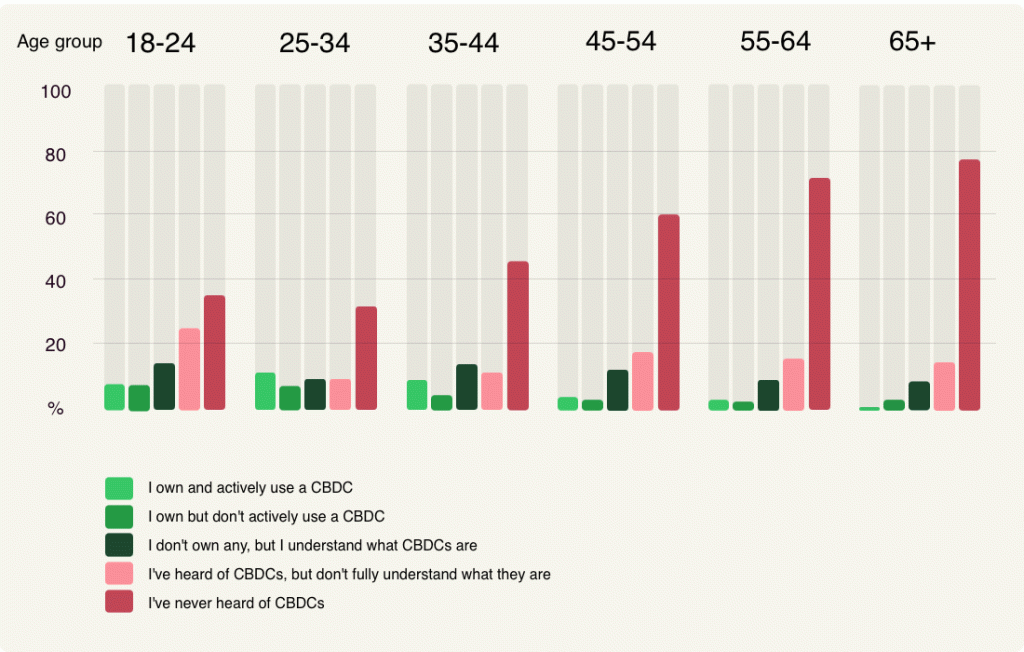
Crypto & Digital Currencies: Is the U.S. Leading or Falling Behind?
Final thoughts
So, are Americans keeping pace or falling behind?
The honest answer is: both at the same time.
- In innovation and technology, the U.S. is still strong
- In regulation and speed of adoption, it is slower than some countries
- In public interest, Americans are still very active but cautious
Crypto is still very new in global terms. The race is not over yet. In fact, it’s just beginning.
The next few years will decide a lot. If the U.S. can balance innovation with clear rules, it can remain a leader in the digital currency world. If not, other countries may move ahead faster.
For now, America is not losing—but it is definitely not moving as fast as it could.
Read Also: Keep your face towards the sunshine and shadows will fall behind you
Watch Also: https://www.youtube.com/@TravelsofTheWorld24














Leave a Reply