
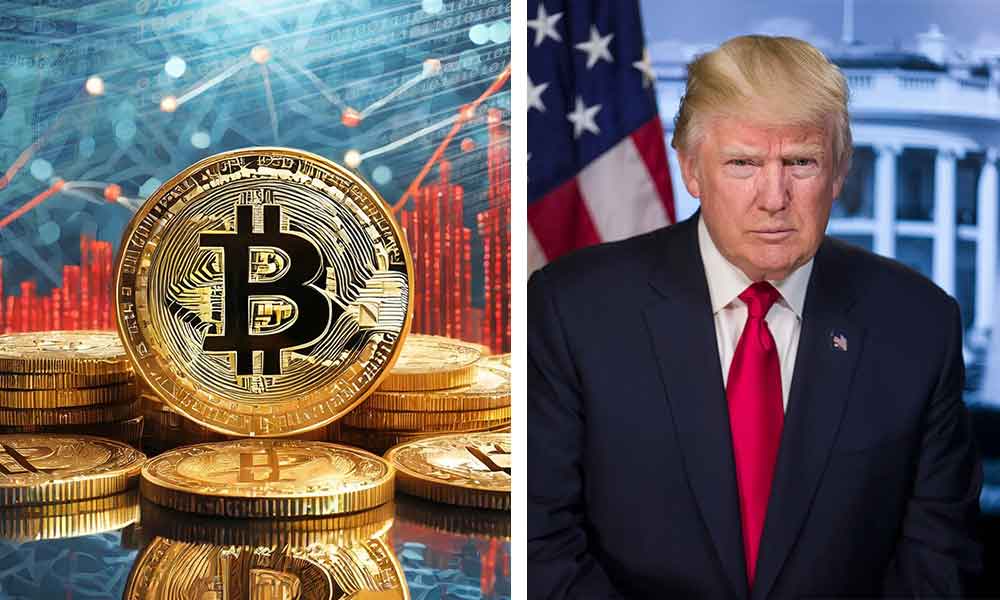
The idea of paying off a country’s national debt with Bitcoin sounds almost unbelievable. Recently, a statement attributed to Donald Trump suggesting that the United States could potentially use Bitcoin to deal with its massive $35 trillion national debt has sparked huge global discussion.
At the same time, in Pakistan, well-known crypto figure and high-leverage trader Waqar Zaka continues to promote cryptocurrency awareness and trading education, aiming to inspire young people to explore digital finance.
Together, these two narratives highlight how deeply crypto is entering global economic conversations—from powerful nations to developing countries.
But how realistic is this idea? And what does it actually mean for Bitcoin, national debt, and everyday investors?
Let’s break it down in a simple and clear way.
1. Understanding the idea: Paying national debt with Bitcoin
A national debt is the total amount of money a government owes. For the United States, this number is extremely large—around $35 trillion.
Now the idea of using Bitcoin to pay off such debt raises many questions.
Bitcoin is:
- A decentralized digital asset
- Not controlled by any government
- Highly volatile in price
- Limited in supply (21 million coins total)
So the concept of using it to clear national debt is not straightforward.
2. Why Bitcoin is being mentioned in such discussions
Even though the idea is controversial, Bitcoin is often included in financial debates because:
A. It has high value potential
Bitcoin has grown significantly over the years, gaining attention as a store of value.
B. It is seen as “digital gold”
Some people compare Bitcoin to gold because of its limited supply.
C. Institutional adoption is increasing
Large companies and funds now hold Bitcoin as part of their portfolios.
D. Political and media attention
Crypto has become a mainstream topic in politics and economics.
3. Can Bitcoin realistically pay off national debt?
In practical terms, this idea faces major challenges.
A. Volatility problem
Bitcoin’s price can change rapidly. A government cannot rely on an asset that can drop or rise sharply in value.
B. Supply limitation
There are only 21 million Bitcoins ever. Even at high prices, converting enough value to cover trillions in debt is complex.
C. Market impact
If a government tried to sell or use large amounts of Bitcoin, it could crash the market.
D. Legal and financial systems
National debt is managed in fiat currency (like USD), not crypto assets.
So while the idea is interesting, it is not currently practical in real-world economics.
4. Why such statements create market excitement
Even if not realistic, political statements about Bitcoin often affect markets.
When major figures mention crypto:
- Investor interest increases
- Media coverage spikes
- Short-term price volatility rises
This happens because crypto markets are highly sentiment-driven.
5. Bitcoin as a strategic asset (realistic view)
Instead of paying debt, a more realistic idea is:
Bitcoin as a strategic reserve asset.
Some possible uses:
- Hedge against inflation
- Diversify national reserves
- Store long-term value
But even this idea is still debated among economists and policymakers.
6. Waqar Zaka and crypto influence in Pakistan
In Pakistan, Waqar Zaka is one of the most recognized figures in the crypto space.
He is known for:
- Promoting crypto awareness
- Teaching trading strategies
- Encouraging young people to learn digital finance
- Publicly supporting blockchain adoption
His approach has made him a controversial but influential voice in the region.
7. High-leverage trading and its risks
Waqar Zaka is also associated with high-leverage trading, which is popular among aggressive traders.
What is high leverage?
It means trading with borrowed capital to increase position size.
For example:
- Small investment
- Large exposure to market movements
Risks involved:
- High chance of liquidation
- Fast losses if market moves against you
- Emotional pressure in volatile markets
So while it can generate high returns, it is also extremely risky.
8. Crypto awareness in Pakistan
Pakistan has a growing interest in cryptocurrency despite regulatory uncertainty.
Reasons include:
- Young population interested in online income
- Growing digital economy
- Global exposure through social media
- Desire for alternative financial systems
Figures like Waqar Zaka have helped bring attention to crypto trading and blockchain education.
9. The difference between developed and developing country perspectives
The way crypto is viewed differs across countries.
In developed economies:
- Focus is on regulation
- Institutional investment
- Financial stability
In developing economies:
- Focus is on income opportunities
- Trading and freelancing
- Access to global financial systems
This creates very different attitudes toward Bitcoin and crypto trading.
10. Why Bitcoin is central to global conversations
Bitcoin is no longer just a digital currency. It has become:
- A political topic
- A financial instrument
- A speculative asset
- A technology innovation
So when leaders or influencers mention it, global attention follows.
11. The gap between hype and reality
One important thing to understand is the difference between:
Hype:
- Big claims
- Extreme predictions
- Viral statements
Reality:
- Economic systems are complex
- Governments move slowly
- Regulations matter more than opinions
Bitcoin exists somewhere between innovation and speculation.
12. What investors should take from this
For regular investors, the key lessons are:
A. Don’t rely on extreme claims
Statements about paying national debt with Bitcoin are not practical today.
B. Focus on fundamentals
Look at:
- Adoption
- Technology
- Market trends
C. Manage risk carefully
Especially in leverage trading.
D. Stay informed, not emotional
Crypto news can be exciting, but decisions should be logical.
Final thoughts
The idea of using Bitcoin to pay off a $35 trillion national debt is more symbolic than realistic. It reflects how much attention crypto has gained in global politics and finance, but not a practical economic solution.
At the same time, figures like Waqar Zaka show how crypto is influencing awareness and trading culture in countries like Pakistan, where digital finance is still developing.
In simple terms:
- Bitcoin is powerful but not a debt solution tool
- Political statements often create hype
- Crypto education and risk awareness are more important than ever
The world is clearly moving toward digital finance, but the path is gradual—not revolutionary overnight.
Read Also: Keep your face towards the sunshine and shadows will fall behind you
Watch Also: https://www.youtube.com/@TravelsofTheWorld24














Leave a Reply