
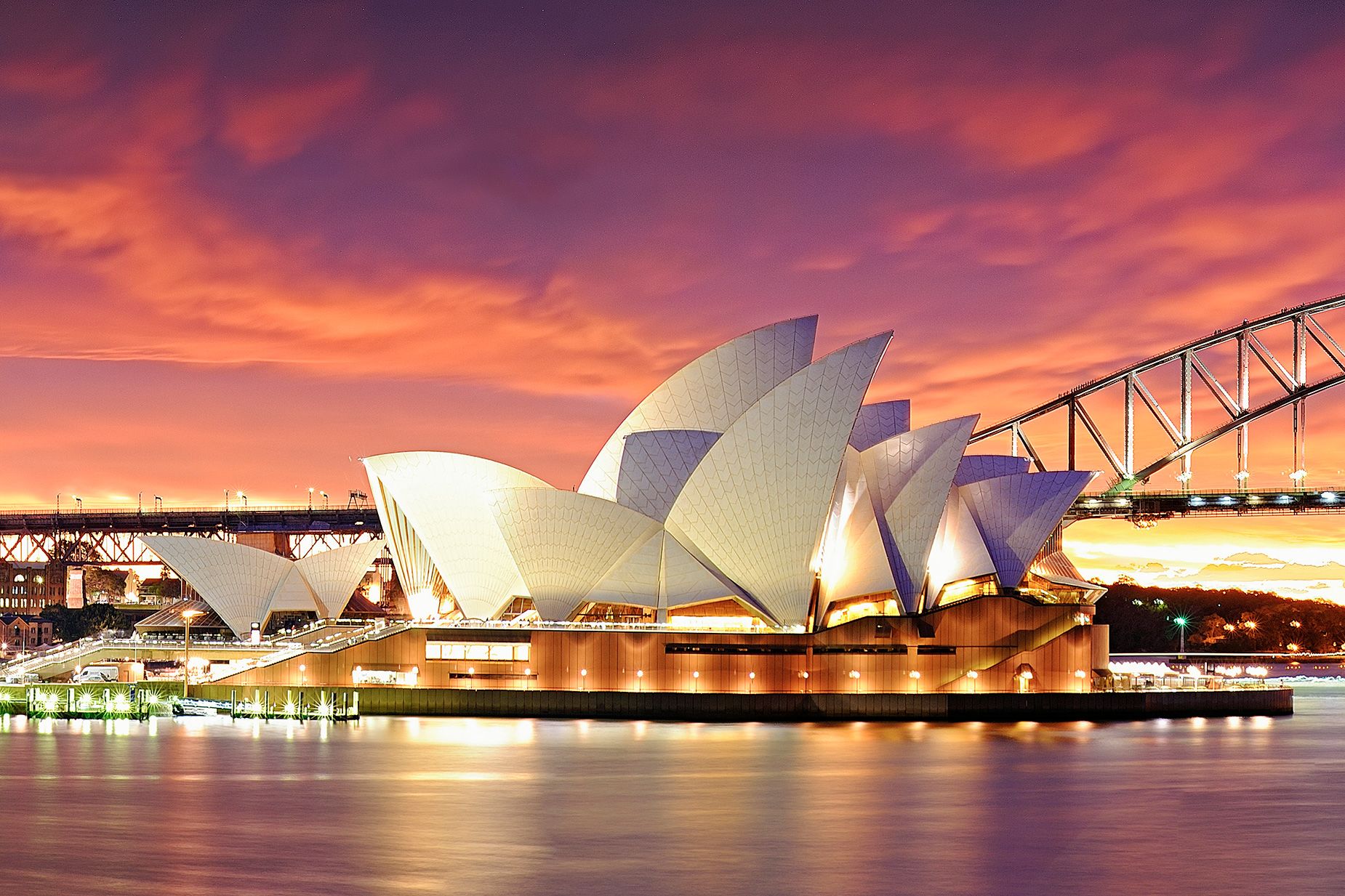
Sydney is famous for its stunning harbor, sunny beaches, and one of the most recognizable buildings in the world: the Sydney Opera House. With its white sail-like roofs and striking waterfront location, the Opera House has become an international symbol of Australia and a hub for arts and culture.
Designed by Danish architect Jørn Utzon, the building opened in 1973 and has since become a UNESCO World Heritage Site. Its innovative design, engineering feats, and cultural significance make it one of the most celebrated architectural works of the 20th century.
Why It Was Built
Before the Opera House, Sydney lacked a major performance venue that could host large-scale concerts, theater, and opera performances. In 1956, an international design competition was held to find a visionary concept.
Jørn Utzon’s design, inspired by sails and shells, won the competition with its bold, sculptural form. The goal was to create a building that reflected Australia’s modern identity, celebrated creativity, and enhanced the beauty of Sydney Harbour.
Architecture and Design
The Sydney Opera House is renowned for its unique and innovative architecture:
-
Sail-Like Roofs: The most iconic feature, made of precast concrete panels covered with white ceramic tiles, resembling sails floating on the harbor.
-
Podium: A massive concrete base supports the roofs and houses performance halls, restaurants, and foyers.
-
Geometric Design: The shells are sections of a sphere, allowing the pieces to fit together precisely and creating an elegant, flowing silhouette.
-
Integration with the Harbour: Positioned on Bennelong Point, the Opera House interacts beautifully with the surrounding water, bridges, and skyline.
The design reflects both modern engineering and artistic creativity, blending function and visual impact.
Construction and Engineering Challenges
Building the Opera House was a massive undertaking, requiring innovative solutions:
-
Construction began in 1959 and lasted 14 years.
-
Engineers developed new techniques to assemble the sail-like roof shells.
-
Over 10,000 workers contributed to the project, including engineers, artisans, and builders.
-
The total cost far exceeded initial estimates, but the final result was a masterpiece that combined structural ingenuity with aesthetic brilliance.
The complexity of the roof design was one of the greatest engineering challenges of the time, involving both mathematical precision and creative problem-solving.
Performance Venues
The Opera House contains multiple performance spaces, each designed for a specific type of event:
-
Concert Hall: The largest venue, seating over 2,600 people, with a world-class pipe organ and excellent acoustics.
-
Joan Sutherland Theatre: Formerly the Opera Theatre, primarily for opera and ballet, seating around 1,500.
-
Drama Theatre, Playhouse, and Studio: Smaller venues for theater, experimental performances, and lectures.
-
Forecourt: An outdoor area for festivals, events, and large public gatherings.
These spaces host thousands of performances annually, ranging from classical music to modern theater and international productions.
Acoustics and Interior Design
Acoustic design was a major focus of the Opera House:
-
Concert Hall features adjustable acoustic panels to suit different types of music.
-
Warm wood paneling and precise shaping ensure clear sound for audiences.
-
Each performance space is tailored to enhance the experience for both performers and viewers.
The interiors combine functionality with elegance, creating a comfortable, inspiring environment for both performers and spectators.
Public Spaces and Foyers
The Opera House also offers public spaces designed for visitors to enjoy:
-
Wide foyers with views of Sydney Harbour
-
Cafés, bars, and restaurants inside and around the building
-
Outdoor promenades for walking, photography, and sightseeing
These areas encourage community engagement and make the Opera House accessible beyond ticketed events.
Location and Surroundings
Bennelong Point is a prime waterfront location in Sydney Harbour, providing stunning views of:
-
Sydney Harbour Bridge
-
Circular Quay
-
Ferries and yachts
-
The city skyline and nearby Royal Botanic Gardens
The Opera House is not just a building but a destination, harmoniously integrated into its natural and urban surroundings.
Cultural Significance
The Sydney Opera House is more than a performance venue; it is a cultural icon:
-
Represents Australia on the global stage
-
Symbolizes creativity, innovation, and modernity
-
Hosts international artists, orchestras, and theater companies
-
Provides educational programs, workshops, and guided tours for the public
Its influence extends beyond architecture, shaping Australia’s cultural identity and arts landscape.
UNESCO World Heritage Status
In 2007, the Opera House was designated a UNESCO World Heritage Site for its architectural significance and contribution to modern architecture.
UNESCO highlighted:
-
Innovative design and engineering
-
Cultural and artistic impact
-
Symbolic integration with the natural environment
This recognition cements its status as a global treasure and a source of national pride.
Tourism and Visitor Experience
Millions of people visit the Opera House every year:
-
Guided tours explain the history, design, and construction.
-
Visitors can attend performances, concerts, and exhibitions.
-
Photography opportunities abound, especially at sunset or from the harbour.
-
Outdoor spaces and restaurants provide places to relax and enjoy the surroundings.
The Opera House is both an active cultural center and a must-see landmark for tourists.
Nighttime Illumination
At night, the Opera House is beautifully lit:
-
White sails glow against the dark sky
-
Special lighting is used for festivals and events
-
Reflections on the harbour create a stunning visual effect
Nighttime views provide a different perspective, highlighting the building’s sculptural qualities.
Events and Festivals
The Opera House hosts a wide variety of events:
-
Opera, ballet, and symphony performances
-
Theater productions and experimental art shows
-
Film screenings, lectures, and cultural festivals
-
Outdoor concerts and public celebrations on the forecourt
These events ensure that the Opera House remains a lively hub for the arts throughout the year.
Legacy of Jørn Utzon
The Danish architect’s vision changed the course of modern architecture:
-
He pioneered innovative structural techniques
-
Combined engineering with artistic vision
-
Inspired architects worldwide to experiment with form and function
Though Utzon resigned before completion, his design vision remained intact and continues to inspire awe.
Preservation and Maintenance
Maintaining such a complex structure is a continuous effort:
-
Regular cleaning of ceramic tiles and concrete surfaces
-
Upgrades to acoustics and seating
-
Preservation of historical design elements while accommodating modern technology
These efforts ensure the Opera House remains functional and visually striking for future generations.
Fun Facts
-
The roof tiles are self-cleaning and made from over one million Swedish ceramic tiles.
-
The building contains more than 1,000 rooms, including offices, rehearsal spaces, and kitchens.
-
It took 14 years to build, with multiple engineering breakthroughs along the way.
-
The Opera House welcomes over 8 million visitors each year.
These facts highlight the scale, ambition, and ingenuity of the project.
Symbolism and Impact
The Sydney Opera House represents:
-
Australia’s cultural growth and modern identity
-
The combination of art, architecture, and engineering
-
A connection between people, performance, and the natural environment
It is both a functional building and a symbol of creativity, admired worldwide.
Conclusion
The Sydney Opera House is a masterpiece of design, engineering, and cultural significance. Its sail-like roofs, waterfront location, and performance spaces make it unique among global landmarks.
Visitors can attend world-class performances, take guided tours, enjoy views of the harbour, or simply admire its stunning architecture from outside. As a UNESCO World Heritage Site and international icon, the Sydney Opera House continues to inspire awe, celebrate the arts, and define the cultural identity of Australia for generations to come.






Leave a Reply