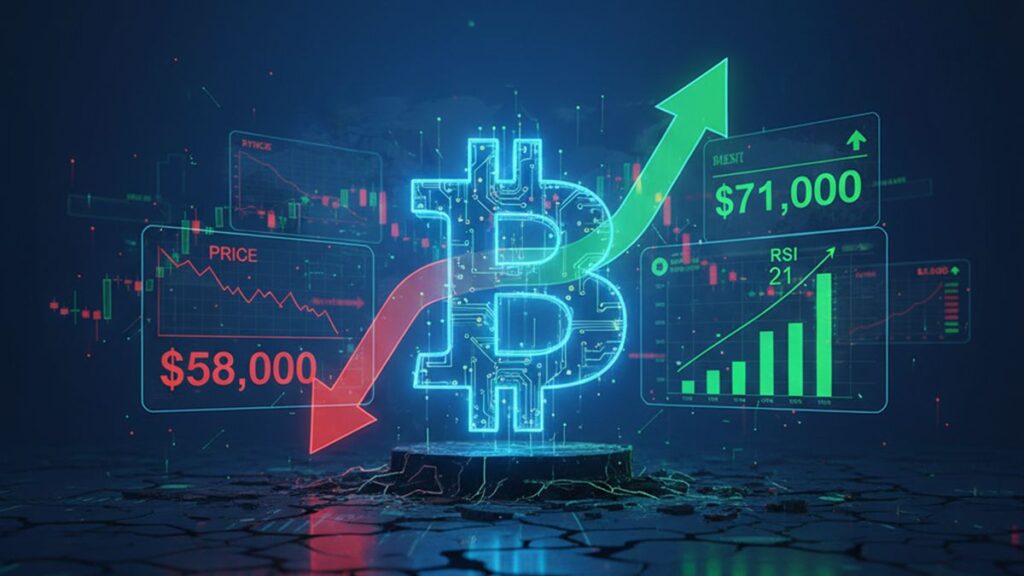
Bitcoin has bounced back to around $71,000 after a sharp drop that shook the crypto market. This recovery came as a key indicator called RSI showed that Bitcoin had become extremely oversold, meaning the price had fallen too fast and too far in a short time.
For many traders and investors, this rebound was not a surprise. When markets fall quickly, they often bounce back once selling pressure slows down. Still, the move has raised an important question:
Is this rebound the start of a stronger recovery, or just a short break before more volatility?
To understand what’s happening, let’s break it down in a simple way.
What Happened Before the Rebound?
Before Bitcoin moved back to $71,000, the market went through a tough phase.
Bitcoin prices dropped quickly as:
-
Investors sold risky assets
-
Fear spread across markets
-
Leveraged traders were forced to sell
This kind of fast selling usually happens when traders panic or when bad news hits the market. Once prices start falling, stop-loss orders and liquidations make the drop even worse.
As Bitcoin fell, confidence dropped too. Many investors started expecting even lower prices.
What Is RSI and Why Does It Matter?
RSI stands for Relative Strength Index. Don’t worry about the name — the idea is simple.
RSI helps traders understand:
-
If an asset is overbought (too expensive)
-
Or oversold (too cheap in the short term)
RSI moves between 0 and 100.
-
Above 70 → market may be overbought
-
Below 30 → market may be oversold
When Bitcoin’s RSI dropped near or below 30, it signaled that selling had gone too far too fast.
This does not guarantee prices will rise, but it often suggests that a bounce is likely.
RSI Hits Extreme Oversold Levels
During the recent drop, Bitcoin’s RSI fell to very low levels not seen in weeks.
This told traders:
-
Sellers were exhausted
-
Panic selling was slowing
-
A short-term rebound was possible
As soon as selling pressure eased, buyers started stepping in. This shift helped Bitcoin move higher and reclaim the $71,000 level.
Buyers Step In After the Selloff
When Bitcoin reached lower levels, many investors saw it as a chance to buy at a discount.
These buyers included:
-
Short-term traders looking for a bounce
-
Long-term holders adding to positions
-
Institutions that prefer buying during dips
Once buyers entered the market, prices stabilized and started rising.
Short Sellers Helped Push the Price Up
Another reason for the rebound was short sellers.
Short sellers are traders who bet that prices will fall. When Bitcoin started moving up instead of down, many of them were forced to close their positions.
To close a short position, they had to buy Bitcoin, which added more buying pressure and helped push prices higher.
This kind of move often makes rebounds faster and stronger.
Market Sentiment Starts to Improve
Sentiment simply means how investors feel.
Before the rebound:
-
Fear was high
-
Social media was bearish
-
Many expected a deeper crash
After Bitcoin moved back to $71,000:
-
Panic eased
-
Confidence slowly returned
-
Selling pressure reduced
This change in mood played an important role in stabilizing the market.
Why $71,000 Is an Important Level
Price levels matter because traders watch them closely.
The $71,000 area is important because:
-
It was a previous support zone
-
Many trades happened around this price
-
Holding above it improves confidence
Reclaiming this level suggests that buyers are still active and willing to defend key zones.
Does RSI Always Work?
RSI is a useful tool, but it is not magic.
Sometimes:
-
RSI stays oversold for a long time
-
Prices keep falling even after a signal
-
Market conditions override indicators
That’s why experienced investors never rely on RSI alone. They also look at market trends, news, and overall conditions.
In this case, RSI helped signal a bounce, but it does not guarantee long-term growth.
Bigger Market Factors Still Matter
Even though Bitcoin rebounded, larger issues remain.
Global markets are still dealing with:
-
Interest rate uncertainty
-
Economic slowdown fears
-
Geopolitical tension
Bitcoin often reacts to these factors, especially when markets are nervous.
If global conditions worsen, Bitcoin could face renewed pressure.
Institutional Investors Remain Cautious
Big investors are still watching the market carefully.
While some institutions buy dips, many prefer:
-
Clear trends
-
Stable conditions
-
Lower volatility
Recent data suggests institutions are cautious rather than aggressive. This means strong rallies may need more time and better conditions.
Retail Investors Are Still Careful
Small investors have been through many ups and downs recently.
After sharp drops:
-
Many become hesitant
-
Trading volume drops
-
Confidence takes time to rebuild
The rebound to $71,000 is encouraging, but many retail investors are waiting for confirmation before fully returning.
Is This the Start of a New Rally?
This is the big question.
Bullish View
Optimistic investors say:
-
The worst selling is over
-
RSI showed a clear oversold signal
-
Bitcoin reclaimed an important level
They believe Bitcoin could move higher if confidence continues to improve.
Cautious View
More careful investors warn:
-
This could be a short-term bounce
-
Volatility is still high
-
Markets remain sensitive to news
From this view, Bitcoin may move sideways or retest lower levels before choosing a clear direction.
What Needs to Happen for More Upside?
For Bitcoin to continue rising, several things could help:
-
Stable global markets
-
Lower fear around interest rates
-
Strong buying volume
-
Positive sentiment returning
Without these, rallies may struggle to last.
Risks That Could Push Bitcoin Lower Again
Even after the rebound, risks remain.
Possible negative triggers include:
-
Bad economic data
-
Sudden market shocks
-
Large investors selling
-
Regulatory concerns
Bitcoin is still volatile, and sharp moves can happen quickly.
Long-Term Investors Stay Focused
Long-term Bitcoin holders usually ignore short-term RSI signals.
They focus on:
-
Adoption
-
Limited supply
-
Network growth
For them, dips and rebounds are part of the journey, not reasons to panic.
Lessons From This Move
This rebound highlights some important lessons:
-
Panic selling often happens near bottoms
-
Technical indicators can help spot extremes
-
Markets move in cycles
Understanding these patterns can help investors make better decisions.
What This Means for Everyday Investors
For average investors, the key takeaway is simple:
-
Bitcoin is volatile
-
Sharp drops can create opportunities
-
Emotional decisions often lead to losses
Staying calm and thinking long term is often more effective than chasing every move.
Final Thoughts
Bitcoin’s rebound to $71,000 shows how quickly market conditions can change. After heavy selling pushed RSI into extreme oversold levels, buyers stepped in and helped prices recover.
This move does not guarantee a new bull run, but it does show that demand remains strong during dips. Whether Bitcoin continues higher or faces more ups and downs will depend on market confidence, global conditions, and investor behavior.
For now, the rebound has brought relief to the market and reminded everyone that in crypto, fear and opportunity often arrive at the same time.
Read Also: Keep your face towards the sunshine and shadows will fall behind you
Watch Also: https://www.youtube.com/@TravelsofTheWorld24