
Joulian Monastery:
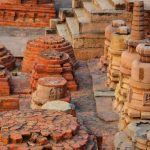
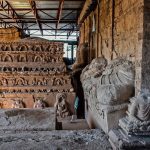
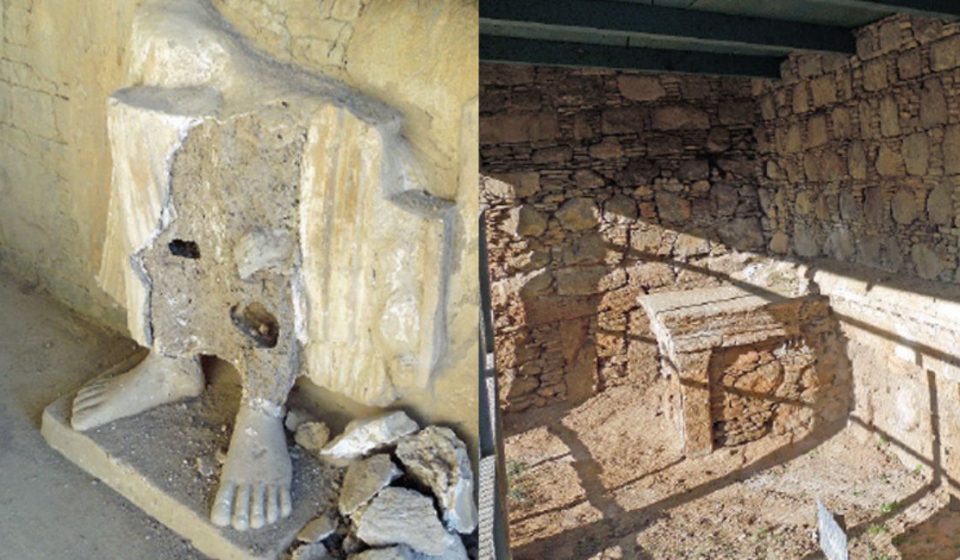
An Undiscovered Gem in Ancient Taxila Introduction One of the most incredible archaeological Buddhist sites in Pakistan is Joulian Monastery, a brilliant exemplar of the historic Gandhara culture. Situated near Taxila in the Province of Punjab, the Monastery of Joulian was once a major hub of Buddhist devotion, teaching, and meditation, while its remarkably intact remnants enable us to have a profound look at the educational and spiritual world of Buddhist monks almost two thousand years in the past. The adjacent picture shows a fraction of the monastery’s compound that includes ancient stone architecture and a fractured stupa of Buddha. Despite the toll of time, these remnants still narrated the tales of the civilisation that played a key role in Buddhism’s transmission through Asia.
Joulianis is considered as one of the best-conserved monasteries in the Taxila area and remains an essential source of historical information for researchers, travellers, and history buffs. History and Background The history of Joulian Monastery can be traced back to the 2nd century AD of the Kushan epoch. The Kushan Empire was among the most effective forces in Central and South Asia and was Instrumental in the proliferation of Buddhism. By then, Taxila was a major nexus of commerce, learning, and worship.
Its positioning along a prime commercial route led to exchange among merchants, scholars, monks, and travellers from disparate areas. It was founded as a religious community for monks who could meditate, educate, learn and worship. Joulian became an acclaimed centre within the Buddhist sphere over centuries and attracted students and pilgrims from varied Asian regions. The monastery remained occupied until about the 5th century CE, when external aggression and the decline in Buddhist political and military support resulted in the demise of the city.
The term ‘Joulian’ There’s noconfirmation in history regarding the origin of the name “Joulian,” but various hypotheses suggest its links with nearby natural phenomena or water sources. However, regardless of its inception, Joulian turned out to be one of the finest Buddhist monastic establishments in ancient Gandhara. Its repute extended beyond Taxila due to its academic contribution and its spiritual relevance. These days, “Joulian”is recognised globally among tourists and scholars interested in the archaeological history of Buddhist sites in Gandhara.
Its Position and Landscape Joulian monastery sits on a height above the Taxilavalley. This high locale has been selected carefully, considering both the practical and spiritual requirements of a religious community. The calm environment was a perfect site for meditation and schooling as the monks could pursue an undisturbed and tranquil living away from urban hubs of activity. This mountainous site additionally helped to keep out invading raiders and offered sublime panoramas of the environs.
The monastery and the site complement each other to establish a tranquil haven for contemplation. Architecture of the Monastery The complex design of the architecture is perhaps one of the most striking aspects of the Joulian monastery building, reflecting the mastery of ancient builders in managing to serve the needs of numerous monastic personnel. The building consists of a few divisions organised around a main courtyard. Monastic Courtyard At its core, there exists a sacred courtyard, the centre point for religious activity, surrounded by many Buddhist stupas and icons. The main stupa is the heart of the monastic complex, where monks and tourists pray and meditate together.
Monastic Cells: Smaller chambers, known as monks’ cells, where individuals lived individually, surround the central Courtyard. They offered sufficient area to meditate, learn, and rest peacefully, underscoring the core Buddhist values of minimalism and discipline. These spaces were essential to the monastic education and reinforced social and philosophical bonds. Kitchens and Storage Facility Archaeological Evidence is also available for kitchens, as well as a room where supplies were stored at the monastery.
Daily living necessities for the community were thus fulfilled. Centre of Buddhist Education Joulian Monastery wasn’t only a sanctuary; it was a revered centre of Islamic studies as well as. Monks acquired education here on Buddhist philosophies, scriptures, ethical standards, and principles of Buddhist enlightenment, and trained under experienced mentors that impart advanced training in this discipline. Pilgrims and scholars flock to this destination to learn and communicate on matters of Buddhism.
Educational programmes within this monastery combined scholastic education with spiritual awareness and contemplation practices to prepare the trainee monks as proficient leaders in the realm of Buddhism. Its Religious Importance The religious value of the Joulian monastery is incalculable. Centuries have passed since it last witnessed a congregation; however, it continues to maintain the spiritual ambience and remains a centre of attraction for devotees. This monastic site has also been referred to as one of the many locations where you can obtain special blessed grace, as many Buddhist pilgrims visit and make donations.
Read more at: https://www.discovernewsdaily24.com/taxila-museum-two-thousand-years-in-a-single-garden/
People come to offer prayers and meditation, as well as seek blessings at stupas which allegedly contain the cremated remains of Buddhist saints. The sanctity of the place allows devotees and pilgrims to meditate as well as contemplate in seclusion. Famous Healing Tradition. Some of the stones within the monastery bear the unique marks of a damaged Buddhist idol; a gaping wound is noticeable in its chest. It is popularly believed to bestow fortune and good luck on individuals who place their fingers into the wound and utter a devout wish.
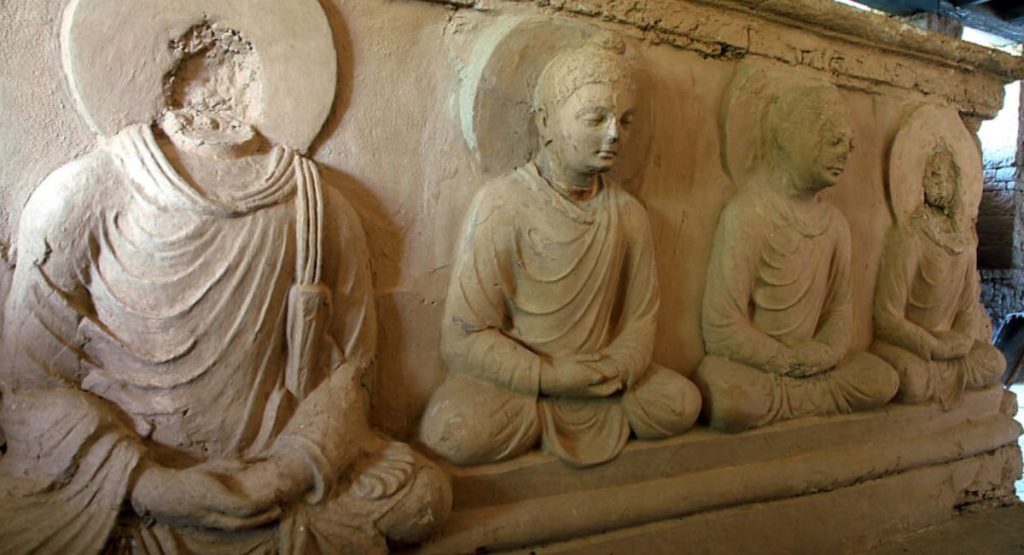 The tradition continues as a popular tourism feature, and many visitors pay a visit to verify this. The photograph below depicts parts of the famous stone idol. [Figure is shown, it is a sculpture of a broken statue of Buddha.] Gandharan Artwork. Many stones discovered inside the monasteries display Gandharan influence in artistry. The art forms during this period are a blend of Greek and Buddhism, Persian and Indian styles; therefore, artists demonstrated real craftsmanship in sculpting their works.
Buddhist symbols are readily visible in the artwork; the stone sculpture depicts the images of Buddhist bodhisattvas and legends. Daily monastic life. The way of life was austere, rigid, and spiritually focused. Every morning, monks would wake up before dawn and engage in prayer and Meditation. They were devoted to their studies all day, attended lectures, and performed all monastery jobs with full dedication.
The monks devoted ample to time to meditation, which allows them to achieve spiritual awakening. Meals were typically simple and modest and designed to satisfy the fundamental human needs. Archaeological Investigations A number of significant artifacts have been recovered at Joulianthrough extensive excavation processes; someof these included: • stone sculptures • Buddhist stupas • terracotta votive figurines and coins • ceramic items and inscriptions • evidence of living chambers, kitchens, storage facilities The information obtained during these investigations have given us considerable insights into the life style of the occupants of Joulian and development of the ancient Buddhist culture in Gandhara. Decline of the Monastery Over time, various socio-cultural, political and military changes began affecting the fate of this Buddhist site, leading to its eventual demise.
Attacks of White Huns in the 5th century in Gandhara played havoc on Buddhist culture, including sites of monasteries. Joulian, along with other monasteries of this region, gradually declined in influence and was abandoned by its inhabitants; subsequently, parts of the site were buried due to geological actions over centuries. Rebirth of the Site Since the early 1900s, as archaeological surveys in Taxila gained attention, Joulian again came to the limelight. Field excavation led by Sir John Marshall at the site brought it to international acclaim by revealing how well preserved it was.
The analysis made by the archaeologists confirmed that Joulian is one of the most preserved Buddhist monasteries in the Gandhara territory, which provides a fascinating insight into the ancient Buddhist practices. Location and relationship with Taxila Joulian, in the vicinity of Taxila city, was a component of the massive educational and spiritual institution, which historically made Taxila the foremost focal point of learning in Asia. In addition, its importance rose due to the involvement of its students in the teaching of Buddhism in Asia and elsewhere as well as the great scholar named Aryasambh, who was a well-renowned philosopher and scholar of Sanskrit; he educated many students on the subject of Buddhism in his capacity as Professor at Takshashila and later in other Buddhist centres of learning in Central Asia as well. Travel, Tourism, Conservation Efforts and Legacy A traveller can pay a visit to the Joulian monastery on their tour to Taxila for their understanding of the Buddhist culture and traditions.
These ruins hold considerable tourism significance, not to mention the immense historical and religious value it possesses. A great deal of restoration work on site aims at preserving this historic treasure for the years to come. Conservation initiatives and projects work towards maintaining and documenting the archaeological features and educating tourists. Joulian Monastery, despite having aged considerably through the centuries, remains a testament to the cultural, spiritual and artistic zenith achieved by the civilisations of the past.
It has an indelible impact on the minds of the visitors, thus leaving behind cherished memories. Joulian monastery bears testimony to the richness of Pakistan’s cultural heritage and its significance in history. Conclusion Joulian monastery, dated back to the 2nd Century AD, is one of the finest Buddhist archaeology and one of the most significant examples of the country’s rich cultural legacy and Buddhist Heritage. One of the most important monasteries is found on the hillside near Taxila, and it is one of the best-preserved monasteries in the whole Taxila Region.
This site has always served as a centre of attraction for scholars, pilgrims and travellers interested in the early Buddhist history.
See Also: https://www.youtube.com/watch?v=iyU4cZor_Gg