
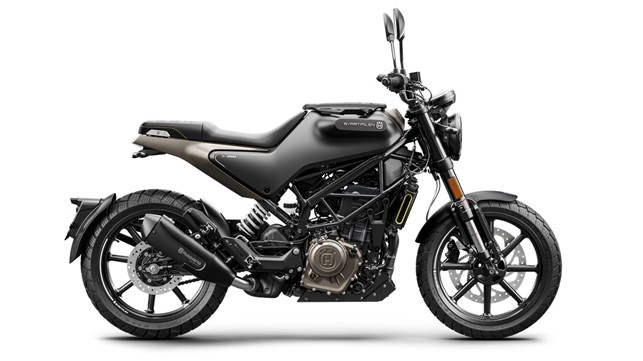
The Indian two-wheeler industry has undergone one of its most significant transformations in recent years with the introduction of BS-VI (Bharat Stage VI) emission norms. These regulations, aimed at sharply reducing vehicular emissions, forced manufacturers to rethink product strategies, redesign engines, and temporarily slow down new model launches. Among the companies most affected by this transition was Bajaj Auto, one of India’s largest two- and three-wheeler manufacturers.
Now that the BS-VI rollout is largely complete and manufacturers have adapted to the new regulatory environment, Bajaj Auto is preparing to accelerate its product launches. At the same time, the company has confirmed that the much-anticipated Husqvarna motorcycles for India have been rescheduled to 2026, reflecting a more cautious and strategic approach to premium brand expansion.
This article explores the impact of BS-VI on Bajaj Auto, the company’s renewed product roadmap, the reasons behind the Husqvarna delay, and what this means for the Indian and global motorcycle markets.
Understanding BS-VI and Its Impact on the Two-Wheeler Industry
BS-VI emission norms were introduced to align India’s vehicular emission standards with global benchmarks, particularly Euro 6 standards. Compared to BS-IV, BS-VI mandates:
-
Drastically lower limits on nitrogen oxides (NOx) and particulate matter
-
Advanced fuel injection systems
-
Improved exhaust after-treatment technologies
-
More precise engine calibration
For two-wheeler manufacturers, this meant higher development costs, extensive testing, and significant changes to existing engines. Carburetors were replaced by fuel injection systems, exhaust designs were reworked, and electronic components became more complex.
As a result, many manufacturers, including Bajaj Auto, paused or delayed new product launches to focus on compliance and cost management.
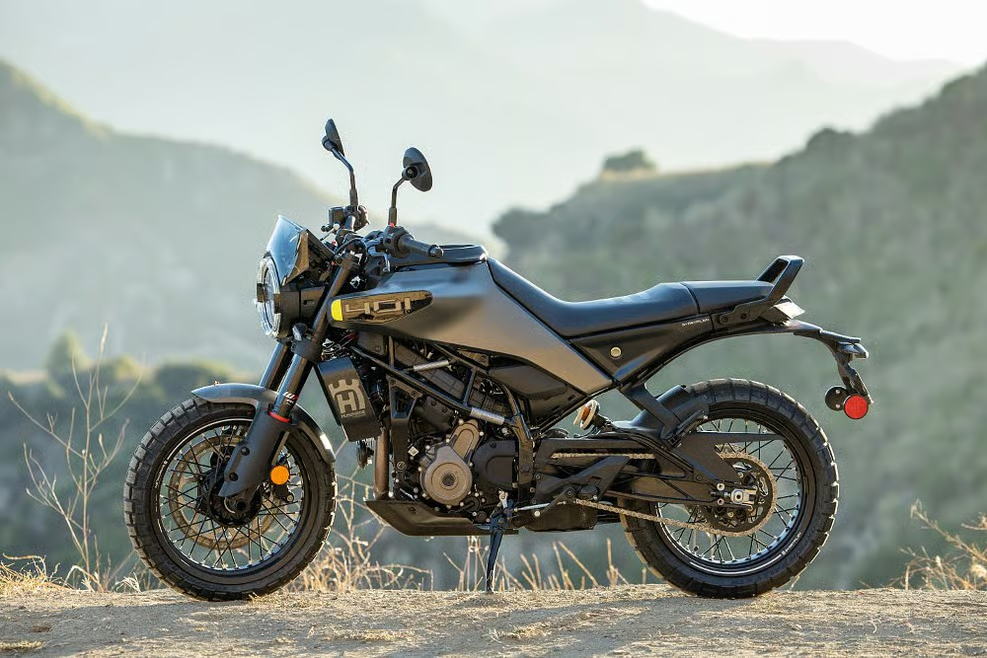
Bajaj Auto During the BS-VI Transition
Bajaj Auto entered the BS-VI era with a strong portfolio but faced multiple challenges:
Product Rationalization
To control costs and complexity, Bajaj streamlined its lineup, discontinuing or updating certain low-volume models. The focus was on converting high-selling motorcycles such as the Pulsar, Platina, and CT series to BS-VI standards.
R&D and Cost Pressures
BS-VI compliance increased production costs significantly. Bajaj Auto had to invest heavily in R&D, testing infrastructure, and supplier upgrades. These investments temporarily reduced the company’s flexibility to introduce all-new models.
Market Uncertainty
The BS-VI transition coincided with broader market challenges, including fluctuating fuel prices, changing consumer preferences, and later, global economic disruptions. Under such conditions, Bajaj adopted a cautious launch strategy.
Post-BS-VI: Bajaj Auto Gears Up for Faster Launches
With the BS-VI transition largely behind it, Bajaj Auto is now in a position to reignite its product pipeline.
Renewed Focus on Innovation
Bajaj has indicated that upcoming launches will not just be regulatory updates but meaningful product upgrades, including:
-
New engine platforms
-
Improved ride quality and performance
-
Enhanced safety features
-
Better fuel efficiency
The company aims to deliver motorcycles that justify their higher BS-VI costs through improved overall value.
Expanding Across Segments
Bajaj Auto plans to strengthen its presence across multiple categories:
-
Commuter motorcycles with better mileage and lower emissions
-
Sports and performance bikes under the Pulsar and Dominar brands
-
Electric vehicles, especially through its Chetak electric scooter
This diversified approach reduces dependence on any single segment and helps the company respond to evolving consumer demand.
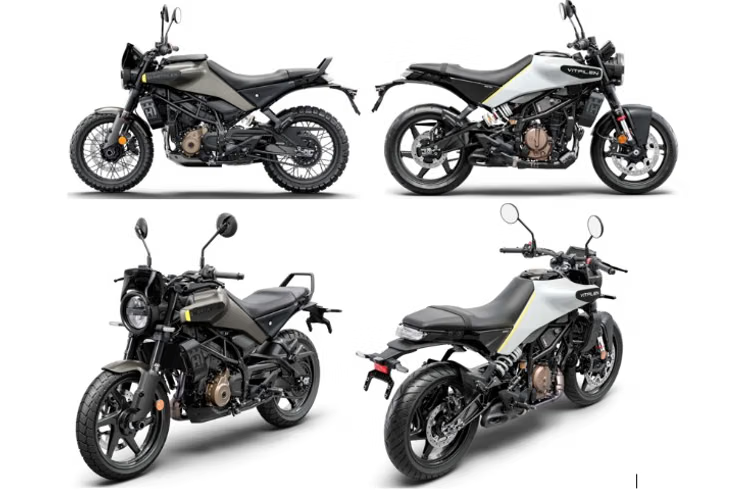
The Strategic Importance of New Launches
For Bajaj Auto, accelerating launches is not just about growth — it’s about staying competitive.
Intensifying Competition
Rivals such as Hero MotoCorp, TVS Motor Company, and international brands like Yamaha and Honda are rapidly updating their lineups. Frequent launches help maintain brand relevance and market share.
Premiumization of the Market
Indian consumers are increasingly moving toward premium motorcycles with better performance, features, and design. Bajaj’s faster launch cycle will help it capitalize on this trend.
Export Opportunities
Bajaj Auto has a strong export presence in Africa, Latin America, and Southeast Asia. New models designed to meet global emission standards can be exported more easily, boosting revenues.
Husqvarna Motorcycles: A Premium Brand with Delayed Plans
One of the most talked-about developments in Bajaj Auto’s premium strategy has been Husqvarna Motorcycles. The iconic Swedish brand, now owned by KTM’s parent company Pierer Mobility Group, is known for its distinctive design and performance-focused motorcycles.
Bajaj Auto, a key partner of KTM, has long been expected to play a role in bringing Husqvarna motorcycles to India. However, the company has now confirmed that the Husqvarna launch has been rescheduled to 2026.
Why Was the Husqvarna Launch Delayed?
Several factors have contributed to this decision:
1. Market Readiness
While the premium motorcycle segment in India is growing, it remains relatively small compared to the mass market. Bajaj and its partners appear to be waiting for stronger and more sustained demand before launching another premium brand.
2. BS-VI and Cost Considerations
Premium motorcycles face even higher costs under BS-VI norms. Positioning Husqvarna competitively while maintaining profitability requires careful pricing and localization strategies.
3. Brand Positioning Challenges
Husqvarna has a distinct identity, different from KTM’s aggressive styling. Introducing it successfully requires clear differentiation, dedicated marketing, and possibly separate retail strategies.
4. Focus on Existing Brands
Bajaj already manages multiple brands and platforms, including Pulsar, Dominar, KTM, and Chetak EV. Delaying Husqvarna allows the company to strengthen existing portfolios before adding another layer of complexity.
What to Expect from Husqvarna in 2026
Although delayed, the Husqvarna launch remains highly anticipated.
Likely Models
Industry watchers expect India-spec versions of Husqvarna’s smaller-capacity motorcycles, potentially based on KTM platforms but featuring:
-
Unique neo-retro or minimalist styling
-
Tuned engines for smooth performance
-
Premium components and finishes
Target Audience
Husqvarna is likely to appeal to riders seeking design-led, premium motorcycles that stand apart from mainstream sport bikes.
Competitive Landscape
When it arrives, Husqvarna will compete with brands like Royal Enfield, Honda’s premium offerings, and select European manufacturers.
Bajaj Auto’s Long-Term Vision
The decision to accelerate launches post-BS-VI while delaying Husqvarna reflects a measured, long-term strategy rather than hesitation.
Balanced Growth
Bajaj Auto aims to balance mass-market strength with selective premium expansion. This approach reduces risk and ensures steady cash flow.
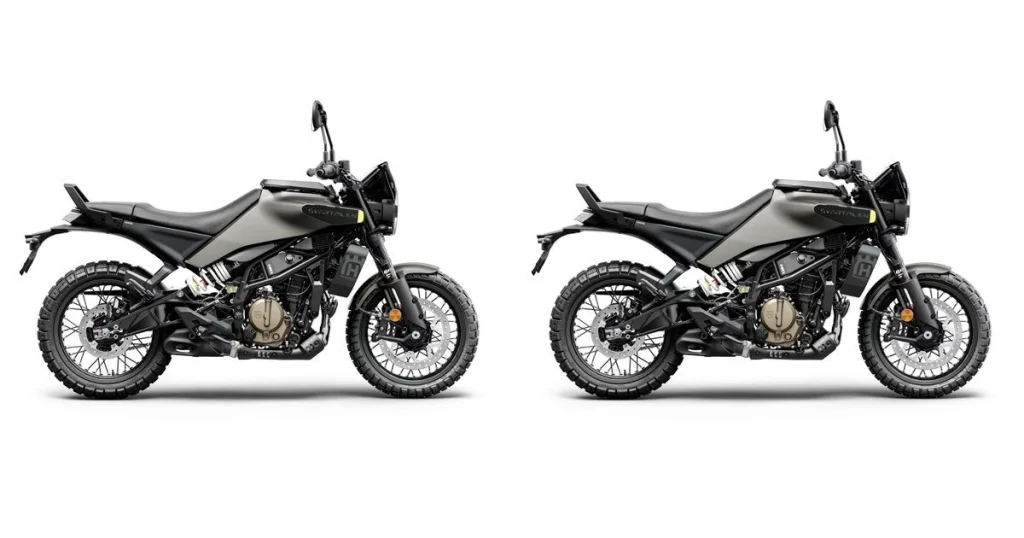
Technology and Electrification
Beyond conventional motorcycles, Bajaj is investing heavily in electric mobility. The success of the Chetak electric scooter signals the company’s intent to remain relevant in a rapidly changing industry.
Global Strategy
With BS-VI-compliant platforms, Bajaj can leverage its manufacturing scale to serve global markets more efficiently, reinforcing its position as a leading exporter.
Industry Reaction and Market Implications
Positive Outlook
Industry analysts view Bajaj’s post-BS-VI acceleration positively. A faster launch cycle keeps the brand fresh and responsive to consumer trends.
Cautious Optimism for Husqvarna
While some enthusiasts are disappointed by the delay, many recognize that a well-planned 2026 launch could result in a stronger, more sustainable presence.
Consumer Benefits
For consumers, faster launches mean:
-
More choices
-
Improved technology
-
Better compliance with environmental standards
Challenges Ahead
Despite its strong position, Bajaj Auto still faces challenges:
-
Rising input and compliance costs
-
Price sensitivity in the mass market
-
Rapid electrification trends
-
Increasing competition from global and domestic players
Successfully managing these challenges will determine how effective the accelerated launch strategy will be.
Conclusion: A Strategic Reset After BS-VI
The completion of the BS-VI rollout marks a turning point for Bajaj Auto. With regulatory hurdles largely behind it, the company is now poised to accelerate product launches, refresh its lineup, and strengthen its market position.
The decision to reschedule the Husqvarna launch to 2026 reflects strategic patience rather than retreat. By prioritizing stability, brand clarity, and market readiness, Bajaj Auto aims to ensure that when Husqvarna finally arrives, it does so with impact.
As the two-wheeler industry continues to evolve — shaped by emissions regulations, electrification, and changing consumer tastes — Bajaj Auto’s post-BS-VI roadmap suggests a company focused on sustainable growth, innovation, and long-term competitiveness.
Read Also: Keep your face towards the sunshine and shadows will fall behind you
Watch Also: https://www.youtube.com/@TravelsofTheWorld24





Leave a Reply