
The stars have inspired poets and scientists alike, prompting questions that have no easy answers: Are we alone in the universe? Is Earth the only planet with life? To date, we have not discovered definitive evidence of life beyond our planet. Yet, through scientific advancement, exploration, and an ever‑expanding understanding of the cosmos, our search continues with optimism and determination. The belief that we will one day find life outside Earth is not mere wishful thinking—it is grounded in logic, scientific progress, and the vast potential the universe holds.
1. The Immensity of the Universe
One of the most compelling reasons to believe that life exists beyond Earth is the scale of the universe itself. Our solar system, while vast on a human scale, is but a tiny speck in a cosmos that contains billions of galaxies. Each galaxy hosts billions of stars, and many of these stars have planets orbiting them.
In the past few decades, astronomers have confirmed the existence of thousands of exoplanets—planets orbiting stars outside our solar system. Many of these worlds exist in what scientists call the “habitable zone” or the “Goldilocks zone,” where temperatures might allow for liquid water, a fundamental ingredient for life as we know it. This staggering diversity of worlds suggests that Earth may not be unique in its ability to support life. With such an immense number of planets, it seems statistically improbable that ours is the only place life could arise.
2. Scientific Advances in the Search for Life
The tools and methods used to search for life beyond Earth have advanced rapidly in recent years. Telescopes like the Hubble Space Telescope and the James Webb Space Telescope have transformed our understanding of distant planets and cosmic environments. These powerful instruments allow scientists to analyze the atmospheres of exoplanets, searching for chemical signatures that might indicate the presence of biological processes.
For example, the detection of gases like oxygen, methane, or water vapor in certain combinations could suggest biological activity. While these findings are not yet definitive proof of life, they provide valuable clues about which worlds might be promising candidates for further study.
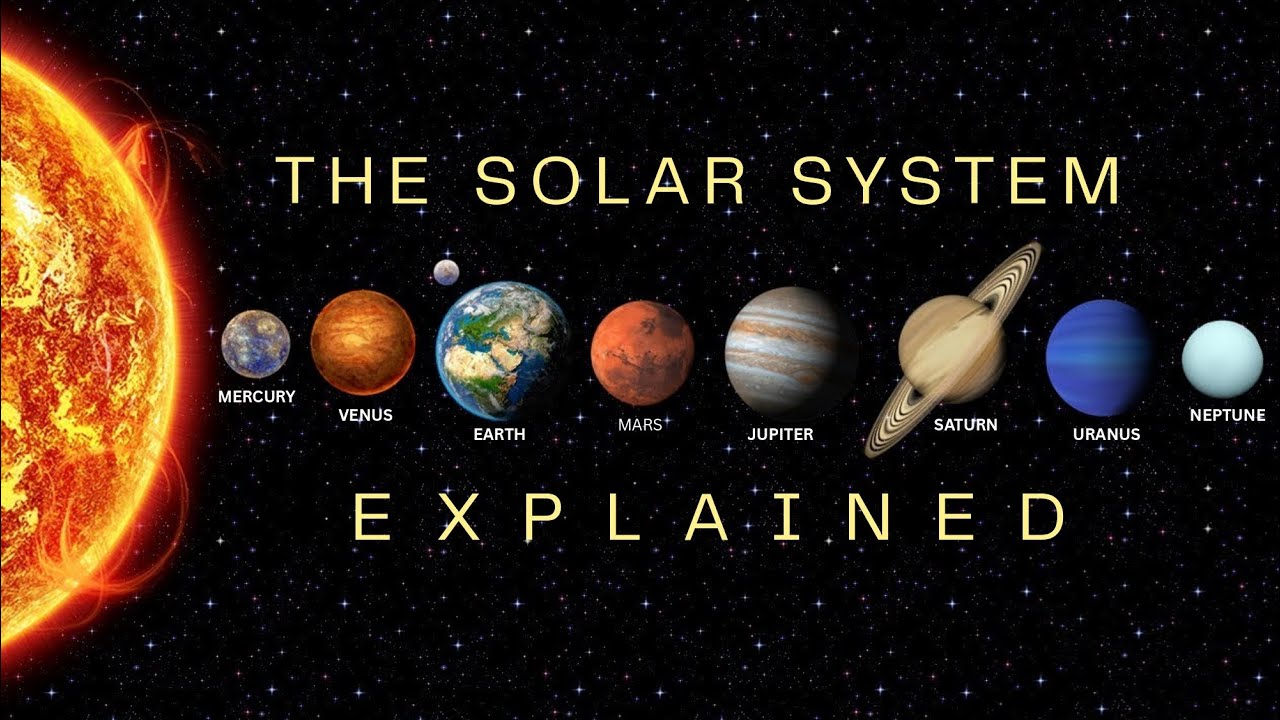
Closer to home, robotic missions to Mars, such as NASA’s Perseverance rover, are studying the planet’s geology and searching for signs of ancient microbial life. Scientists believe that Mars may have once had liquid water on its surface, raising the possibility that life could have developed there in the distant past. Meanwhile, icy moons in our own solar system, such as Europa (orbiting Jupiter) and Enceladus (orbiting Saturn), are prime targets because they are believed to have subsurface oceans beneath their frozen crusts—environments that might be suitable for life. These missions represent significant steps forward in the search for life beyond Earth and demonstrate the scientific community’s belief that such a discovery is possible.
3. What “Life” Really Means
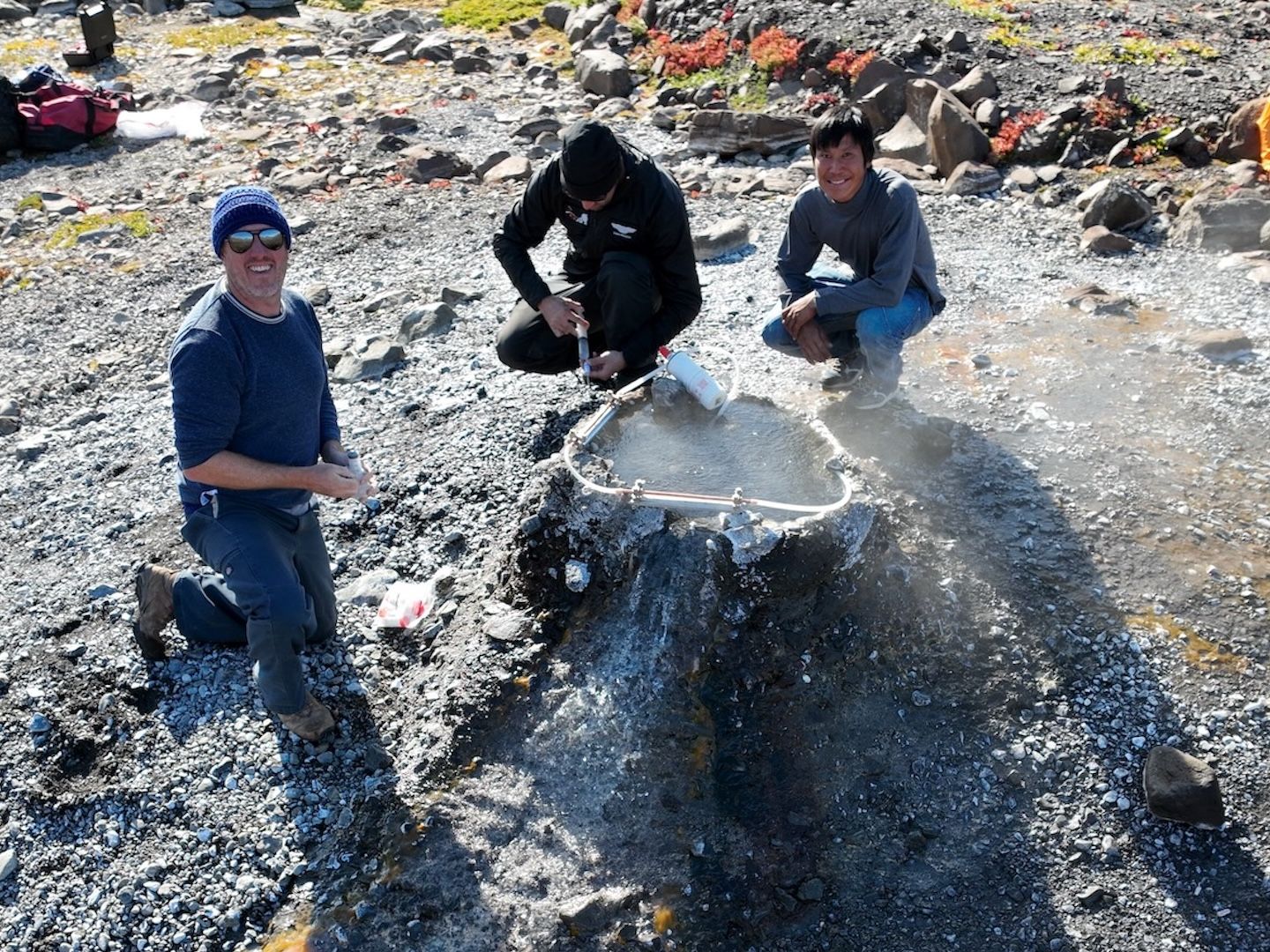
Defining life is more complex than it might seem. On Earth, life exists in a remarkable range of environments, from boiling hot springs to deep‑sea hydrothermal vents, and from arid deserts to frozen tundras. These extremes demonstrate that living organisms can adapt to conditions once thought inhospitable. Consequently, scientists studying life beyond Earth have broadened their definitions of possible life‑supporting environments.
Life elsewhere might not resemble life on Earth. It could be microbial, or it could rely on chemical processes entirely different from those familiar to us. By studying Earth’s extremophiles (organisms that thrive in extreme conditions), scientists gain insight into how life might exist under diverse cosmic conditions. The more we learn about life’s resilience here, the more we realize that life beyond Earth may not be as improbable as once believed.
4. The Search for Intelligent Life
Beyond searching for microbial or primitive life, humanity has also pursued signs of intelligent civilizations. The Search for Extraterrestrial Intelligence (SETI) listens for deliberate radio signals or electromagnetic transmissions from distant stars. While no confirmed signals from intelligent life have been detected so far, the search continues with ever‑improving technology and global cooperation.
SETI projects focus on narrow bands of electromagnetic frequencies that might be chosen by intelligent beings attempting to communicate with others in the cosmos. These searches, though technically challenging, represent a careful and methodical effort to answer one of humanity’s deepest questions: Are there other intelligent beings out there who know we exist?
Read Also: Keep your face towards the sunshine and shadows will fall behind you
5. The Role of Future Missions
The future of space exploration holds enormous promise in our search for extraterrestrial life. Upcoming missions aim to study Mars in greater detail, explore the icy moons of the outer solar system, and even return samples from asteroids and comets. These celestial bodies carry clues about the early history of the solar system and may contain organic compounds that hint at the building blocks of life.
In addition to robotic missions, plans for human exploration of Mars and long‑term lunar bases may expand our scientific capabilities dramatically. Human explorers could conduct complex experiments on other worlds and make real‑time decisions that machines alone cannot achieve. These ambitious endeavors may accelerate discoveries that would otherwise take decades to unravel.
New telescopes under development will be powerful enough to image Earth‑like exoplanets directly, allowing scientists to study their atmospheres for signatures of life. Space agencies and private companies alike are investing in technologies that will extend humanity’s reach deeper into space, making the goal of detecting life outside Earth more attainable with each passing year.
6. The Philosophical and Cultural Implications
The discovery of extraterrestrial life, whether microbial or intelligent, would be one of the most profound events in human history. It would challenge our understanding of biology, evolution, and life’s potential diversity. It would force us to reconsider philosophical and theological perspectives on humanity’s place in the universe. The cultural impact would be enormous, influencing art, literature, politics, and society as a whole.
Even without direct contact or discovery, the search for life beyond Earth has already shaped our worldview. It has broadened our understanding of where life might exist and encouraged deeper reflection on Earth’s fragility and uniqueness. We now recognize that our planet is a precious haven in the vast cosmic expanse, and protecting our biosphere has become a more urgent, shared responsibility.
7. Skepticism and Scientific Rigor
While optimism about finding life beyond Earth is widespread, it is tempered with scientific skepticism and rigor. Extraordinary claims require extraordinary evidence, and scientists approach each discovery with careful analysis and peer review. False positives—signals or observations that initially seem promising but later prove to have non‑biological explanations—are common in scientific research.
For instance, atmospheric gases that might indicate life could also arise from geological processes. Unusual signals detected by radio telescopes could have origins in natural cosmic phenomena or human technology. The scientific method ensures that discoveries are validated, challenged, and confirmed before being accepted as evidence of extraterrestrial life.
This rigorous approach does not diminish the importance of the search; instead, it ensures that any claim of discovery will be credible, verifiable, and grounded in reproducible science.
8. Why We Believe We Will Find Life
Despite the challenges and uncertainties, there are several reasons scientists and explorers believe that life beyond Earth will eventually be found:
a) The sheer number of planets: With billions of stars in our galaxy alone and many with planets in habitable zones, the odds favor the existence of life somewhere.
b) The adaptability of life: Life on Earth thrives in extreme conditions, suggesting that life could adapt to environments very different from those on our planet.
c) Ongoing discoveries: Each year, astronomers find new exoplanets and learn more about potentially life‑friendly environments.
d) Technological advancement: New instruments and missions increase our capacity to detect subtle signs of life, from biosignatures in distant atmospheres to possible microbial fossils on Mars.
e) Scientific curiosity: The global scientific community is united in its search, drawing on interdisciplinary expertise that accelerates progress.
In light of these factors, it is reasonable to believe that finding life beyond Earth is not just a possibility, but an eventuality. It may take years, decades, or even centuries—but the trajectory of discovery points toward that outcome.
9. How Discovery Might Unfold
The discovery of extraterrestrial life could take many forms. It might begin with the detection of chemical markers in the atmosphere of a distant exoplanet. It might come from analyzing samples returned from Mars or ocean‑bearing moons. It could even arrive as unexpected data from advanced telescopes or unexplained signals detected by SETI.
Whatever form it takes, the first confirmed discovery of life beyond Earth will likely spark intense scientific scrutiny and global fascination. It will raise new questions even as it answers old ones, driving further exploration and expanding our understanding of life’s potential in the universe.
10. Conclusion: A Future of Discovery
We have not yet found life outside Earth, but the search is one of humanity’s most exciting and hopeful scientific ventures. From the first discovery of exoplanets to ongoing planetary missions and next‑generation telescopes, each step brings us closer to answering one of our deepest questions: Are we alone?
The absence of evidence today does not equate to evidence of absence. The universe is vast, and we have barely begun to explore its depths. As technology improves and our curiosity propels us forward, the likelihood of discovering life—whether simple microbes or advanced civilizations—grows stronger. Even if that discovery lies far in the future, the journey itself enriches our understanding of the cosmos and our place within it.
In the end, the quest to find life beyond Earth is not just a scientific pursuit—but a testament to humanity’s enduring hope, curiosity, and drive to explore the unknown.
Watch Also: https://www.youtube.com/@TravelsofTheWorld24







Leave a Reply