

Few automotive creations have captured the imagination of drivers and enthusiasts quite like the muscle car. Loud, powerful, and unapologetically bold, muscle cars are a distinctly American invention—born from a desire for speed, affordability, and attitude. From their humble beginnings in the early 1960s to today’s technologically advanced performance machines, muscle cars have undergone a dramatic evolution while retaining their core identity.
This journey from the first muscle cars to the modern era is not just a story of engines and horsepower, but of culture, regulation, innovation, and survival.
The Birth of the Muscle Car (Early 1960s)
The muscle car story begins in the early 1960s, when American automakers realized there was a growing demand for affordable cars with powerful engines. At the time, full-size sedans dominated the roads, but younger buyers wanted something faster and more exciting.
One of the earliest and most widely recognized muscle cars was the 1964 Pontiac GTO. By installing a large V8 engine into a relatively midsize car, Pontiac created a performance bargain that shocked the industry. The GTO’s success proved that buyers were eager for raw power without luxury-car pricing.
Other manufacturers quickly followed. Chevrolet introduced performance versions of the Chevelle, Ford responded with high-powered Fairlanes, and Dodge and Plymouth began experimenting with big-block engines in lighter platforms. The muscle car era had officially begun.
The Golden Age of Muscle (Late 1960s–Early 1970s)
The late 1960s through the early 1970s are widely considered the golden age of muscle cars. Competition between manufacturers intensified, leading to rapid increases in horsepower and aggressive styling.
Iconic models such as the Ford Mustang, Chevrolet Camaro, Dodge Charger, Plymouth Barracuda, and Chevrolet Chevelle SS became symbols of American power and freedom. Engines grew larger, carburetors multiplied, and horsepower ratings soared beyond 400 in some cases.
Design also played a major role. Long hoods, short rear decks, bold stripes, hood scoops, and menacing grilles made muscle cars instantly recognizable. These cars were not subtle—they were designed to intimidate and impress.
Muscle cars also became deeply embedded in popular culture. Movies, television shows, and drag racing events elevated them to legendary status, ensuring their place in automotive history.
The Pony Car Influence
While traditional muscle cars were midsize vehicles with massive engines, the pony car segment emerged alongside them. Pony cars were smaller, sportier, and more affordable, appealing to younger drivers.
The Ford Mustang, introduced in 1964, created this new category almost overnight. Its success inspired rivals like the Chevrolet Camaro, Pontiac Firebird, and Dodge Challenger. Though smaller than classic muscle cars, pony cars often offered V8 engines and comparable performance.
Over time, the distinction between muscle cars and pony cars blurred. Many pony cars grew larger and more powerful, becoming muscle cars in their own right.
The Fall: Oil Crisis and Regulation (Mid-1970s)
The muscle car boom came to an abrupt halt in the mid-1970s. Several factors contributed to the decline, most notably the 1973 oil crisis, which caused fuel prices to soar and made gas-guzzling vehicles less practical.
At the same time, new emissions regulations and safety standards forced automakers to detune engines. Compression ratios were lowered, horsepower ratings dropped dramatically, and performance suffered.
Insurance companies also raised premiums on high-powered cars, further discouraging buyers. By the late 1970s, many once-mighty muscle cars produced less than half the horsepower of their predecessors.
Although muscle cars never completely disappeared, this period is often referred to as the “dark age” of performance.
Survival and Adaptation (1980s–1990s)
During the 1980s and 1990s, muscle cars struggled to regain their former glory. Smaller engines, front-wheel-drive platforms, and a focus on fuel efficiency defined the era.
However, performance never fully died. Models like the Ford Mustang GT, Chevrolet Camaro IROC-Z, and Pontiac Firebird Trans Am kept the spirit alive. Advances in fuel injection and engine management systems gradually improved power and reliability.
By the late 1990s, horsepower figures began to climb again, signaling a potential comeback for American performance cars.
The Muscle Car Revival (2000s)
The early 2000s marked a turning point. Automakers realized that nostalgia, combined with modern technology, could reignite interest in muscle cars.
Ford played a major role with the 2005 Mustang, which featured retro-inspired styling and modern engineering. Chevrolet followed with the reborn Camaro, and Dodge reintroduced the Challenger with unmistakable classic design cues.
These modern muscle cars delivered impressive performance while meeting contemporary safety and emissions standards. For the first time, drivers could enjoy V8 power alongside airbags, stability control, and refined interiors.
Modern Muscle Cars: Power Meets Precision (2010s–Present)
Today’s muscle cars are the most advanced versions ever built. Horsepower numbers rival supercars, while handling, braking, and comfort have improved dramatically.
Modern engines use technologies such as variable valve timing, direct injection, and forced induction to produce more power with better efficiency. Suspension systems, adaptive dampers, and performance driving modes allow muscle cars to excel on both streets and racetracks.
Models like the Ford Mustang GT, Chevrolet Camaro ZL1, and Dodge Challenger Hellcat showcase how far muscle cars have come. These vehicles can accelerate faster, stop shorter, and corner harder than anything imagined during the classic era.
Technology and Safety Advancements
Unlike their early counterparts, modern muscle cars are packed with technology. Traction control, launch control, anti-lock brakes, and electronic stability systems help drivers safely manage massive horsepower.
Inside, muscle cars now feature digital displays, touchscreen infotainment systems, smartphone connectivity, and advanced driver-assistance features. What were once raw, uncomfortable machines have evolved into refined performance vehicles suitable for daily driving.
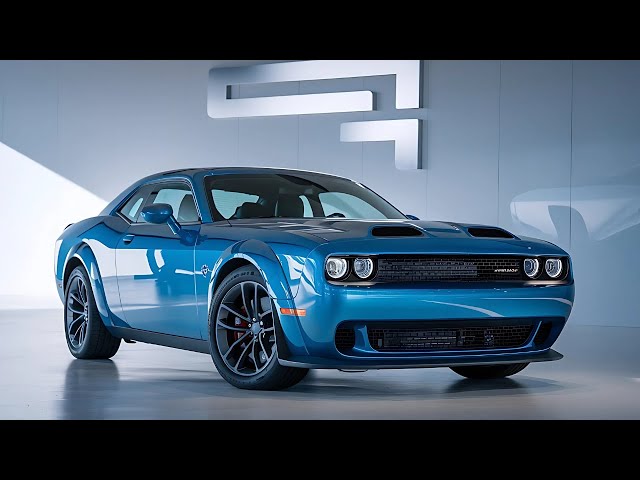
Design: Honoring the Past, Embracing the Future
Modern muscle car design carefully balances heritage and innovation. Retro-inspired elements—such as aggressive front ends, muscular fenders, and classic proportions—pay homage to the past.
At the same time, aerodynamic improvements, LED lighting, and lightweight materials reflect modern engineering priorities. This blend ensures muscle cars remain instantly recognizable while staying competitive in today’s market.
The Future of Muscle Cars
The automotive world is changing rapidly, with electrification and sustainability shaping the next generation of vehicles. Traditional V8 engines face increasing pressure from emissions regulations and fuel efficiency demands.
However, the muscle car philosophy—affordable performance and thrilling acceleration—remains alive. Electric motors offer instant torque and incredible speed, characteristics that align naturally with muscle car ideals.
Manufacturers are now exploring hybrid and electric performance models, signaling a new chapter in the muscle car story. While the sound and feel may change, the spirit of muscle is likely to endure.
Conclusion
From the first big-engine midsize cars of the 1960s to today’s high-tech performance machines, the muscle car has continually evolved to survive changing times.
Despite setbacks caused by fuel crises, regulations, and shifting consumer tastes, muscle cars have proven remarkably resilient. They have adapted without losing their identity, remaining symbols of power, freedom, and American automotive passion.
The evolution of the muscle car is far from over. Whether powered by gasoline, electricity, or something entirely new, muscle cars will continue to represent the thrill of performance—just as they did from the very first model to now.
Read Also: Keep your face towards the sunshine and shadows will fall behind you
Watch Also: https://www.youtube.com/@TravelsofTheWorld24





Leave a Reply