
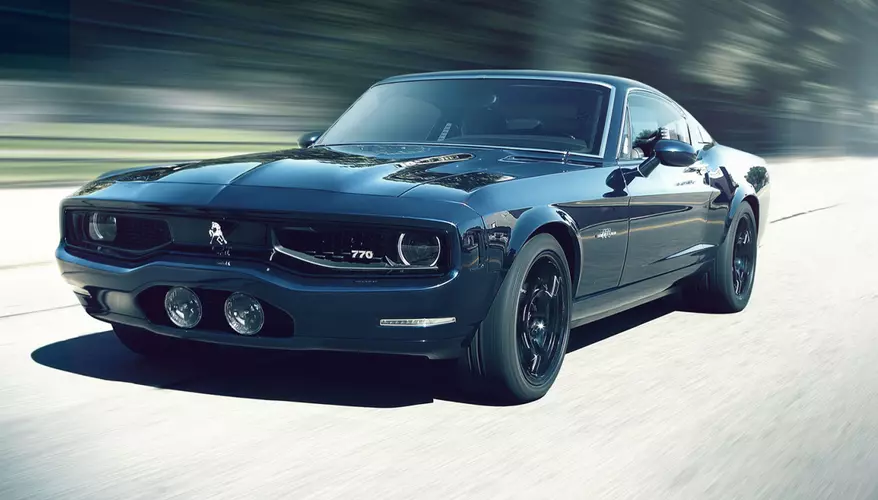
Few automotive categories evoke as much passion, nostalgia, and raw excitement as American muscle cars. Born from a uniquely American blend of wide-open roads, affordable V8 power, and a cultural obsession with speed, muscle cars have evolved dramatically over the decades. While the classic era of the late 1960s and early 1970s is often romanticized, modern American muscle cars represent something even more impressive: the successful fusion of old-school power with cutting-edge technology, safety, and refinement.
Today’s muscle cars are faster, safer, more efficient, and more sophisticated than ever before—yet they still honor the spirit that made them legends in the first place. This is the story of modern American muscle cars: where they came from, how they adapted, and why they remain an enduring symbol of American automotive culture.
The DNA of American Muscle
To understand modern muscle cars, it’s important to define what makes a car “muscle” in the first place. Traditionally, an American muscle car is a relatively affordable, rear-wheel-drive coupe or sedan powered by a large-displacement V8 engine. The formula was simple: maximum straight-line performance for the money.
Classic muscle cars like the Ford Mustang, Chevrolet Camaro, Dodge Charger, and Plymouth Barracuda focused on brute force rather than finesse. Handling, braking, and fuel efficiency were secondary concerns. What mattered was acceleration, engine sound, and visual aggression.
Modern muscle cars still follow this DNA, but with a crucial difference: they are engineered to perform not only in a straight line, but also on winding roads, racetracks, and daily commutes.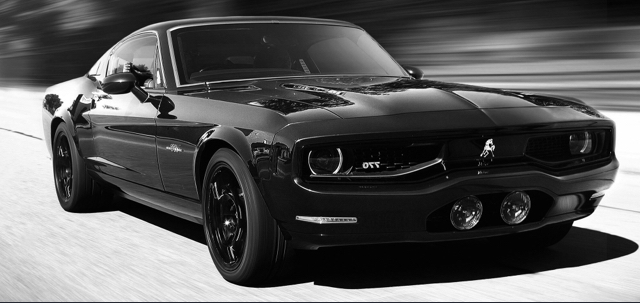
The Muscle Car Revival
By the late 1970s and 1980s, muscle cars had nearly disappeared. Emissions regulations, fuel crises, and rising insurance costs crippled the V8-powered performance segment. Horsepower numbers plummeted, and many iconic nameplates faded into obscurity.
The revival began in the early 2000s, when American automakers realized that nostalgia—combined with modern engineering—could reignite interest in muscle cars. Ford led the charge with the retro-inspired 2005 Mustang, which blended classic styling cues with contemporary performance and safety standards.
Chevrolet followed with the reborn Camaro in 2010, while Dodge went all-in on aggressive styling and massive engines with the modern Challenger and Charger. These cars didn’t just look the part—they delivered serious performance that rivaled, and often surpassed, European sports cars costing far more.
Ford Mustang: The Icon Evolves
No discussion of American muscle cars is complete without the Ford Mustang. Introduced in 1964, the Mustang created an entirely new class of vehicle—the “pony car”—and became an instant cultural phenomenon.
Modern Mustangs, particularly from the sixth and seventh generations, represent a major leap forward. Independent rear suspension, advanced traction control systems, and refined interiors transformed the Mustang from a straight-line bruiser into a legitimate global performance car.
The range of Mustang engines reflects this evolution. From the turbocharged EcoBoost four-cylinder to the thunderous 5.0-liter Coyote V8, buyers can choose between efficiency and traditional muscle. At the top of the lineup, high-performance variants like the Mustang Dark Horse and Shelby GT500 push horsepower into supercar territory, proving that American muscle can compete at the highest level.
Despite its technological advances, the Mustang remains true to its roots: rear-wheel drive, bold styling, and an unmistakable exhaust note that announces its presence long before it comes into view.
Chevrolet Camaro: Precision Meets Power
The Chevrolet Camaro has always been the Mustang’s fiercest rival. After a brief hiatus in the early 2000s, the Camaro returned stronger than ever, focusing heavily on chassis dynamics and track performance.
Modern Camaros are often praised for their balance and handling. With advanced suspension setups, magnetic ride control, and lightweight materials, the Camaro feels more like a European sports coupe than a traditional muscle car.
Engine options range from turbocharged four-cylinders to naturally aspirated and supercharged V8s. Models like the Camaro SS and ZL1 deliver blistering acceleration while maintaining impressive control through corners. The ZL1 1LE package, in particular, has earned respect on racetracks worldwide for its astonishing lap times.
While the Camaro may be slightly less practical than some competitors, it represents the modern muscle car at its most focused—built not just for drag strips, but for drivers who crave precision and feedback.
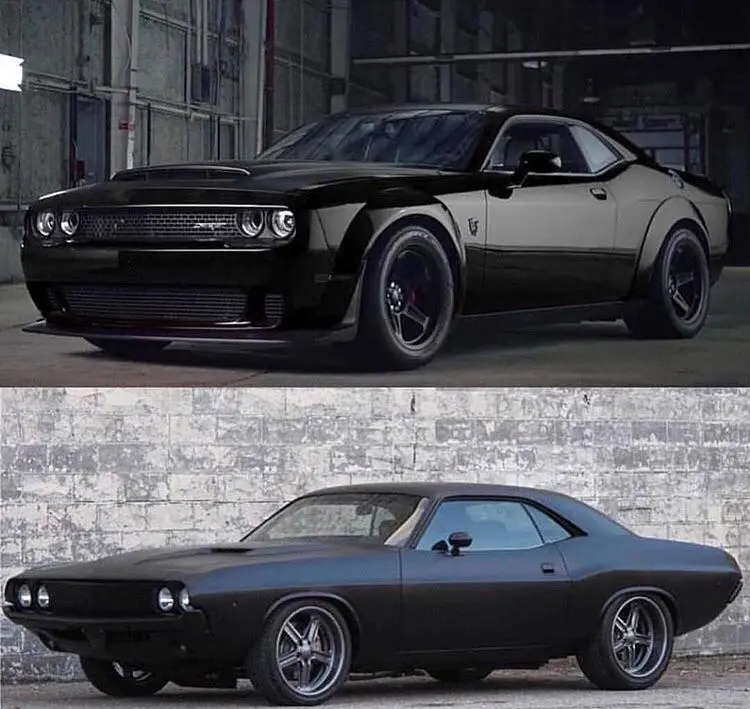
Dodge Challenger and Charger: The Last of the Big V8s
If Ford and Chevrolet modernized muscle cars through balance and handling, Dodge chose a different path: unapologetic excess. The Challenger and Charger embrace size, power, and attitude, standing as rolling tributes to classic American muscle.
Dodge’s modern muscle lineup became legendary thanks to its use of supercharged HEMI V8 engines. The Hellcat models, producing well over 700 horsepower, redefined what factory-built performance could look like. Later variants pushed output even further, creating some of the most powerful production cars in history.
The Challenger, with its retro-inspired design and wide stance, feels like a time machine from the golden age of muscle. The Charger, meanwhile, adds practicality with four doors, proving that muscle doesn’t have to sacrifice usability.
In an era moving toward electrification, Dodge’s commitment to massive displacement engines made these cars icons of defiance—celebrated by enthusiasts as symbols of a disappearing era.
Technology Transforms Muscle
One of the biggest differences between classic and modern muscle cars is technology. Today’s models are packed with features that would have been unimaginable decades ago.
Advanced traction control, launch control systems, adaptive suspensions, and performance driving modes allow drivers to safely harness enormous power. Anti-lock brakes and stability systems improve confidence without eliminating the thrill of driving.
Inside the cabin, modern muscle cars offer digital instrument clusters, infotainment systems with smartphone integration, premium audio, and driver-assistance features. These cars are no longer crude machines—they are refined performance vehicles capable of daily use.
Importantly, modern engineering has also improved reliability. Where classic muscle cars often required constant tuning and maintenance, today’s models can deliver extreme performance with factory warranties and everyday dependability.
Design: Retro Inspiration, Modern Execution
Styling plays a crucial role in the appeal of muscle cars. Modern designs often blend retro cues with contemporary aerodynamics and materials.
Long hoods, short rear decks, wide stances, and aggressive front fascias remain defining features. LED lighting, sculpted body panels, and functional aerodynamic elements add a modern edge.
This balance between past and present is intentional. Muscle cars are as much about emotion as performance, and familiar design elements help maintain a strong connection to their heritage while appealing to new generations of buyers.
Muscle Cars in a Changing World
The automotive industry is undergoing a major transformation. Stricter emissions regulations, rising fuel costs, and the shift toward electrification pose challenges for traditional muscle cars.
Some manufacturers have already begun adapting. Hybrid systems, turbocharging, and even fully electric performance models are becoming more common. While purists may mourn the eventual loss of large-displacement V8s, performance itself is not disappearing—it is evolving.
Electric powertrains offer instant torque and astonishing acceleration, characteristics that align surprisingly well with the muscle car philosophy. The challenge lies in preserving the emotional elements—sound, feel, and personality—that define American muscle.
Cultural Impact and Enduring Appeal
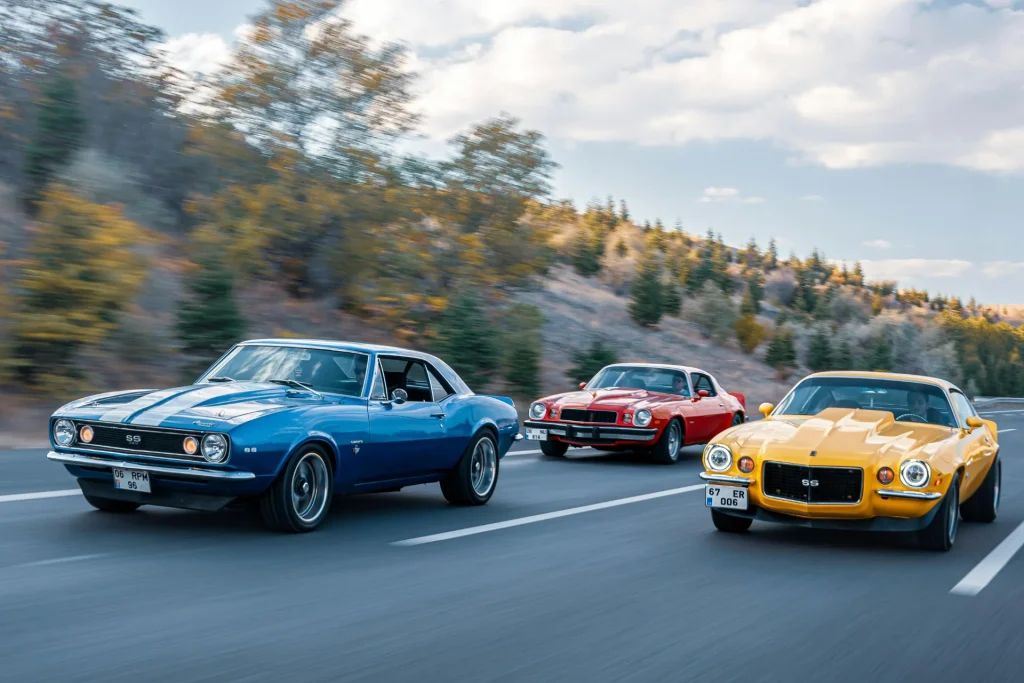
Modern American muscle cars are more than machines; they are cultural symbols. They represent freedom, individuality, and rebellion—values deeply rooted in American identity.
From movies and music to car shows and social media, muscle cars continue to capture the imagination. They appeal to enthusiasts of all ages, from those who grew up idolizing classic models to younger drivers discovering performance through modern technology.
Crucially, muscle cars remain relatively accessible. Compared to exotic supercars, they offer extraordinary performance at attainable prices, keeping the dream of high-powered driving alive for a broad audience.
Conclusion: Still Born in the USA
Modern American muscle cars prove that tradition and innovation can coexist. By blending classic styling, thunderous performance, and advanced engineering, they honor their heritage while embracing the future.
Whether it’s the refined versatility of the Ford Mustang, the track-focused precision of the Chevrolet Camaro, or the outrageous power of Dodge’s HEMI-powered machines, modern muscle cars remain unmistakably American.
Born in the USA, shaped by decades of evolution, and driven by passion, these cars continue to stand as rolling reminders that performance, personality, and pride still have a place on today’s roads.
Read Also: Keep your face towards the sunshine and shadows will fall behind you
Watch Also: https://www.youtube.com/@TravelsofTheWorld24





Leave a Reply