
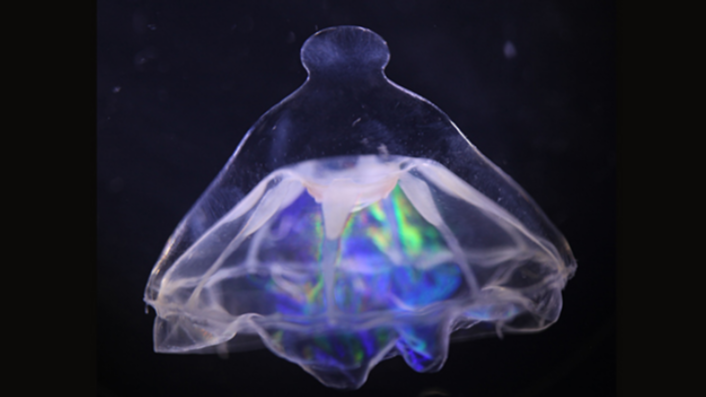
The deep ocean is one of the least explored environments on Earth, a realm of perpetual darkness, crushing pressure, and bizarre creatures that seem almost alien. Among these strange inhabitants are deep-sea jellyfish, relatives of the familiar gelatinous animals that float near the ocean surface but evolved to survive in a world of extreme conditions. Recently, scientists have discovered a mysterious barrier in the Atlantic Ocean that appears to divide populations of these jellyfish cousins, creating a striking genetic split despite no obvious physical obstruction.
1. Introducing the Deep-Sea Jellyfish Cousins
Unlike the jellyfish most people recognize, deep-sea jellyfish often have unusual shapes, bioluminescent patterns, and lifecycles adapted to the extreme conditions of the ocean’s midwater and abyssal zones. Some have translucent bodies that can stretch to several meters, while others sport tiny, intricate structures for capturing scarce prey. Despite these differences, genetic studies have revealed that many of these species are closely related—“cousins” in evolutionary terms.
The Atlantic Ocean, stretching thousands of kilometers from north to south and spanning temperate to tropical waters, hosts multiple populations of these jellyfish cousins. Surprisingly, researchers found that jellyfish populations on opposite sides of a specific Atlantic zone are genetically distinct, almost as if an invisible wall separates them.
2. The Discovery of the Barrier
Marine biologists first noticed the phenomenon when they analyzed DNA samples from jellyfish collected at various points along the Atlantic. While superficially the jellyfish looked almost identical, their genomes told a different story. Populations separated by this barrier had distinct genetic markers, suggesting limited or no interbreeding across the divide.
What makes this finding particularly mysterious is that there are no obvious geographic features, such as land masses or shallow ridges, that could block these animals’ movement. Jellyfish drift with ocean currents, and their larval stages are carried even farther by the water. Yet, the genetic evidence points to a long-standing division.
3. Possible Explanations for the Barrier
Scientists are exploring several hypotheses for the existence of this mysterious barrier:
-
Ocean Currents: Strong and stable currents may act as invisible highways and walls simultaneously. Some currents might prevent jellyfish from crossing certain latitudes, effectively isolating populations on either side.
-
Temperature and Salinity Gradients: Jellyfish are sensitive to water conditions. Variations in temperature, salinity, or oxygen levels may create environmental zones that are unsuitable for migration, indirectly forming a barrier.
-
Depth Preferences: Many deep-sea jellyfish occupy specific depth ranges. Differences in ocean layering could prevent jellyfish from moving freely between layers where other populations thrive.
-
Behavioral Isolation: Despite drifting with currents, some jellyfish may have behaviors or reproductive cues that limit interbreeding, reinforcing the separation.
4. The Role of Genetics in Understanding Ocean Mysteries
Genetic research is revolutionizing our understanding of deep-sea life. Morphologically similar animals can be genetically distinct, revealing hidden diversity in ecosystems once thought to be uniform. In this case, the barrier demonstrates that even in the vast, seemingly open Atlantic, populations can be separated in ways that are not immediately visible to humans.
By analyzing mitochondrial DNA and nuclear markers, researchers can trace the evolutionary history of these jellyfish cousins, estimating when the populations diverged and how the barrier may have persisted over time. These studies provide crucial insights into biodiversity, adaptation, and the resilience of deep-sea ecosystems.
5. Implications for Conservation
Although jellyfish are not typically considered threatened, understanding their population structure is important for marine conservation. Deep-sea ecosystems are vulnerable to climate change, deep-sea mining, and pollution. If populations are genetically isolated, the loss of one group could mean the disappearance of unique genetic diversity.
The discovery of this Atlantic barrier also highlights how little we know about midwater and deep-sea ecosystems. Protecting the ocean requires knowledge of not only surface-dwelling species but also the hidden diversity in its depths.
6. Comparisons to Other Ocean Barriers
The phenomenon is not unique to jellyfish. Similar genetic divides have been observed in deep-sea fish, crustaceans, and plankton. Scientists suspect that subtle environmental and physical barriers—often invisible to humans—play a key role in shaping marine biodiversity. The Atlantic barrier offers a rare glimpse into the invisible forces that govern life in the ocean’s depths.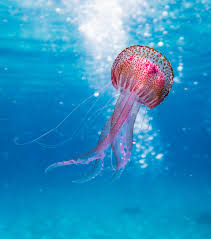
7. The Next Steps in Research
Marine scientists plan to continue sampling jellyfish across the Atlantic and use advanced technologies like autonomous underwater vehicles (AUVs) and environmental DNA (eDNA) sampling. These methods allow researchers to detect the presence of species without physically capturing them, which is especially useful in the harsh conditions of the deep sea.
Understanding the barrier will also require modeling ocean currents, temperature, and salinity patterns, as well as observing jellyfish behavior in situ. The goal is to unravel whether this divide is primarily physical, environmental, behavioral, or a combination of factors.
8. Why It Matters
This discovery underscores the complexity of ocean ecosystems. Even in the open ocean, invisible boundaries can shape the evolution and distribution of species. By studying jellyfish cousins and their mysterious barrier, scientists gain a better understanding of evolutionary processes, species adaptation, and the hidden structures of marine life.
Moreover, it reminds us that the deep sea, which covers most of our planet, still holds countless secrets waiting to be uncovered. Each discovery, like this Atlantic barrier, expands our appreciation of the delicate and intricate web of life beneath the waves.
Conclusion
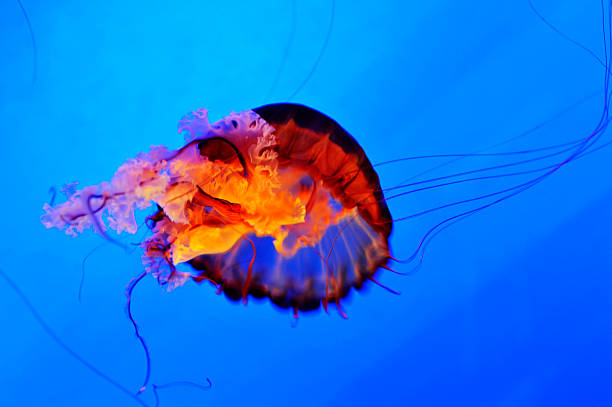
The mysterious Atlantic barrier dividing deep-sea jellyfish cousins is a fascinating example of how nature can create isolation without obvious obstacles. Genetic evidence, environmental conditions, and oceanic forces combine to shape the lives of these elusive creatures. Studying such phenomena not only enhances our knowledge of deep-sea biology but also emphasizes the importance of protecting fragile ocean ecosystems. In a world where much of the ocean remains unexplored, discoveries like this remind us that the depths still hold extraordinary mysteries—and understanding them is key to preserving life on Earth.
Read Also: Keep your face towards the sunshine and shadows will fall behind you
Watch Also: https://www.youtube.com/@TravelsofTheWorld24










Leave a Reply