
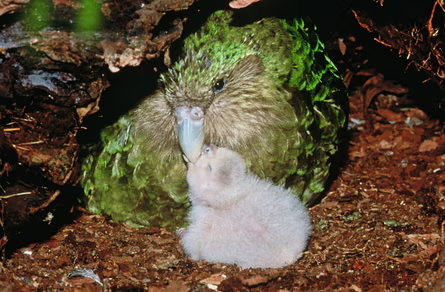
For the first time in four years, one of the world’s rarest and most unusual birds — the kākāpō (Strigops habroptilus) — has begun breeding again in New Zealand. This highly anticipated event marks a hopeful milestone in the ongoing efforts to save a species that nearly vanished from the planet. The kākāpō, a flightless and nocturnal parrot found only in New Zealand, has a unique life history and highly specific breeding triggers that have made its recovery both a scientific challenge and a conservation success story. This essay explores the biology of the kākāpō, the reasons behind the long gap between breeding seasons, the conservation efforts that have brought the species back from the brink, and why this year’s breeding event could be record‑breaking.
The Kākāpō: A Unique Bird
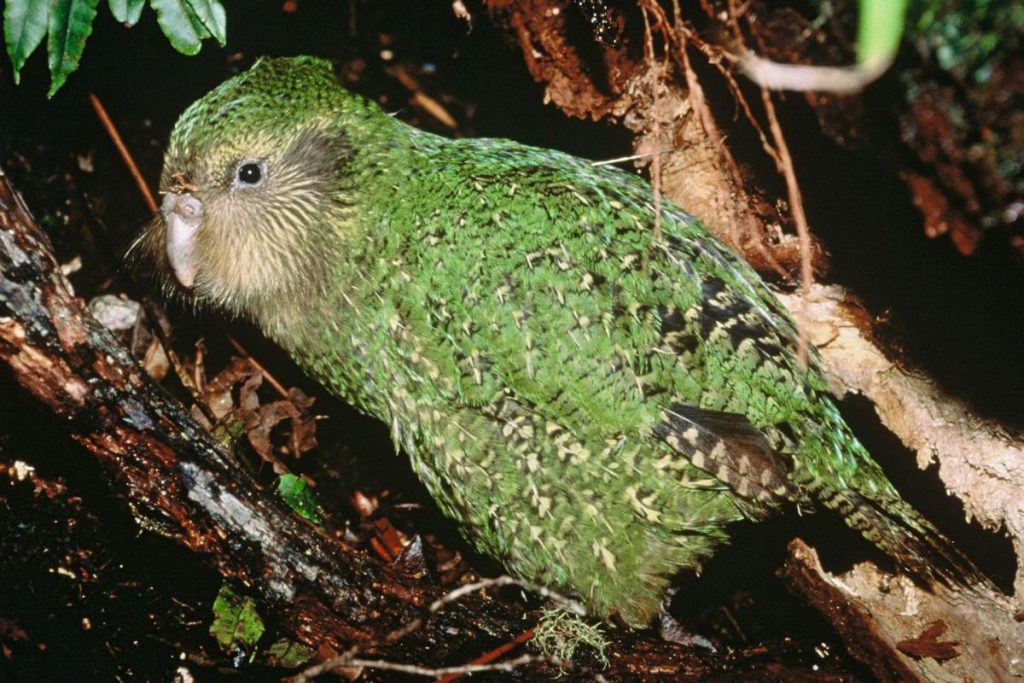
The kākāpō is more than just another bird — it is one of the most distinctive and remarkable parrots on Earth. Weighing up to around 4 kilograms (nearly 9 pounds), it is the heaviest parrot species in the world and one of the very few birds that cannot fly. Instead, kākāpō walk and climb using strong, muscular legs, and they use their wings only for balance or to right themselves when descending trees. Their frog‑like gait and soft, mossy green and brown feathers help them blend into their forest habitat.
Kākāpō are also nocturnal, meaning they are active at night and rest during the day. Their name — “kākāpō” — comes from the Māori language and can be translated roughly as “night parrot,” reflecting this behavior.
Biologically, they are long‑lived birds, with lifespans that may exceed 90 years. Males and females both take several years to reach sexual maturity, with males typically breeding in their teens and females often not breeding until around six years old.
Why Kākāpō Don’t Breed Every Year
One of the most intriguing aspects of kākāpō biology is their irregular breeding cycle. Unlike many birds that breed annually, kākāpō only reproduce once every two to four years, and only under very specific environmental conditions. The key driver of their breeding is the masting — or mass fruiting — of the rimu tree (Dacrydium cupressinum), one of New Zealand’s native conifers.
During a mast year, rimu trees produce an extraordinary abundance of fruit, which provides a rich source of nutrition for wildlife. Kākāpō depend on this fruit because it is high in essential nutrients like vitamin D and calcium, which are crucial for egg production, chick development, and overall breeding success. In years with poor rimu fruit production, kākāpō simply don’t breed because there isn’t enough food to support nesting females and raising chicks.
Consequently, there were no significant breeding events recorded in the most recent years because the rimu trees did not produce enough fruit — and without that trigger, the birds didn’t enter a breeding cycle. This explains the four‑year gap between breeding seasons that conservationists have been waiting so long to see broken.
2026: A “Mast” Year and Renewed Hope
In late 2025 and into early 2026, the rimu trees experienced a mast fruiting event. This outstanding fruit abundance caught the attention of conservation scientists and triggered a response from the kākāpō population: breeding began again. Remote monitoring equipment detected mating activity starting around December 29, 2025, marking the first breeding season in four years.
The Department of Conservation (DOC) in New Zealand has said that this season could be the biggest breeding season since the recovery program began over 30 years ago. With approximately 236 kākāpō currently alive — including around 83 breeding‑age females — the conditions are excellent for a potentially record number of chicks.
Some notable features of this breeding season include:
https://youtu.be/jlFVBSwa4v8?si=DHa–jLw0Y1jg52X
-
Simultaneous breeding across all three main breeding islands where kākāpō are managed.
-
Several females breeding for the first time, increasing the number of potential nests and eggs.
-
Expectations that over 50 chicks could be produced this season — possibly the highest number ever recorded.
These developments offer renewed optimism for the species, which remains critically endangered despite decades of dedicated recovery efforts.
Conservation History: Saving a Species
The story of kākāpō conservation is one of persistence, innovation, and partnership. At the turn of the 20th century, the arrival of humans in New Zealand brought catastrophic changes to ecosystems. Introduced predators such as stoats, rats, and cats — none of which the flightless kākāpō had ever encountered in evolutionary history — decimated the species. Habitat loss and hunting compounded the problem, and by the 1990s, fewer than 60 wild individuals remained.
In response to this crisis, the New Zealand government and Māori tribal partners initiated the Kākāpō Recovery Programme in 1995. Comprehensive conservation measures included:
-
Relocating all remaining kākāpō to predator‑free islands, where invasive mammals had been eradicated or controlled.
-
Using radio transmitters and remote cameras to track individual birds and monitor nesting.
-
Providing supplementary feeding in low mast years to maintain health and condition.
-
Hand‑rearing fragile chicks when needed and assisting with artificial insemination to maintain genetic diversity.
Thanks to these intensive efforts, the population has increased from around 51 individuals in 1995 to over 230 today. While still critically endangered, this rebound demonstrates that thoughtful, science‑based conservation can make a tangible difference for even the most vulnerable species.
Breeding Behavior and Lek Mating
Kākāpō have one of the most unusual mating systems among parrots and birds in general. Males gather at traditional display sites known as leks, where they excavate shallow depressions in the ground and emit deep, rhythmic “booming” calls to attract females. These low‑frequency booms can travel long distances through the forest and play a central role in female choice.
Females visit these male display sites to select a mate. Once mating occurs, the female is solely responsible for incubating the eggs and raising the chicks, often without assistance from the male. This system — combined with the long intervals between breeding seasons — makes successful reproduction rare and unpredictable, even in good years.
Challenges Ahead
Despite the positive developments of this year’s breeding season, kākāpō conservation still faces significant challenges:
-
Limited habitat: Currently, all managed kākāpō live on a small number of predator‑free islands. Finding safe, suitable land on the New Zealand mainland will be crucial for future expansion of the species.
-
Genetic diversity: With such a small population, maintaining genetic health and preventing inbreeding remain priorities for scientists.
-
Breeding triggers: Because kākāpō only breed in mast years, conservation planning must account for long, unpredictable intervals between these events.
Yet, conservationists remain hopeful, and with each successful breeding season, the prospects for a self‑sustaining kākāpō population grow stronger.
Conclusion
The recent news of kākāpō breeding again — after four years without such activity — is a cause for celebration in the world of conservation and biodiversity. Triggered by an extraordinary bumper crop of rimu fruit, this breeding season offers the potential for record numbers of chicks and a significant boost to a species that once teetered on the edge of extinction.
More importantly, it highlights both the challenges and successes of species recovery programs. The kākāpō’s story reminds us that with dedicated effort, scientific knowledge, and collaboration, even the rarest and most threatened creatures can be given a fighting chance to survive and thrive. In a world where biodiversity loss continues at an alarming rate, stories like this offer hope for the future.
Read Also: Keep your face towards the sunshine and shadows will fall behind you
Watch Also: https://www.youtube.com/@TravelsofTheWorld24





Leave a Reply