
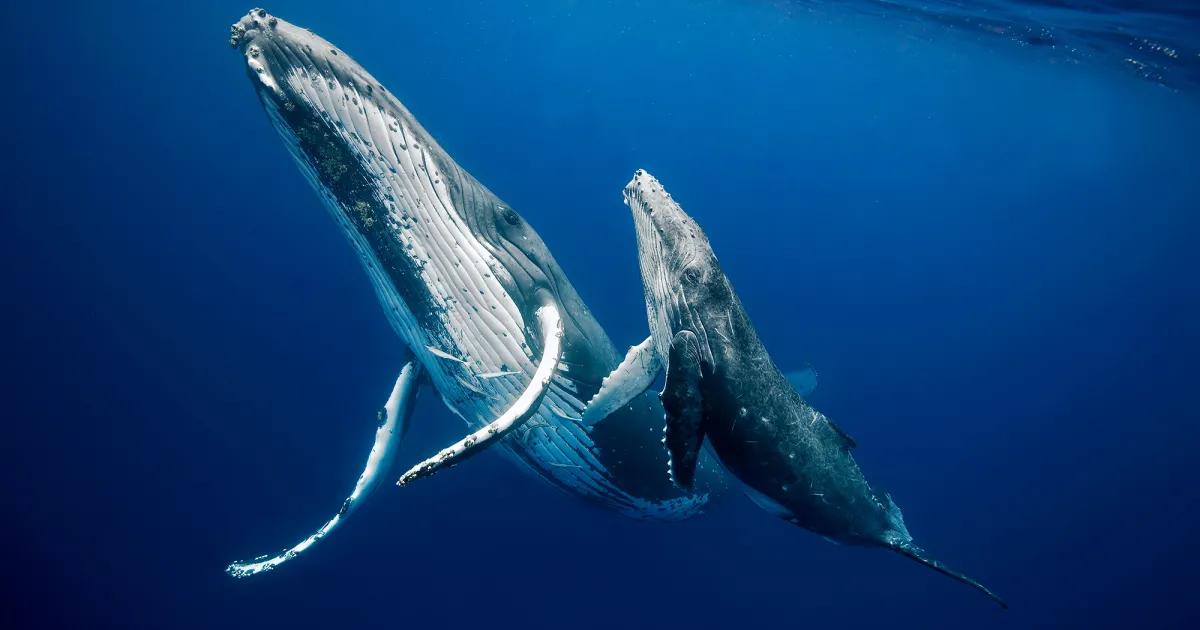
Whales are among the most magnificent creatures on Earth. These marine mammals capture human imagination not only for their immense size but also for their intelligence, social behaviors, and ecological importance. Ranging from the gigantic blue whale, the largest animal to have ever lived, to the smaller and more elusive species, whales inhabit nearly every oceanic environment on the planet. Understanding whales involves exploring their biology, evolution, behavior, ecological roles, and interactions with humans. This essay delves into the fascinating world of whales, tracing their journey from ancient land-dwelling ancestors to the ocean giants we know today, their adaptation to marine life, their importance in ecosystems, and the challenges they face in the modern world.
Evolutionary History of Whales
Whales belong to the order Cetacea, which includes dolphins and porpoises. They are mammals, meaning they share characteristics such as warm-bloodedness, breathing air through lungs, live births, and nursing their young with milk. The evolutionary journey of whales is remarkable because it represents a dramatic transition from land to sea.
Fossil evidence indicates that whales evolved from terrestrial mammals around 50 million years ago during the Eocene epoch. Early ancestors, such as Pakicetus, were land-dwelling predators with adaptations for hunting in shallow water. Over millions of years, these early whales developed streamlined bodies, reduced hind limbs, and tail flukes, allowing them to navigate marine environments efficiently. Today’s whales represent the culmination of millions of years of adaptation to life in the oceans.
Classification of Whales
Whales are divided into two main suborders: Mysticeti (baleen whales) and Odontoceti (toothed whales).
-
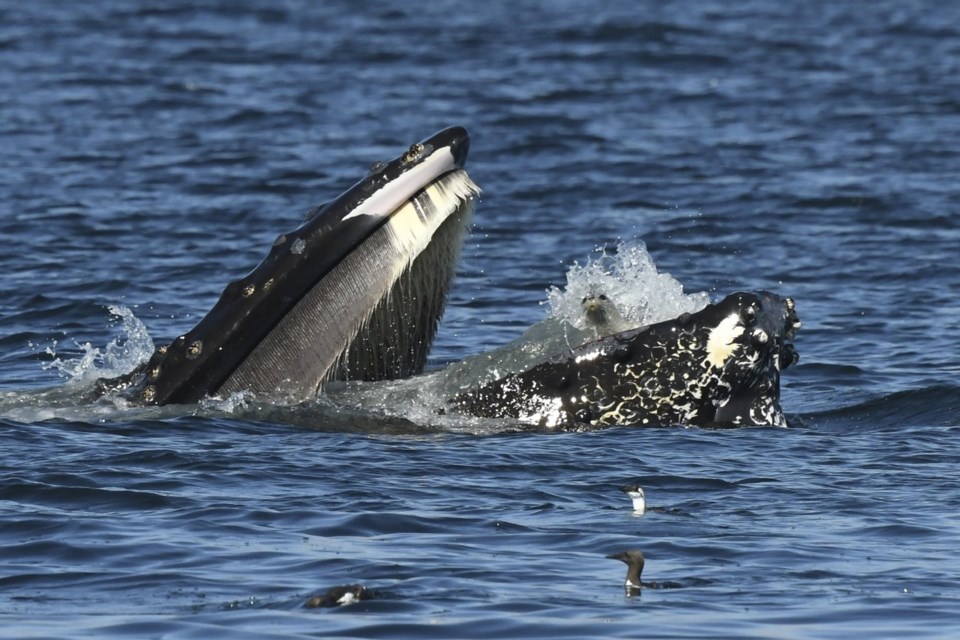
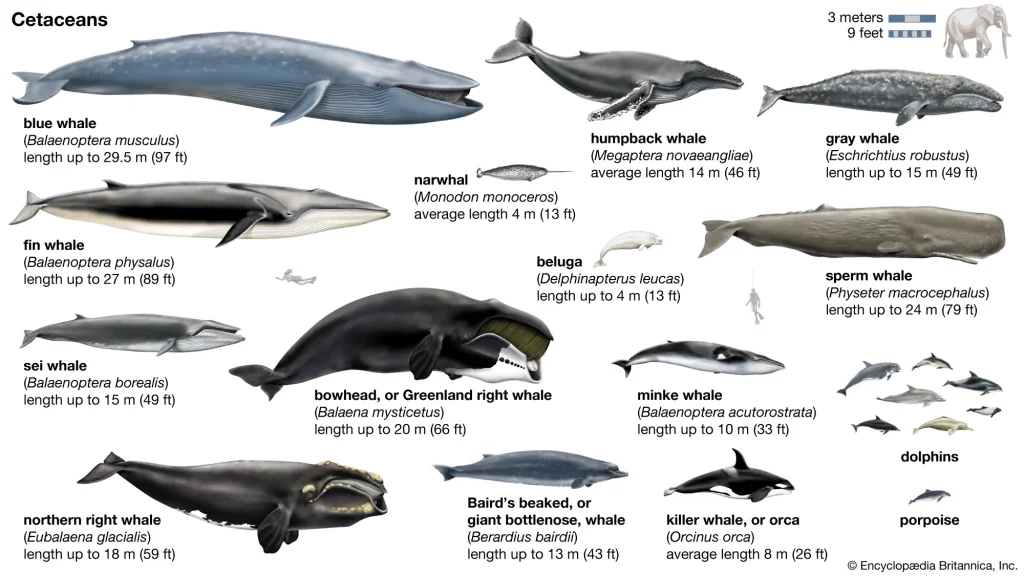
Baleen Whales (Mysticeti): These whales have baleen plates instead of teeth, which they use to filter food such as krill, plankton, and small fish from seawater. Famous examples include the blue whale (Balaenoptera musculus), humpback whale (Megaptera novaeangliae), and gray whale (Eschrichtius robustus). Baleen whales are generally larger than toothed whales, and many undertake long migrations to feed and breed.
-
Toothed Whales (Odontoceti): This group includes whales with teeth, such as sperm whales (Physeter macrocephalus), orcas (killer whales, Orcinus orca), and beaked whales. Toothed whales are typically predators, hunting fish, squid, and other marine animals. Many of them use sophisticated echolocation to locate prey, navigate, and communicate in deep or murky waters.
Understanding these two groups provides insight into how whales evolved different feeding strategies and behaviors to thrive in diverse marine habitats.
Physical Characteristics
Whales exhibit extraordinary physical adaptations to life in water. Their streamlined bodies reduce drag and allow efficient swimming. Most whales have a thick layer of blubber that provides insulation in cold waters, stores energy, and aids buoyancy. Their flippers, dorsal fins, and tail flukes enable precise movement and powerful propulsion through the ocean.
The size of whales is perhaps their most striking feature. Blue whales can reach lengths of over 30 meters (98 feet) and weigh around 200 tons. Even smaller species, such as the minke whale (Balaenoptera acutorostrata), can grow up to 10 meters (33 feet) and weigh several tons. Despite their enormous size, whales are capable of impressive agility and speed in water.
Another fascinating aspect is their sensory adaptation. Baleen whales primarily rely on low-frequency sounds to communicate over long distances, while toothed whales employ echolocation, emitting sound waves and listening for echoes to detect objects, prey, and navigation cues in complete darkness.
Behavior and Social Structure
Whales are highly social animals. Many species form pods or groups, which can consist of family members, mates, or larger social networks. Social structures vary depending on species. For instance, sperm whales live in matrilineal groups of females and young, while males may travel alone or in bachelor groups. Orcas are known for complex social organization, cooperative hunting, and even cultural behaviors, where distinct pods have unique hunting techniques and vocalizations passed down generations.
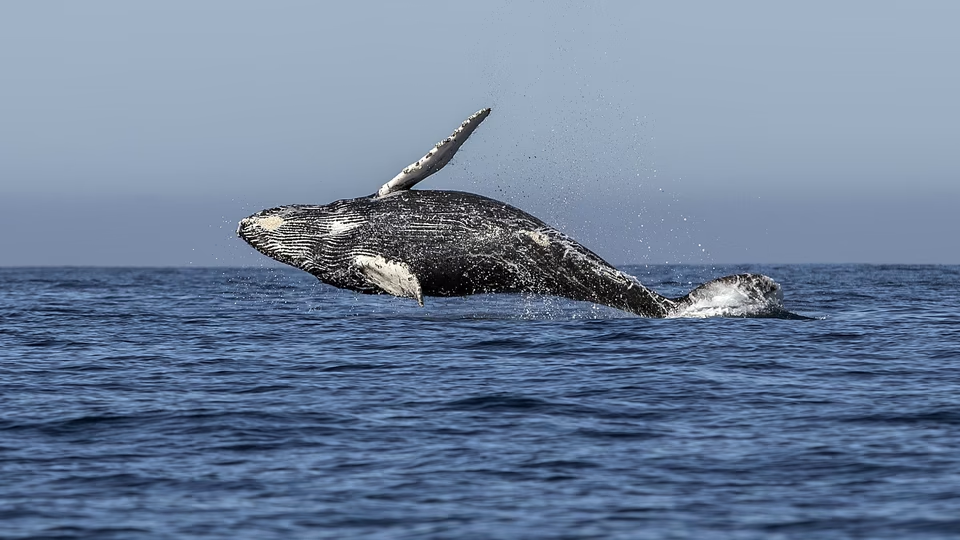
Communication is central to whale behavior. Songs of humpback whales, for example, are elaborate sequences of sounds that can last for hours and are thought to play roles in mating and social bonding. Toothed whales use clicks, whistles, and pulsed calls for echolocation and social interaction. The cognitive abilities of whales are advanced, with problem-solving skills, memory, and emotional intelligence comparable to some land mammals.
Migration is another notable behavior. Many whale species undertake extensive seasonal migrations to exploit feeding and breeding grounds. Gray whales, for example, migrate over 16,000 kilometers annually between feeding areas in the Arctic and breeding lagoons off Mexico. These migrations are vital for survival, as they allow whales to access nutrient-rich waters while reproducing in safer, warmer environments.
Diet and Ecological Role
Whales occupy key roles in marine ecosystems. Baleen whales are primarily filter feeders, consuming vast quantities of plankton and small fish. Through feeding, they help regulate populations of marine organisms, maintaining ecological balance. Toothed whales, as apex predators, influence the structure of marine food webs by preying on fish, squid, and other marine mammals.
Whales also contribute to nutrient cycling. The “whale pump” is a phenomenon where whales feed at depth and release nutrients near the surface through fecal matter, enriching surface waters and stimulating the growth of phytoplankton. Phytoplankton, in turn, supports marine food chains and plays a crucial role in carbon sequestration, helping regulate global climate. In this way, whales indirectly support entire ocean ecosystems and contribute to the health of the planet.
Human Interactions
Humans have had complex interactions with whales throughout history. Early societies hunted whales for meat, oil, and baleen, using primitive techniques for survival. With technological advances in the 18th and 19th centuries, commercial whaling intensified, leading to dramatic population declines in many species. Blue whales, humpback whales, and right whales were pushed to the brink of extinction due to overhunting.
The 20th century saw a growing awareness of the ecological importance of whales. International regulations and organizations, such as the International Whaling Commission (IWC), were established to control whaling and promote conservation. Many whale species have since made remarkable recoveries, although some remain endangered.
Whales also play cultural and economic roles. In indigenous cultures, whales are revered as sacred animals, symbols of strength and endurance. Whale watching has become a global industry, attracting millions of tourists each year and promoting marine conservation awareness.
Threats to Whales
Despite conservation efforts, whales face ongoing threats. Human activities such as ship strikes, entanglement in fishing gear, pollution, and habitat degradation pose significant risks. Climate change affects ocean temperatures, currents, and prey availability, impacting whale feeding and migration patterns. Noise pollution from shipping and industrial activities interferes with whale communication and echolocation, which can lead to disorientation and stress.
Some species, like the North Atlantic right whale, remain critically endangered, with population numbers in the hundreds. Continuous monitoring, legislation, and global cooperation are essential to protect whale populations and ensure their survival in the face of modern challenges.
Conservation and Future Prospects
Conservation of whales involves multiple strategies. Protecting critical habitats, regulating shipping lanes, implementing sustainable fishing practices, and monitoring populations are key approaches. Public education and ecotourism also foster appreciation and support for whale conservation. Advances in technology, such as satellite tracking and acoustic monitoring, provide valuable data for understanding whale behavior and threats.
The future of whales depends on global commitment to preserving ocean health. Protecting whales is not just about conserving a single species; it is about safeguarding marine ecosystems, cultural heritage, and planetary ecological balance. Whales serve as indicators of ocean health, reminding humanity of the interconnectedness of life and the importance of responsible stewardship.
Conclusion
Whales are extraordinary beings that inspire awe, curiosity, and respect. Their evolution, adaptations, complex behaviors, and ecological roles highlight the marvels of life in the ocean. From the massive blue whale to the cunning orca, whales demonstrate intelligence, social complexity, and resilience. Human activities have shaped their history, both through exploitation and conservation, revealing the profound impact we have on other species.
Understanding and protecting whales is crucial for the health of marine ecosystems and the future of our oceans. As giants of the sea, they remind us of the wonder of the natural world, the importance of ecological balance, and our responsibility to ensure that these majestic creatures continue to thrive for generations to come.
Read Also: Keep your face towards the sunshine and shadows will fall behind you
Watch Also: https://www.youtube.com/@TravelsofTheWorld24













Leave a Reply