
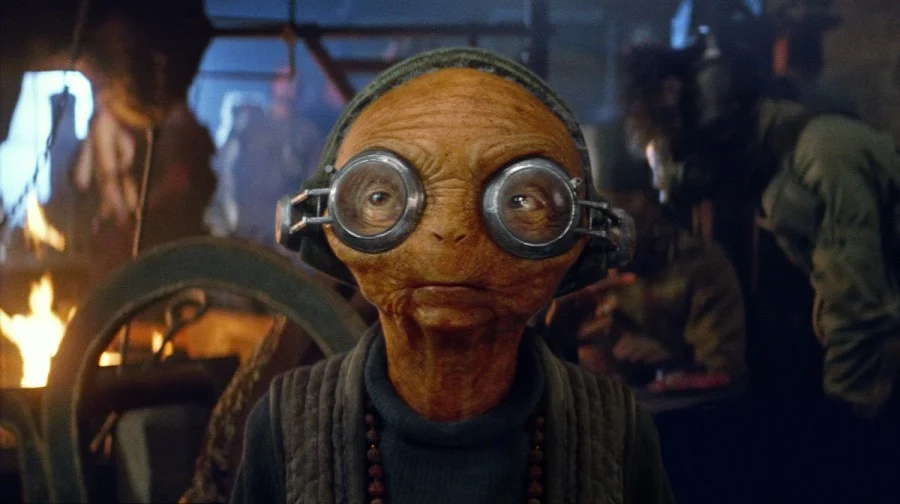
The Force Awakens hit theaters in 2015, fans marveled at the return of the franchise’s iconic aesthetic while also being introduced to a host of new aliens and creatures. From the mischievous Teedo scavengers on Jakku to the intimidating Abednedo officer in the Resistance, the creatures were as memorable as the heroes themselves.
Behind the magic of these creations is Neal Scanlan, the legendary creature designer and animatronics specialist, whose work on the film was nothing short of groundbreaking. In a detailed discussion about the challenges faced during production, Scanlan shared insights into how these creatures came to life, the obstacles of practical effects in the modern blockbuster era, and the creative process of blending practical effects with CGI to maintain the Star Wars feel.
The Vision: Bringing New Aliens to Life
One of Scanlan’s primary goals on The Force Awakens was to maintain the tactile, real-world feel of Star Wars aliens, reminiscent of the original trilogy. He explained:
“Star Wars has always been about practical effects. Audiences respond to the physicality of the creatures. You can feel their presence in a way CGI alone can’t replicate.”
This meant creating entirely new species while ensuring they felt organic to the Star Wars universe. Each alien needed to have distinct personality, movement, and cultural hints, whether it was a sly scavenger or a towering officer of the First Order.
Challenges in Design
Scanlan faced several unique challenges when designing the new aliens:
-
Maintaining Legacy Style: Every creature had to feel like it belonged in the Star Wars universe, bridging the gap between classic designs and modern aesthetics.
-
Practical Constraints: Animatronics, puppets, and prosthetics needed to function reliably on set, often in extreme weather conditions or during physically demanding stunts.
-
Integration with CGI: Certain movements or effects could not be achieved practically, so Scanlan collaborated closely with digital artists to blend animatronics seamlessly with computer-generated enhancements.
-
Actor Interaction: Unlike pure CGI creations, the aliens needed to react naturally to human actors, providing believable eye-lines and interactions.
Scanlan described the balance as a tightrope walk: “We wanted creatures to feel alive without breaking the illusion of the world. That meant every twitch, every blink, had to be carefully choreographed.”
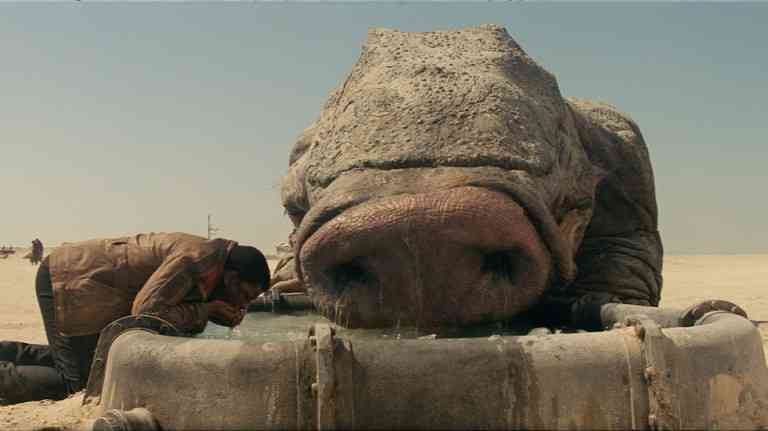
Teedos on Jakku: Small but Memorable
The Teedo scavengers, the small, hooded creatures scavenging wreckage on Jakku, were among the first aliens Scanlan’s team designed. Despite their diminutive size, they posed a unique challenge:
-
Articulation: The Teedos required intricate animatronic mechanisms to allow lifelike movements of limbs, heads, and eyes.
-
Performance: Puppeteers had to coordinate multiple points of articulation to give the creatures a cohesive personality.
-
Integration: Scenes with Rey had to feel interactive, requiring precise timing and coordination between the puppeteers and the actors.
The result was a group of aliens that conveyed curiosity, mischief, and resourcefulness, adding life and depth to the desert planet’s environment.
The Larger, More Intimidating Aliens
Creating larger alien characters, such as the towering Abednedo officer, presented a completely different set of challenges:
-
Size and Weight: Building suits and animatronics large enough to convey presence while allowing actors to perform safely required innovative engineering.
-
Movement Realism: The team had to design naturalistic gaits and gestures, avoiding any sense of stiffness.
-
Detail and Texture: From skin folds to clothing, every detail had to be practical yet visually striking on the large cinema screen.
Scanlan noted, “Bigger aliens are more than just costumes. They have to inhabit the space convincingly, otherwise they risk breaking the audience’s suspension of disbelief.”
Working with J.J. Abrams
Collaboration with director J.J. Abrams was crucial to achieving the balance between practical effects and modern cinematic expectations. Scanlan described Abrams as deeply involved in creature development, often providing feedback on how an alien’s expression or movement would translate emotionally to the audience.
“J.J. wanted creatures that felt both grounded and cinematic. He understood that a great alien is not just scary—it’s memorable, it has character, and it tells a story without words.”
This philosophy extended to every new alien species, ensuring that practical effects were always informed by story and performance, rather than mere spectacle.
Read Also: Keep your face towards the sunshine and shadows will fall behind you
Integrating Practical Effects with CGI
One of the modern challenges Scanlan faced was ensuring that practical effects and CGI worked seamlessly together. While practical puppets were often used on set for actors to interact with, CGI was applied in post-production to:
-
Enhance movement impossible with animatronics
-
Smooth mechanical limitations
-
Add additional environmental interactions
Scanlan emphasized that CGI was always secondary: the goal was never to replace the tactile feel but to augment it where necessary. This careful blending allowed aliens to feel real, physically present, and responsive in ways purely digital creations often cannot.
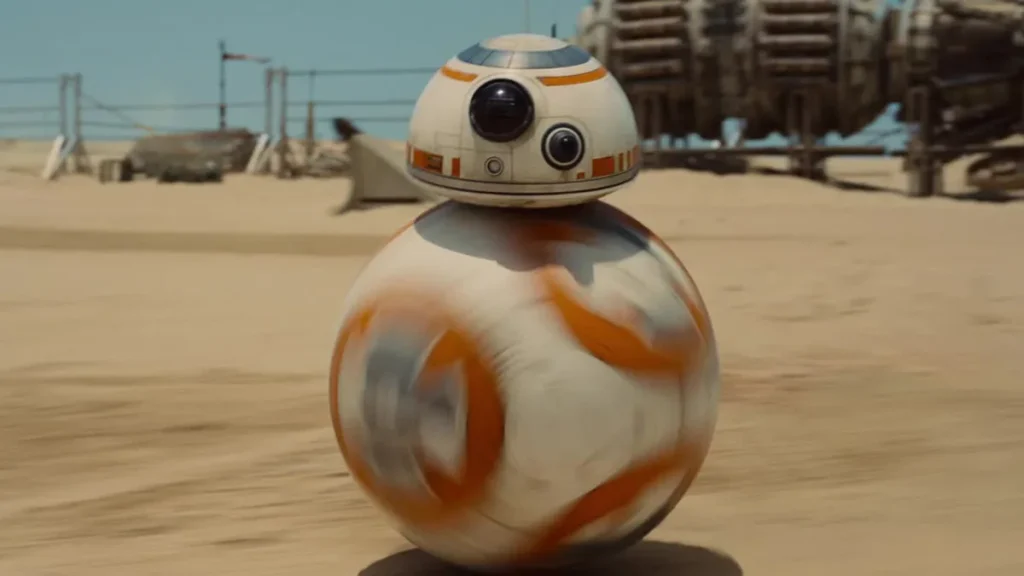
The Creative Team
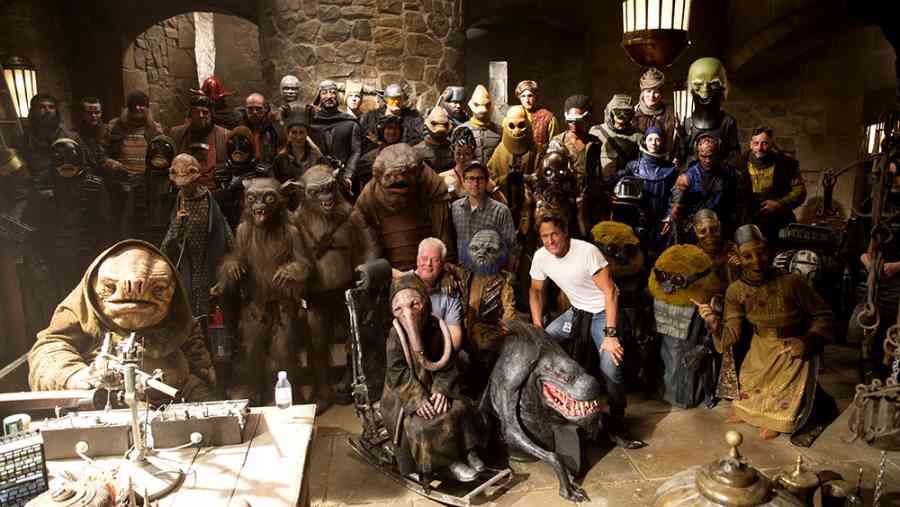
Scanlan credited a large, multidisciplinary team for bringing the aliens to life:
-
Sculptors and mold-makers: Crafted intricate alien designs in clay and silicone
-
Animatronics engineers: Built precise mechanical systems for movement
-
Puppeteers: Operated animatronics live on set
-
Visual effects artists: Refined and enhanced movements digitally
-
Costume designers: Ensured that clothing, armor, or uniforms integrated naturally with the alien body
The teamwork allowed Scanlan to realize visions that spanned both art and engineering, blending creativity with precision.
Challenges on Set
Working on a live-action blockbuster comes with logistical obstacles. Scanlan described some memorable difficulties:
-
Extreme weather on location: Desert shoots on Jakku made puppeteering and animatronics challenging.
-
Space and mobility constraints: Large alien suits had to navigate tight corridors and sets while staying safe for actors.
-
Timing for stunts: Coordinating alien movement with explosions, stunts, or action sequences required precise choreography.
Despite these challenges, Scanlan emphasized the rewards of seeing creatures move organically on camera, noting it’s always more satisfying than CGI alone.
Fan Reactions and Legacy
The creatures of The Force Awakens were met with enthusiastic fan reception, with many noting how practical effects made the aliens feel more real. Scanlan pointed out that this attention to tactile design honors the legacy of the original trilogy, ensuring that new aliens feel like part of the same universe while remaining fresh and innovative.
“Fans respond to physical creatures because they occupy space and have weight. That’s something digital monsters can’t fully replicate.”
The success of the aliens reinforced the importance of practical effects in modern cinema, inspiring other franchises to reconsider the balance between CGI and tangible designs.
Continuing Innovation
Scanlan noted that working on The Force Awakens pushed his team to innovate in both design and technique. Some innovations included:
-
Advanced animatronics capable of subtle facial expressions
-
Lightweight alien suits allowing for extended performance
-
Modular designs for rapid costume changes and stunt integration
These advancements not only enhanced the current film but also set the stage for future Star Wars projects, where practical effects continue to play a central role.
Reflections on the Process
Looking back, Neal Scanlan described the process of creating aliens for The Force Awakens as both challenging and rewarding:
“Each creature presents a puzzle: how do we make it believable, functional on set, and visually striking? When it works, and you see actors react genuinely to the alien, it’s magical.”
He emphasized that collaboration, experimentation, and respect for the legacy of Star Wars were critical to the success of the creatures.
Conclusion: Practical Magic in Modern Blockbusters
Neal Scanlan’s work on The Force Awakens demonstrates the enduring power of practical effects in an era dominated by CGI. By combining traditional animatronics, puppetry, and cutting-edge design techniques, Scanlan and his team created aliens that feel alive, memorable, and cinematic.
For fans, the creatures are more than just visual spectacles—they are characters with presence, weight, and personality, contributing to the film’s immersive storytelling. Scanlan’s insights reveal the painstaking work and creativity behind every new alien, showing that even in blockbuster filmmaking, practical artistry remains irreplaceable.
Watch Also: https://www.youtube.com/@TravelsofTheWorld24







Leave a Reply