

In the age of social media, where moments can be magnified within seconds and opinions travel faster than facts, public figures often find themselves navigating storms they never intended to enter. Such was the case for Dr. Karri Turner Bryant, who recently became the center of an online firestorm following her appearance in what critics labeled a “nude dress.” What began as a fashion moment quickly escalated into a viral debate touching on modesty, faith, gender expectations, and public judgment.
Amid the noise, one voice stood firmly in her corner—her husband, Pastor Jamal Bryant. As reactions poured in from every corner of the internet, Dr. Bryant took a moment not to retreat, but to reflect, respond, and most notably, express gratitude for the unwavering support of what she affectionately called her “holy hubby.”
This episode has since evolved into a broader conversation about marriage, faith leadership, and the pressures placed on women in the public eye—especially those connected to religious institutions.
How the Viral Moment Began
The controversy erupted after Dr. Karri Turner Bryant attended a high-profile public event where she wore a form-fitting, skin-toned gown. While many praised her elegance and confidence, others quickly criticized the outfit, claiming it was inappropriate given her role as a pastor’s wife and a faith leader in her own right.
Within hours, images of the dress spread across social media platforms, sparking intense commentary. Supporters applauded her poise and autonomy, while detractors framed the look as controversial, using language that ranged from moral concern to outright condemnation.
What might have remained a fleeting fashion discussion instead became a viral debate, amplified by blogs, opinion threads, and reaction videos.
The Weight of Public Expectations on Faith-Adjacent Women
For women connected to religious leadership, the scrutiny often extends far beyond appearance. They are frequently expected to embody ideals of modesty, restraint, and symbolic perfection—standards that are rarely applied with the same intensity to men.
Dr. Bryant’s experience highlighted this imbalance. Critics weren’t merely reacting to a dress; they were reacting to what they believed she should represent.
The controversy raised a critical question: Who gets to define modesty, and why is it so often policed through women’s bodies?
Pastor Jamal Bryant Steps In
As the criticism intensified, Pastor Jamal Bryant addressed the situation directly. Rather than distancing himself or remaining silent, he publicly defended his wife, affirming her character, confidence, and right to self-expression.
His response stood out for its clarity and conviction. He emphasized that his wife is a fully realized individual—not merely an extension of his ministry—and that her worth is not measured by online opinions or outdated expectations.
In doing so, he reframed the narrative from controversy to commitment.
A Husband’s Support in the Public Arena
Public support between spouses is powerful, especially when delivered in the face of criticism. Pastor Bryant’s defense was not confrontational but principled, rooted in respect and partnership.
He reminded audiences that marriage is about unity and protection, not public image management. His words resonated with many couples who saw his response as an example of what it means to stand with one’s partner when scrutiny becomes overwhelming.
For Dr. Bryant, that support was deeply meaningful.
Dr. Karri Turner Bryant Breaks Her Silence
Following her husband’s remarks, Dr. Bryant addressed the situation herself—not with defensiveness, but with gratitude and grace. She thanked Pastor Jamal Bryant for his unwavering support, calling him her “holy hubby” and expressing appreciation for his willingness to protect her dignity in a public forum.
Her response struck a chord because it avoided fueling controversy. Instead, she spoke about love, partnership, and faith as lived experiences rather than performative ideals.
She acknowledged the pain that public judgment can bring, while also reaffirming her confidence in who she is and the values she holds.
Faith, Fashion, and Female Autonomy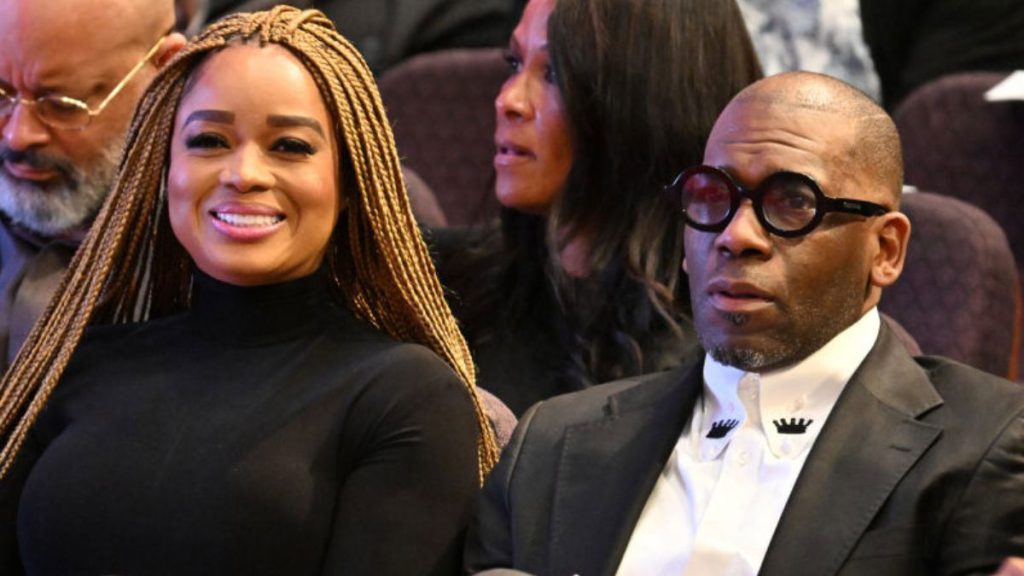
The incident reignited a long-standing conversation about the intersection of faith and personal expression. Can a woman of faith be stylish, confident, and modern without compromising her beliefs? Dr. Bryant’s supporters argue that the answer is unequivocally yes.
They point out that faith is not a uniform, nor is it expressed solely through conservative aesthetics. For many, spirituality is internal—a reflection of character, compassion, and integrity rather than outward appearance.
Dr. Bryant’s handling of the situation reinforced that perspective.
Social Media’s Role in Escalating Controversy
Social media thrives on immediacy and emotion, often rewarding outrage over understanding. In this case, screenshots and captions stripped context, turning a single outfit into a symbol loaded with assumptions.
What was lost in the discourse was nuance—the idea that individuals can hold faith and fashion, tradition and modernity, in the same space.
Dr. Bryant’s experience served as a reminder of how quickly narratives can spiral once the internet takes hold.
Supporters Push Back Against the Criticism
As criticism mounted, so did support. Many women, particularly those within faith communities, spoke out in defense of Dr. Bryant. They applauded her confidence and criticized the culture of shaming that often targets women’s appearance.
Some supporters noted that the controversy revealed deeper issues about control and expectation rather than genuine concern for spirituality.
The growing chorus of support helped shift the conversation from condemnation to dialogue.
Marriage as Partnership, Not Performance
One of the most powerful takeaways from the situation was the example set by Dr. and Pastor Bryant’s marriage. Rather than treating the controversy as a public relations problem, they approached it as partners.
Their responses reflected mutual respect, shared values, and emotional alignment—qualities that many observers found refreshing in a world where public couples are often pressured to perform perfection.
Their unity sent a message louder than any criticism.
Redefining the Role of a Pastor’s Wife
Historically, the role of a pastor’s wife has been narrowly defined, often burdened with unrealistic expectations. Dr. Bryant’s experience challenged that framework.
She is not only a spouse but a doctor, a leader, and an individual with her own voice. The controversy sparked renewed discussion about allowing women in faith spaces the freedom to exist as whole people rather than symbolic figures.
That conversation may prove to be the most lasting impact of the incident.
Grace Under Pressure
What ultimately distinguished Dr. Bryant’s response was her composure. In a moment when retaliation would have been easy, she chose gratitude. When silence might have been interpreted as guilt, she chose clarity.
Her ability to navigate public scrutiny with grace reinforced why so many people admire her—not because she is perfect, but because she is grounded.
A Teachable Moment for the Public
This episode became a teachable moment for audiences watching from the sidelines. It highlighted how quickly judgment can overshadow empathy and how important it is to consider context before criticism.
It also underscored the power of standing up for loved ones, particularly when public opinion becomes harsh.
Looking Ahead
As the viral moment fades, Dr. Karri Turner Bryant continues her work, her marriage, and her faith journey—unchanged at the core. The dress may have sparked debate, but it also sparked reflection, conversation, and, for many, growth.
For Pastor Jamal Bryant, the moment reinforced his role not just as a public figure, but as a husband committed to honoring and defending his partner.
Final Thoughts
In a digital culture quick to judge, Dr. Karri Turner Bryant’s response to the viral nude dress debacle stands out as a reminder that dignity, love, and faith are not defined by optics alone.
Her public thanks to her “holy hubby” was more than a gesture—it was a statement about partnership, respect, and resilience.
Read Also: Keep your face towards the sunshine and shadows will fall behind you
Watch Also: https://www.youtube.com/@TravelsofTheWorld24














Leave a Reply