
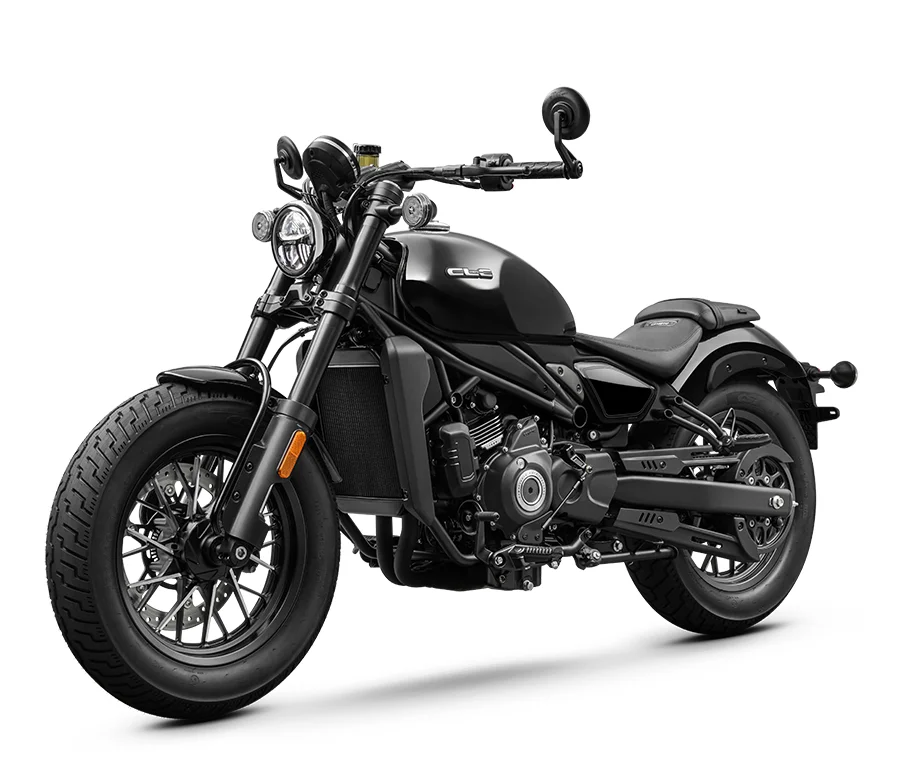
The **debate over allowing heavy motorcycles on Pakistan’s motorways — particularly the M-2 motorway that connects Lahore with Islamabad — has been one of the most talked-about road safety and rights issues in recent years. At various stages between 2018 and 2022 it saw court interventions, police notifications, proposed regulations and finally the overturning of earlier allowances by the Supreme Court. This article dives deep into the background, legal battles, safety concerns, motorcycle community reactions, conditions proposed for entry, and the current situation around heavy bikes and motorway access.
1. Background: Why Motorcycles Were Not Allowed on Motorways
From the very beginning, motorcycles — including heavy bikes — were banned from Pakistan’s motorways, including the M-1, M-2, M-3 and others. The rule was clear: high-speed limited access roads are meant only for vehicles of a certain speed and size for safety reasons.
According to the Motorway Ordinance 2000 and the Highways & Motorway Code, the National Highways and Motorways Police (NHMP) is empowered to regulate the type of traffic that is allowed on motorways; motorcycles had been categorized as vehicles that should not be mixed with other high-speed traffic.
This mirrored global practice: many countries restrict smaller vehicles — especially two-wheelers — from expressways, freeways and motorways due to the inherent risks of mixing them with heavy, fast moving multi-axle traffic.
2. The Motorcycle Community and Legal Challenges
Despite the official ban, biker groups and the heavy motorcycle community in Pakistan challenged this restriction in court. In late 2017 and 2018, clubs such as the Lahore Bikers Club filed petitions claiming that the Motorway Ordinance does not explicitly forbid motorcycles, and that denying access was unfair to riders who own high-power bikes and wish to travel long distances efficiently.
In December 2018 the Islamabad High Court (IHC) was hearing cases on whether motorcycles — especially heavy bikes above 500cc — could be allowed on the motorways on a regulated basis. One cricket edition of the court case noted that the Chief Justice observed during hearings that no accidents were reported when heavy bikes were previously permitted for a few years, questioning whether the ban was justified.
This gave rise to multiple legal notices and decisions that saw both sides pushing arguments — the biker community wanted access, while the NHMP and federal government highlighted safety concerns.
3. Court-Ordered Permission: Heavy Bikes Allowed Under Conditions
In late 2019, the Islamabad High Court issued orders allowing heavy bikes on the M-2 motorway — with specific conditions and restrictions attached. This was one of the most publicized developments on the issue at the time.
Key Conditions Included:
xr:d:DAFSYPB92OU:4,j:41471510119,t:22111908
-
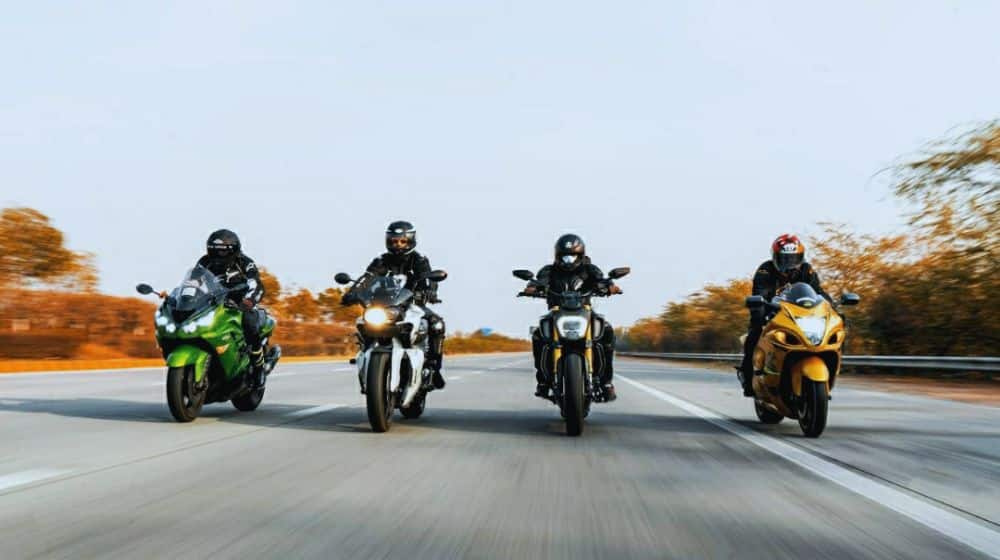
Only heavy bikes with engine capacity above 600cc were allowed to enter.
-
Riders had to be members of an official biker club, and had to submit their club membership and identity documents.
-
Entry and exit points were limited to Main Toll Plaza Islamabad and Ravi Toll Plaza Lahore — no other interchanges were permitted for entry or exit.
-
Riders had to register shifts to ride, so that NHMP officials could inspect bikes and paperwork.
-
Motorcycles had to be equipped with ABS (Anti-lock Braking System) and side mirrors, with reflective equipment on rear mudguards.
-
Riders were required to have valid licences and registration documents.
-
Pillion riding was prohibited.
-
Maximum permitted speed was capped at 120 km/h for bikes on the motorway.
-
Only up to four bikes were allowed in a convoy.
-
Any rider under 35 years of age was not permitted.
To help enforce this temporary permission, two reporting centers were set up — one at each toll plaza — where NHMP officials, alongside club representatives, recorded details and carried out inspections. Physical inspection ensured machines met safety compliance under the imposed rules before an entry pass was issued.
4. Why Motorcycles on Motorways Were Controversial
The courtroom and police debates reveal important rationales behind the restrictions:
a. Safety Risks
Authorities repeatedly argued that mixing motorcycles with high-speed cars, buses and heavy transport vehicles (HTVs) on a three-lane high-speed motorway is inherently dangerous. Motorcycles have less protection, are harder to see at high speeds, are more exposed to wind turbulence from large vehicles, and have much higher fatality rates in accidents.
The National Highways Safety Ordinance explicitly empowers the government to restrict specified vehicles on specified roads in public safety interests, and that is exactly the basis for the motorcycle ban.
b. Traffic Density
Motorways like the M-2 see heavy multi-directional traffic — passenger cars, buses, freight trucks — often traveling at high speed. The absence of a separate motorcycle lane and the volume of vehicles raised safety concerns that even experienced riders could not easily mitigate.
c. Previous Incidents
Part of the argument from authorities was based on violations during earlier trial periods when some bikes were allowed on motorways. Riders reportedly exceeded speed limits, engaged in risky manoeuvres, and violated motorcycle discipline, leading to enforcement crackdowns and revoking SOP privileges.
5. The 2022 Supreme Court Decision — Restricting Bikes Again
After the 2019 High Court order allowing heavy bikes under specific conditions, the matter ultimately reached Pakistan’s Supreme Court. In late 2022, the Supreme Court set aside the earlier High Court judgment that had permitted motorcycles on motorways.
In its ruling, the apex court found that the government and NHMP were within their legal rights to restrict motorcycles under Section 45 of the National Highways Safety Ordinance 2000. The court emphasized that the restrictions were justified in the interest of public safety and convenience, and not unconstitutional.
The Supreme Court noted that the safety risks associated with high-speed lanes, lack of dedicated motorcycle tracks, and historical data on risky riding practices justified the continued ban or restriction. The judge observed that the law authorizes the government to prohibit or restrict specific vehicle classes to ensure safety — and that included motorcycles on the motorways.
6. What About Current Status (2025)?
As of early 2025 and into 2026, the official policy remains that motorcycles — including heavy bikes — are not permitted on motorways like the M-2. Enforcement continues under the existing traffic and motorway regulations set by NHMP, and motorcycles do not pass through M-Tag toll systems like four-wheeled vehicles.
There have also been discussions in courts more recently (e.g., in 2024/2025) where the IHC was informed that authorities may consider giving training to riders before reconsidering the matter of permission for heavy bikes. However, there has been no definitive change in the ban so far.
7. Perspectives: Safety vs. Freedom
The debate over heavy bikes on motorways brings up two broad camps of opinion:
a. Motorcycle Enthusiasts’ View
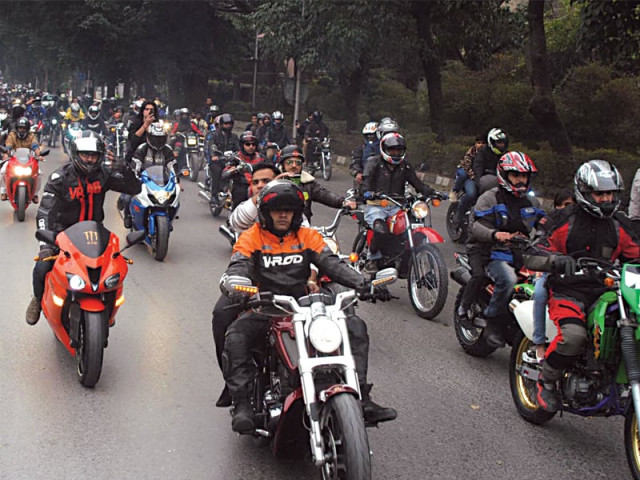
Many riders feel that they should be allowed on motorways just like other vehicles, especially heavy bikes with large engines that can safely maintain higher speeds. They argue that as long as riders follow safety rules, wear protective gear, and ride responsibly, they should not be excluded from the fastest and most efficient road links. They also point out that many countries allow large motorcycles on motorways and expressways provided riders comply with rules.
b. Government & NHMP View
Authorities have prioritized traffic safety and public risk mitigation. From their perspective, allowing motorcycles with inherently higher vulnerability to fatal accidents into mixed high-speed traffic poses unacceptable risk. NHMP and lawyers for the government relied on legal provisions that clearly empower them to restrict motorcycles for safety reasons.
8. Safety Campaigns and Enforcement Trends
Even aside from the motorway issue, motorway police across Pakistan are actively enforcing safety rules on highways and motorways. Campaigns against helmet violations, overspeeding, traffic rule infractions and unsafe riding behaviours are more common — indicating a policy trend towards strict enforcement to reduce accidents.
Motorway police announcements and updated fine lists for 2025-2026 show increasing penalties for unsafe driving and accidents, highlighting the seriousness with which authorities treat road safety.
9. Conclusion
The issue of granting heavy bikes entry to Pakistan’s M-2 motorway has traversed legal, safety, and public policy terrain over the past several years. Although the Islamabad High Court once ordered conditional permission for heavy motorcycles above 600cc to use the motorway in 2019, the Supreme Court’s 2022 judgment restored the ban, noting legitimate safety and legal grounds for restricting motorcycles.
As of now, no official policy change has fully authorized motorcycles — heavy or otherwise — to enter and use motorways like the M-2. Discussions about training or gradual policy shifts may continue in legal and public forums, but the official stance remains aligned with safety-oriented restrictions. This reflects a broader principle in Pakistan’s motorway policy: prioritizing collective safety on limited-access high-speed roads.
Read Also: Keep your face towards the sunshine and shadows will fall behind you
Watch Also: https://www.youtube.com/@TravelsofTheWorld24




Leave a Reply