
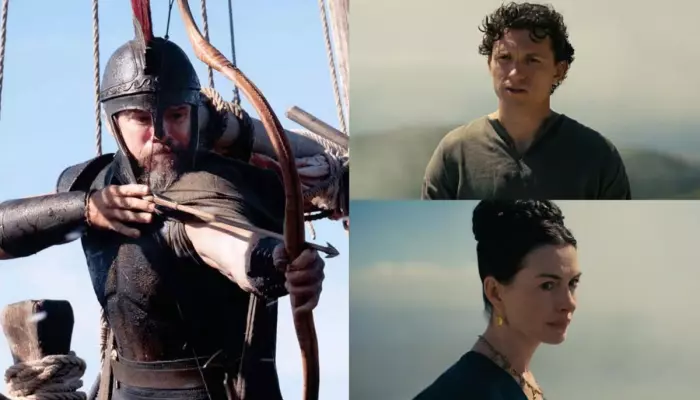
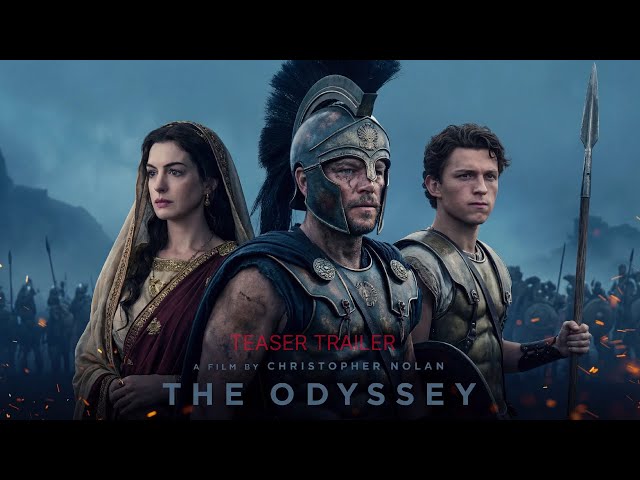
Christopher Nolan’s upcoming historical epic, The Odyssey, starring Matt Damon, has captured the imagination of audiences worldwide. As Nolan prepares to bring one of the most legendary stories in human history to the big screen, curiosity is rising about the real story behind the film. Rooted in Homer’s epic poem, The Odyssey tells the tale of Odysseus, King of Ithaca, and his perilous journey home after the Trojan War. Nolan’s adaptation promises to blend his signature cinematic style with one of the most enduring narratives of classical literature.
This article delves into the origins of The Odyssey, the story’s major characters, themes, and how Nolan’s film adapts this epic for contemporary audiences.
The Origins of The Odyssey
The Odyssey is an ancient Greek epic poem attributed to Homer, composed around the 8th century BCE. It is widely considered one of the greatest works of Western literature. The poem chronicles the adventures of Odysseus, a Greek hero, as he attempts to return home after the decade-long Trojan War.
The epic is structured in 24 books and blends mythology, heroism, and moral lessons. It explores themes of loyalty, perseverance, cunning, and the human struggle against fate and divine forces.
Homer’s work is foundational to Western literature, influencing countless stories, plays, and films throughout history. Its impact is felt in epic storytelling, character archetypes, and the integration of mythological and moral elements in narrative art.
Plot Summary of the Greek Epic
At its core, The Odyssey recounts the ten-year journey of Odysseus as he struggles to return to his home, Ithaca, after the fall of Troy. Along the way, he faces numerous trials and supernatural challenges, testing both his physical and mental resilience.
Key Events in the Original Epic
-
The Cicones and Lotus-Eaters: Odysseus and his men first encounter resistance after leaving Troy, including temptations that threaten to derail their journey.
-
The Cyclops Polyphemus: Odysseus blinds the Cyclops, angering the sea god Poseidon and setting the stage for many future hardships.
-
Circe and the Underworld: Odysseus receives guidance from the sorceress Circe and journeys to the underworld to seek prophetic advice.
-
The Sirens, Scylla, and Charybdis: These mythical creatures test Odysseus’s cunning and leadership, creating moments of life-or-death tension.
-
Return to Ithaca: After enduring countless trials, Odysseus finally returns home, confronting suitors who have overrun his palace and reuniting with his wife, Penelope.
Major Characters in the Epic
The Odyssey features a rich cast of human and divine characters, many of whom have become archetypes in literature and storytelling:
-
Odysseus: The clever, resourceful hero whose intelligence and perseverance drive the narrative.
-
Penelope: Odysseus’s loyal wife, symbolizing patience and fidelity.
-
Telemachus: Odysseus’s son, who matures over the course of the epic and ultimately aids his father.
-
Poseidon: The sea god who serves as Odysseus’s primary divine antagonist.
-
Athena: The goddess who assists Odysseus, representing wisdom and guidance.
-
Various mythological creatures: Including Cyclopes, Sirens, and Scylla, who create challenges and moral tests.
These characters provide depth, complexity, and universal appeal, offering Nolan rich material to adapt for modern cinematic storytelling.
Themes Explored in The Odyssey
Homer’s epic delves into themes that remain relevant today:
-
Perseverance and Resilience: Odysseus embodies the human spirit, enduring unimaginable obstacles to reach his goal.
-
Loyalty and Fidelity: Penelope’s unwavering faith highlights the strength of commitment and love.
-
Cunning vs. Strength: The poem emphasizes intelligence and strategy as much as physical prowess.
-
Fate and Free Will: Interactions with gods illustrate the tension between destiny and human choice.
-
The Hero’s Journey: Odysseus’s voyage is the archetypal journey of personal growth, struggle, and eventual triumph.
These timeless themes make The Odyssey adaptable for contemporary audiences, especially when combined with Nolan’s modern narrative sensibilities and cinematic vision.
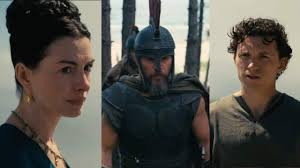
Christopher Nolan’s Adaptation: Bringing the Epic to Life
Nolan is renowned for combining visual spectacle with intricate storytelling, and The Odyssey is no exception. While remaining faithful to Homer’s narrative, Nolan reportedly introduces innovative storytelling techniques to enhance engagement:
-
Nonlinear storytelling: Similar to Inception and Tenet, Nolan may play with time to explore flashbacks and multiple perspectives.
-
Immersive practical effects: Emphasis on realism, especially in battle and ship sequences, enhancing the audience’s sense of immersion.
-
Character depth: Expanding the internal struggles of Odysseus, Penelope, and Telemachus to explore moral dilemmas and emotional journeys.
By balancing fidelity to the source material with cinematic innovation, Nolan’s adaptation aims to appeal to both literature enthusiasts and general audiences.
Matt Damon as Odysseus
Casting Matt Damon as Odysseus has generated excitement due to his proven ability to portray complex, heroic characters. Damon’s preparation reportedly involved:
-
Learning ancient Greek combat techniques and swordsmanship.
-
Physical conditioning to perform demanding action sequences.
-
Studying classical texts to understand Odysseus’s character, intellect, and emotional depth.
Damon’s portrayal is expected to blend heroism with vulnerability, capturing the essence of Homer’s multifaceted protagonist.
Supporting Cast and Characters in Nolan’s Film
In addition to Damon, the ensemble cast features:
-
Emma Stone as Penelope: Offering a strong, emotionally nuanced portrayal of Odysseus’s loyal wife.
-
Idris Elba as Telemachus: Portraying the coming-of-age arc of Odysseus’s son.
-
Rami Malek as an antagonist: Adding tension and intrigue to Odysseus’s journey.
-
Tilda Swinton in a surprise role: Likely portraying a divine or mystical figure to enhance the mythological aspect.
This combination ensures that both human drama and mythological grandeur are central to the cinematic experience.
Challenges of Adapting The Odyssey
Adapting such a seminal epic poses several challenges:
-
Condensing a lengthy narrative: Homer’s poem is extensive, requiring careful selection of key events to fit a modern film’s runtime.
-
Balancing realism and mythology: Presenting mythical creatures and divine interventions in a visually compelling yet believable manner.
-
Maintaining cultural and historical authenticity: Ensuring costumes, sets, and historical references reflect the time period accurately while serving cinematic aesthetics.
Nolan’s expertise in complex narratives and large-scale productions positions him well to navigate these challenges successfully.
Visual Effects and Production Design
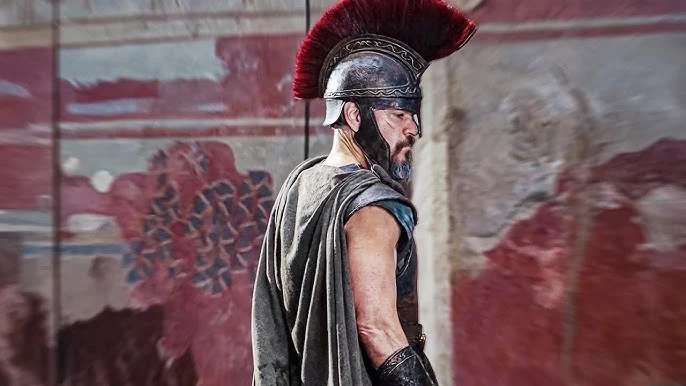
The trailer and behind-the-scenes reports highlight:
-
Practical sets combined with CGI: Ships, ancient cities, and natural landscapes built for realism.
-
Epic battle sequences: Utilizing motion capture and choreographed stunts to create immersive action.
-
Mythical creatures: Realized with state-of-the-art visual effects that honor traditional depictions while remaining visually striking.
Nolan’s commitment to tangible effects ensures a cinematic authenticity that resonates with audiences.
Audience Expectations and Fan Reactions
Fans of both Homer’s epic and Nolan’s filmography have expressed excitement:
-
Praising Damon’s portrayal of Odysseus as heroic yet vulnerable.
-
Anticipating a visually spectacular, emotionally rich epic adventure.
-
Discussing how Nolan might reinterpret the narrative, including non-linear storytelling or character-focused arcs.
Social media has exploded with fan theories, character predictions, and artistic renderings inspired by the trailer and promotional images.
Cultural Significance of Nolan’s Adaptation
Nolan’s The Odyssey represents more than a blockbuster:
-
Global storytelling: Bringing a classic Greek epic to a worldwide audience.
-
Cross-generational appeal: Engaging fans of classical literature, mythology, and modern cinema alike.
-
Educational impact: Encouraging viewers to explore Homer’s original work and understand its historical and literary significance.
This adaptation highlights how timeless narratives can continue to inspire new artistic interpretations across cultures.
The Hero’s Journey in Modern Cinema
Odysseus’s journey aligns with the archetypal hero’s journey, a structure prevalent in contemporary storytelling:
-
Call to adventure: Leaving Troy after the Trojan War.
-
Trials and tribulations: Facing mythical creatures, gods, and human adversaries.
-
Personal growth: Learning leadership, resilience, and humility.
-
Return home: Reuniting with Penelope and reclaiming Ithaca.
By adhering to these timeless principles while adding Nolan’s cinematic style, The Odyssey connects ancient storytelling with modern cinematic techniques.
Conclusion: Bridging Ancient Myth and Modern Cinema
Christopher Nolan’s adaptation of The Odyssey promises to be a cinematic event that bridges classical literature and modern filmmaking. With Matt Damon leading the cast, state-of-the-art visual effects, and Nolan’s visionary direction, audiences can expect a faithful yet innovative interpretation of one of history’s greatest epics.
By exploring themes of heroism, loyalty, perseverance, and the human struggle against fate, the film honors Homer’s timeless narrative while delivering a visually immersive and emotionally engaging experience.
For fans of mythology, epic adventure, and Nolan’s signature storytelling, The Odyssey represents a journey worth taking—a voyage across time, culture, and cinematic imagination.
Whether you are discovering Homer’s epic for the first time or revisiting it through Nolan’s lens, The Odyssey stands as a testament to the enduring power of storytelling, the universality of human struggle, and the magic of bringing ancient myths to life on the big screen.
Read Also: Keep your face towards the sunshine and shadows will fall behind you
Watch Also: https://www.youtube.com/@TravelsofTheWorld24






Leave a Reply