
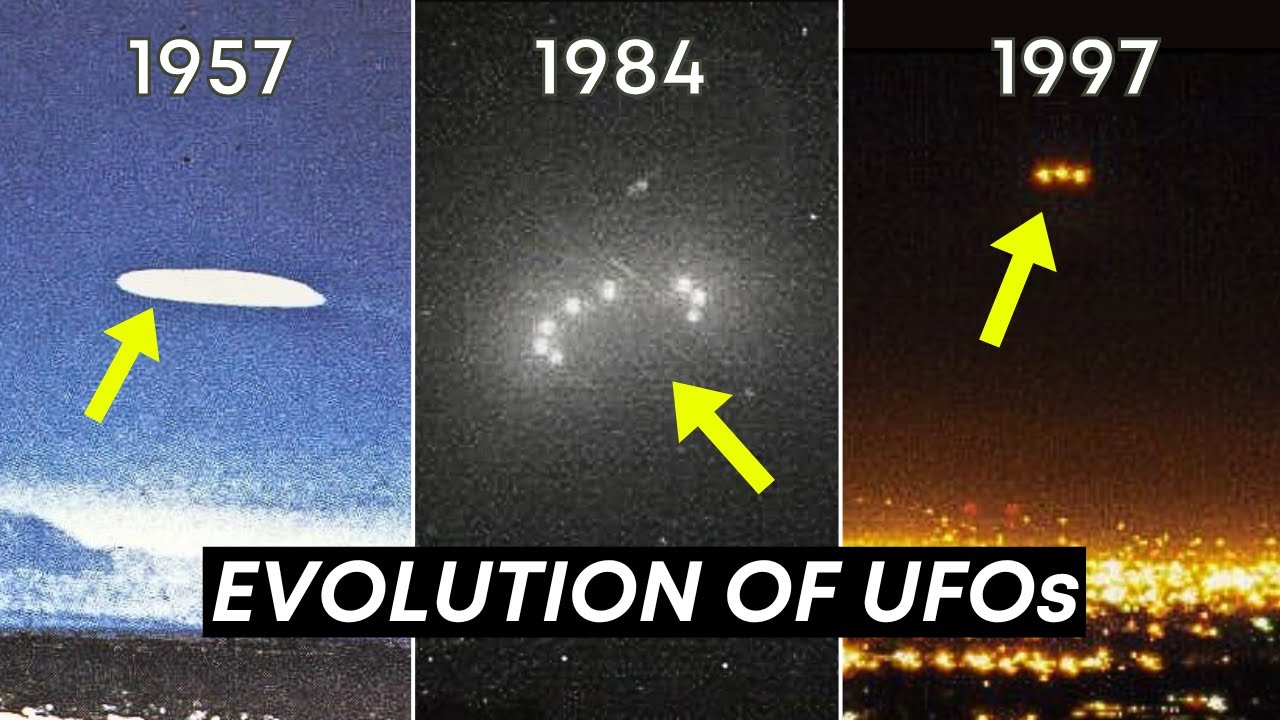
For decades, strange sightings in the sky have captivated public imagination, sparked intense debate, and at times prompted serious government investigation. What began with the now‑iconic term UFO — standing for Unidentified Flying Object — has evolved into the modern label UAP, short for Unidentified Anomalous Phenomena. This change reflects not just a shift in language, but a broader change in how governments, scientists, and the public approach the question of unknown aerial objects.
In this article, we’ll trace how the phenomenon of unidentified objects in the sky has been documented, studied, and redefined over time. From early Cold War sightings to recent Pentagon reports and congressional hearings, the journey from “little green men” to structured national security inquiries is as fascinating as it is complex.
The Origins: The 1940s and the Birth of UFO Culture
The modern UFO era is generally considered to have begun in 1947 with two key events that captured public attention:
1. Kenneth Arnold’s Sighting
In June 1947, pilot Kenneth Arnold reported seeing nine objects flying at incredible speed near Mount Rainier in Washington state. His description of their movement — “like a saucer skipping across water” — led newspapers to coin the term flying saucers. This description quickly entered the public lexicon and helped spark widespread reporting of similar sightings.
2. Roswell Incident
Shortly after Arnold’s report, in July 1947, an object crashed near Roswell, New Mexico. Initial military statements suggested a “flying disc,” but this was soon walked back, and the object was identified as part of a secret high‑altitude balloon program. Despite the later explanation, Roswell became a foundational event in UFO lore and remains embedded in the broader cultural story of extraterrestrial speculation.
These early moments not only introduced the public to UFOs but rooted them in folklore, conspiracy, and Cold War anxieties — two themes that would persist for decades.
Government Studies: From Secrecy to Systematic Research
Project Sign and Its Successors
As sightings increased, the U.S. military launched formal investigations:
-
Project Sign began in 1947 as the first attempt to evaluate UFO reports systematically.
-
In 1949, it was followed by Project Grudge, which took a more skeptical approach and largely sought to dismiss sightings as misidentifications of conventional objects.
-
From 1952 to 1969, the U.S. Air Force ran Project Blue Book, the most comprehensive official UFO study of the era. Blue Book collected and analyzed thousands of reports but ultimately concluded that most sightings were explainable and posed no threat to national security, leading to its termination in 1969.
Despite ending Project Blue Book, interest in aerial mysteries never truly disappeared — it just went underground or shifted into new frameworks.
From “UFO” to “UAP”: Changing Language, Changing Perspectives
Historically, the term UFO carried extraordinary cultural baggage — from alien invasion films to conspiracy theories. In the 21st century, however, military and scientific communities began to prefer the term UAP (Unidentified Anomalous Phenomena) to avoid premature assumptions about extraterrestrial origins and to focus the conversation on anomalous behavior and national security concerns rather than extraterrestrial life.
This change helped legitimize the subject in policy and research fields, leading to more serious government discourse about unidentified objects.
U.S. Government Engagement in the 21st Century
AATIP and the Deepening of Interest
In the 2000s, the U.S. government began a series of less‑publicized investigations into UFOs/UAPs. A notable effort was the Advanced Aerospace Threat Identification Program (AATIP), funded from 2007 to 2012 to study anomalous sightings and potential threats. Although formally ended, reports suggest that interest and some investigatory work continued afterward.
The UAP Task Force and AARO
By 2020, the Department of Defense established the Unidentified Aerial Phenomena Task Force (UAPTF), which evolved into the All‑domain Anomaly Resolution Office (AARO) in 2022. AARO now serves as a centralized government office dedicated to collecting, analyzing, and tracking UAP encounters across air, sea, space, and cyber domains.
According to AARO data, the number of reported sightings has surged — with over 1,600 reports processed by 2024 — and a subset remains unexplained after analysis. In many cases, reports are resolved as conventional objects (such as balloons, drones, or environmental phenomena), but some still defy easy explanation.
These efforts reflect a shift from dismissing UFO reports as folklore to systematic, structured data collection and evaluation.
Recent Government Transparency and Public Hearings
In 2022, the United States Congress held hearings on UAPs — the first public congressional session on the topic in over 50 years. These hearings included testimony from military officials and highlighted the potential risks UAPs may pose to flight safety and national security, even as no definitive evidence of extraterrestrial technology was presented.
Reports delivered to lawmakers and the public have shown that many sightings, while intriguing, do not yet indicate non‑Earth technology. Instead, complex atmospheric effects, sensor limitations, and unidentified natural phenomena likely account for many cases — though a portion remain unresolved.
This balance between transparency and caution characterizes much of the current government approach.
Notable Sightings and Events in Recent Years
While the official reports stress caution, some individual incidents continue to spark widespread interest:
“Tic Tac” UAPs
Military radar footage captured off the California coast in 2023 showed multiple “tic‑tac” shaped objects exhibiting unusual maneuvers, including rapid changes in altitude and motion that lacked visible propulsion — observations that remain puzzling to many analysts.
“Mosul Orb” Video
In the Middle East, declassified video footage from a US surveillance aircraft showed a metallic orb moving erratically at altitude. This footage was obtained through a Freedom of Information request and released by UAP researchers in 2025, adding to the public body of intriguing, if not conclusively explained, evidence.
These episodes maintain public interest and keep the conversation alive, even without confirmed extraterrestrial insights.
Global and Historical Perspectives
Unidentified aerial sightings are not exclusively American phenomena. Cases like the 1966 Westall incident in Australia — where over 200 students and teachers reportedly saw silent metallic objects — show that unexplained sightings have occurred worldwide and have long since prompted renewed calls for official inquiries.
Moreover, academic efforts around the world are increasingly examining UAP/UFO reports from a multidisciplinary perspective, integrating historical data with modern scientific analysis. Such work aims to identify patterns, separate cultural myth from credible evidence, and improve observational frameworks.
Scientific and Skeptical Approaches
Despite high public interest, the scientific community generally emphasizes rigorous evidence and reproducible data. Research published in scientific archives and studies seeks to distinguish between natural atmospheric phenomena, instrument errors, and genuine anomalies, without jumping to extraordinary conclusions. Such approaches help ground the discussion in verifiable analysis rather than speculation.
Even proponents of continued study acknowledge that many phenomena remain unexplained partly because of limited data, inconsistent reporting practices, and observational biases.
Public Perception and Cultural Influence
Public belief in extraterrestrial visitation has grown in recent years. Polls from late 2025 indicate that nearly half of Americans now believe aliens have visited Earth at some point — a significant change from past years. This shift is attributed to greater media coverage, documentary releases, and the increased transparency of military and government information.
Documentaries like The Age of Disclosure (released in 2025) also amplify debate by featuring interviews with former government officials and exploring alleged historic cover‑ups — even as critics emphasize the lack of physical evidence for extraterrestrial claims.
Whether one views these developments as progress toward truth or cultural mythology, the effect is clear: the conversation about unidentified aerial objects has moved from fringe interest to mainstream discourse.
UAPs and National Security
One of the key reasons governments now take UAPs seriously lies in national security concerns. Unidentified objects in controlled airspace — whether near commercial flight routes or military installations — present potential hazards that must be understood. Modern military documentation emphasizes that some anomalies could represent foreign surveillance or advanced technology, rather than alien craft.
This pragmatic, risk‑focused perspective aligns government analysis with broader aerospace and defense priorities, irrespective of extraterrestrial hypotheses.
Challenges and the Road Ahead
Despite the volume of reports and increased transparency, several key challenges remain:
-
Data Quality: Many sightings occur under conditions that lack comprehensive instrumentation, making definitive analysis difficult.
-
Terminology and Perception: The shift from UFO to UAP signals a change in tone, but public expectations still often lean toward sensational explanations.
-
Scientific Scrutiny: Without reproducible evidence, mainstream science remains cautious about drawing conclusions beyond conventional explanations.
Yet, efforts like structured government databases, interdisciplinary research, and public hearings represent meaningful progress in understanding atmospheric and aerospace anomalies. They also establish protocols that could one day bridge unexplained sightings with well‑supported scientific inquiry.
Conclusion
From the early flying saucer reports of 1947 to the modern UAP investigations of the 2020s, the story of unidentified objects in the sky has evolved dramatically. What once existed largely in the realm of folklore and fringe speculation has increasingly entered serious discussion among policymakers, defense officials, scientists, and the public.
While the evidence to date does not confirm extraterrestrial visitation, it does reveal a persistent set of unexplained phenomena that merit structured analysis — whether for aviation safety, national security, or scientific curiosity. The shift from UFOs to UAPs is more than a semantic change; it reflects a collective effort to observe, document, and understand what remains unknown in our skies with rigor rather than assumption.
As reporting improves and investigations continue, the history of unidentified aerial phenomena will undoubtedly expand — reshaping both our understanding of the skies and our expectations of what lies beyond.
Read Also: Keep your face towards the sunshine and shadows will fall behind you
Watch Also: https://www.youtube.com/@TravelsofTheWorld24












Leave a Reply