
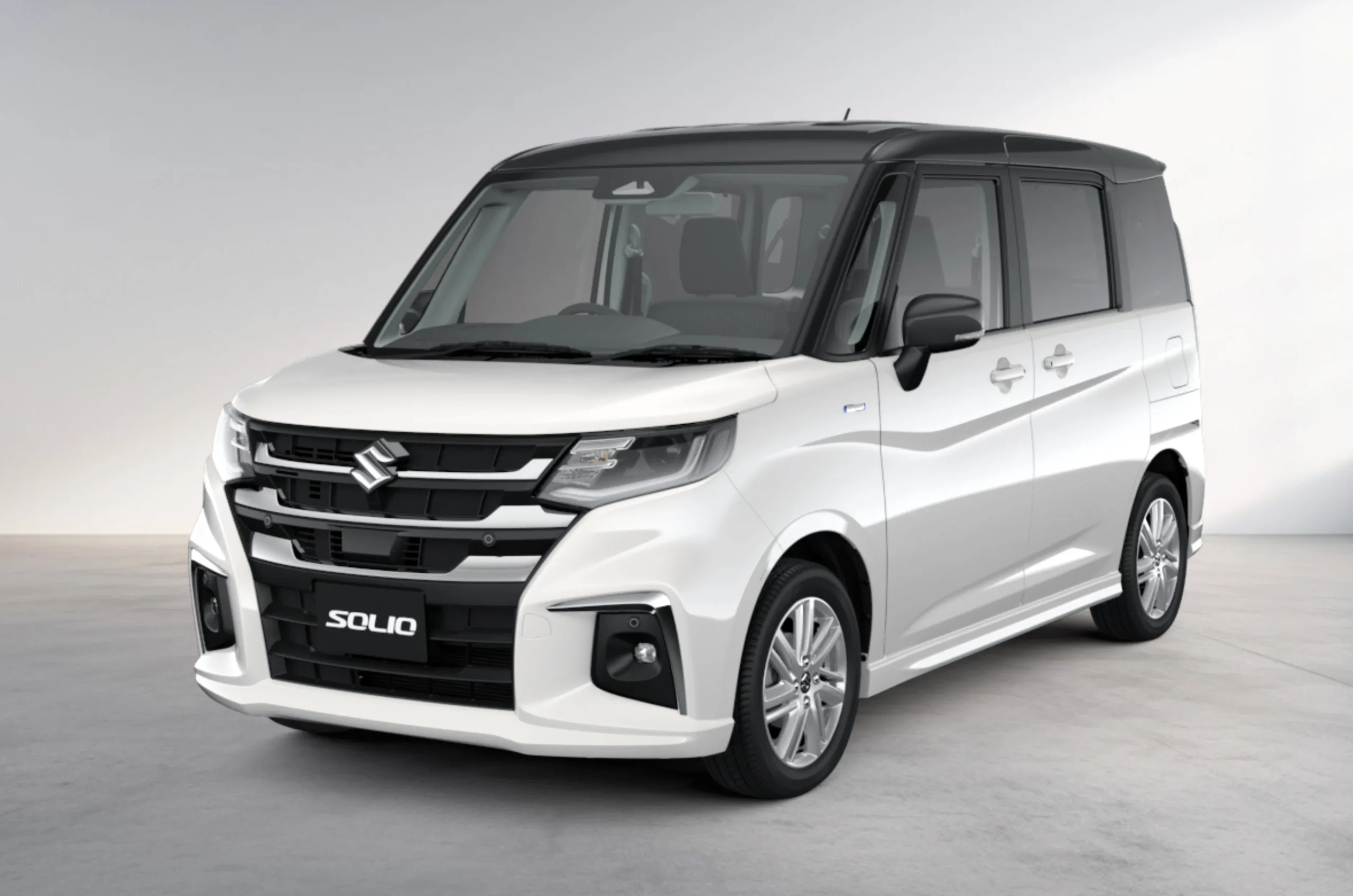
Maruti Suzuki, India’s largest carmaker, has long dominated the compact car and family vehicle market with models like the WagonR, Swift, Dzire, and Ertiga. However, for nearly a decade, auto enthusiasts and industry watchers have been intrigued by spy sightings of a compact MPV based on the Suzuki Solio, a model sold in international markets like Japan and Hong Kong. Recently, renewed test sightings and discussion around the Solio’s presence on Indian roads have reignited speculation that Maruti could finally bring a Solio‑derived compact MPV to India — a move that would fill a gap in its product lineup between the hatchback and larger MPVs.
This extensive article explores the origins of this Solio‑based MPV project, the significance of recent sightings, what the MPV could offer, and whether an official India launch is likely.
1. What Is the Suzuki Solio?
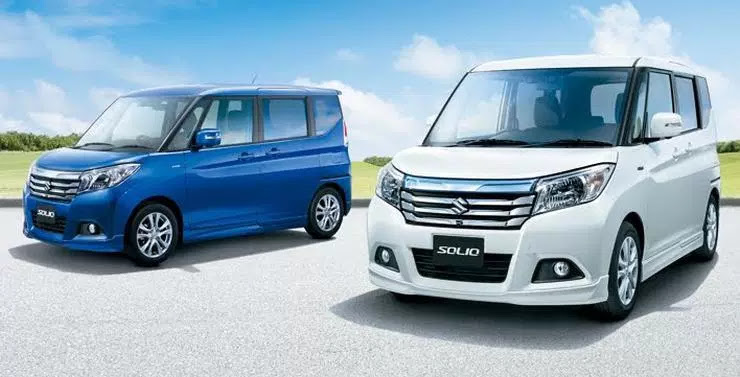
The Suzuki Solio is a compact multi‑purpose vehicle (MPV) sold primarily in Japan, Europe, and some Asian markets. With a tall, boxy design, it emphasizes maximum interior space within a compact exterior footprint. In international markets, the Solio often features sliding rear doors — a rare trait in small family vehicles — and is positioned as a city‑friendly people‑carrier rather than a traditional hatchback.
In terms of powertrains, global variants of the Solio include:
-
A 1.2‑litre petrol engine (K12 series)
-
Hybrid powertrain options in some regions
-
Transmissions like 5‑speed AMT or CVT
-
Optional mild‑hybrid assistance systems
These characteristics make the Solio a versatile vehicle with appeal for urban families and buyers seeking a practical, spacious compact MPV.
2. The Solio and the WagonR Connection
The story of the Solio in India began several years ago. The Solio shares certain design and architectural elements with the WagonR’s platform — at least conceptually — and its tall‑boy proportions and compact footprint have naturally invited comparisons with Maruti Suzuki’s hugely successful WagonR hatchback.
However, it’s important to note that the Indian WagonR sold today is a distinct product developed specifically for the Indian market, even though it carries the same name as its Japanese counterpart. According to historical data, the Indian WagonR’s platform diverged from the later Japanese versions sold abroad, and the Solio itself represents a more premium, MPV‑oriented iteration of compact car design.
There have been periodic test sightings of Solio prototypes on Indian roads, particularly in the Delhi‑Gurugram region, dating back to around 2018 and earlier. Enthusiasts captured these test mules without camouflage, showing styling cues like sliding rear doors and distinctive boxy proportions that hint at Solio’s identity.
3. Recent Sightings and Speculation
The Solio has once again been spotted testing on Indian roads — this time with renewed interest from automotive media and enthusiasts. Observers reported seeing a current‑generation Solio‑type MPV being driven in South Delhi, featuring unmistakable design elements like sliding rear doors and a tall roofline.
Crucially, the test vehicle appeared to be based on the Heartect platform — the same modern lightweight architecture shared by recent Maruti Suzuki models such as Swift, Dzire, WagonR, and even Ertiga. This suggests that Maruti Suzuki could be experimenting with a more locally tailored version of the Solio for Indian conditions.
What’s more, unlike earlier sightings where vehicles were heavily camouflaged, the recent test mule was reportedly seen with minimal disguise, indicating the development phase has progressed beyond early prototype stages.
4. What Could a Solio‑Derived MPV Offer India?
a. Compact and Spacious Design
The Solio’s defining characteristic is its tall, boxy design that translates to surprisingly spacious interiors despite compact external dimensions. The Japan‑spec Solio measures around 3,810 mm in length, 1,645 mm in width, and 1,745 mm in height, with a wheelbase of 2,480 mm — figures that suggest it would fit comfortably within India’s under‑4‑metre tax‑efficient category if suitably adjusted.
This configuration brings several advantages:
-
Excellent headroom and shoulder space
-
Comfortable seating for families
-
Easy ingress and egress due to upright seating
-
Reasonable cargo space for daily needs
Maruti Suzuki could offer different seating configurations to appeal to urban families — from a classic five‑seat layout to possibly a more flexible option that maximizes cargo and seating versatility. No official details have been confirmed yet, but the potential for best‑in‑class space in a compact footprint is high.
b. Sliding Rear Doors — A Segment First?
One of the most distinctive features spotted on Solio test vehicles is rear sliding doors — a rarity in India’s compact segment. Sliding doors are typically found in larger MPVs or premium vehicles and are often prized for ease of access, especially in tight parking spaces or when helping children and elders enter and exit.
If such doors make it to production, it would be a standout feature that differentiates a Solio‑based MPV from competitors like the Renault Triber or Nissan Gravite. It would also help position the model as more family‑friendly and practical than traditional hatchbacks or crossover SUVs in a similar price bracket.
c. Powertrain and Efficiency
The Solio sold overseas is powered by engines such as the 1.2‑litre petrol unit paired with either a CVT or mild‑hybrid setup. Maruti Suzuki could adapt these powertrains for India, possibly utilizing:
-
The K12‑series 1.2‑litre petrol engine already seen in models like Swift and Dzire
-
A potential hybrid or mild‑hybrid configuration to boost fuel efficiency and lower emissions
-
An automatic transmission option (e.g., AMT or CVT) for urban convenience
Reports also indicate that Maruti’s upcoming MPV could use Suzuki’s Z12E 1.2‑litre petrol engine with hybrid technology — a unit already delivering up to around 22 kmpl in WLTC tests in standards overseas. This would make it one of India’s few hybrid compact MPVs if introduced here.
5. Where Would This MPV Fit in Maruti’s Lineup?
Maruti Suzuki’s current MPV offerings in India include:
-
Maruti Ertiga: A midsize MPV catering to families with higher seating requirements
-
Maruti XL6: A premium six‑seater variant with more comfort and features
A Solio‑inspired compact MPV would slot below the Ertiga in the range, offering a choice that is more affordable and city‑friendly while still delivering more utility than a hatchback. Its unique form factor could attract:
-
Buyers seeking practical family vehicles without the bulk of larger MPVs
-
Urban commuters who prioritize interior space and versatility
-
Customers interested in efficient hybrid powertrains (if offered)
In export markets, a compact Solio‑derived MPV could potentially compete against small people‑carriers in European and other Asian markets, especially where space efficiency and low emissions are highly valued.
6. Competition — Where Would It Stand?
In India’s compact MPV segment, the main players include:
-
Renault Triber: A seven‑seat compact MPV with strong practicality
-
Nissan Gravite: A badge‑engineered variant similar to the Triber
While these rivals focus on three rows and maximum seating count, a Solio‑based MPV could carve a niche by focusing on:
-
Premium interior comfort
-
Advanced features (like sliding doors)
-
Fuel efficiency and hybrid tech
-
Safety features and urban usability
In this sense, Maruti Suzuki’s offering may not be competing directly with the Triber for seating capacity but could appeal to buyers who prefer a stylish, efficient, and well‑equipped compact MPV.
7. Why Hasn’t It Launched Yet?
Despite periodic sightings over the past years, including in 2018 and earlier, Maruti Suzuki has never officially confirmed a Solio‑based MPV launch in India. There are several reasons this project may have been delayed or reconsidered:
-
Market priorities: Maruti Suzuki has focused heavily on strengthening its SUV and crossover lineup (e.g., Brezza, Jimny)
-
Cost and positioning: Translating a premium MPV like the Solio into a cost‑competitive model for India could be challenging
-
Product strategy: Emphasis on stronger hybrid and EV plans for other segments might have temporarily delayed MPV plans
However, these recent sightings and renewed interest from automotive news outlets suggest that the idea has not been abandoned entirely. In fact, recent reports indicate that a premium compact MPV inspired by the Solio (codenamed YVF) is actively under development and could arrive by 2028–29, possibly with hybrid technology and export focus.
8. What Could Be the Launch Timeline?
Industry reports suggest Maruti Suzuki is gearing up to release several next‑generation and hybrid models by the late 2020s. A Solio‑inspired compact MPV is expected to be one of these additions, with potential launch timing around 2028–29.
This aligns with broader trends in the Indian market, where buyers are increasingly attracted to vehicles that combine fuel efficiency, space, and premium usability without the premium pricing of large SUVs or luxury offerings.
9. Challenges Ahead
Even if the MPV reaches production, Maruti Suzuki faces several hurdles:
-
Pricing competitively against existing compact MPVs
-
Consumer acceptance towards a new body style in a segment dominated by Renault Triber style vehicles
-
Ensuring safety, comfort, and feature levels that justify its positioning
-
Integrating hybrid technology cost‑effectively
However, given the brand’s strong dealer network and customer trust, Maruti Suzuki stands a good chance of making a compelling case for this MPV in India and possibly overseas.
10. Conclusion: What It All Means
The renewed sightings of the Solio‑based compact MPV on Indian roads suggest that Maruti Suzuki may be seriously evaluating its entry into the premium compact MPV segment. While the company has not formally announced any plans, evidence from ongoing tests and recent industry reports points to a model that could combine:
-
Practical interior space
-
Urban‑friendly dimensions
-
Hybrid powertrain options
-
Premium features like sliding doors
-
Export potential to other markets
If this vehicle does arrive, it could expand Maruti Suzuki’s appeal to buyers seeking an alternative to both traditional hatchbacks and larger MPVs — blending utility, efficiency, and modern features in a package tailored for India and beyond.
Read Also: Keep your face towards the sunshine and shadows will fall behind you
Watch Also: https://www.youtube.com/@TravelsofTheWorld24





Leave a Reply