
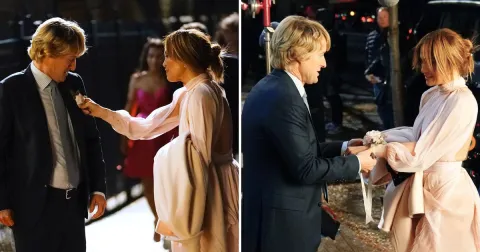
Romantic comedies have long thrived on fantasy, familiarity, and emotional comfort, and Marry Me — starring Jennifer Lopez and Owen Wilson — embraces all three with glossy sincerity. Directed by Kat Coiro, the 2022 film blends modern celebrity culture with old-fashioned rom-com charm, offering audiences a lighthearted escape built on star power, pop music, and a fairy-tale premise that knows exactly what it is.
While Marry Me doesn’t reinvent the genre, it succeeds by leaning into Jennifer Lopez’s natural magnetism and pairing it with Owen Wilson’s understated, grounded presence. The result is a film that may be predictable but remains warm, watchable, and emotionally earnest.
The Story: A Public Fantasy Turned Private Romance
At the heart of Marry Me is a premise as outrageous as it is simple. Kat Valdez (Jennifer Lopez) is a global pop superstar whose love life is just as public as her chart-topping hits. She is set to marry her fellow pop icon fiancé, Bastian (Maluma), during a massive live concert viewed by millions around the world.
Moments before the wedding takes place on stage, Kat discovers that Bastian has been unfaithful. Devastated and humiliated, she makes a spontaneous decision that changes everything: instead of canceling the wedding, she marries a complete stranger from the audience — Charlie Gilbert (Owen Wilson), a divorced math teacher who happens to be holding a sign that reads, “Marry Me.”
What follows is a fish-out-of-water romance that explores fame versus normalcy, image versus authenticity, and the vulnerability required to love again.
Jennifer Lopez: Perfectly Cast as Herself — and Then Some
Jennifer Lopez has spent decades cultivating a pop-culture persona that blurs the line between reality and performance, and Marry Me cleverly uses that familiarity to its advantage. As Kat Valdez, Lopez plays a character who mirrors aspects of her own public image: glamorous, scrutinized, emotionally guarded, and constantly performing.
Lopez brings sincerity to a role that could have easily felt shallow. Beneath Kat’s sequined costumes and stadium-sized confidence lies a woman who is deeply lonely and unsure of who she is without an audience. Lopez excels in these quieter moments, allowing vulnerability to peek through the polish.
Her performance isn’t groundbreaking, but it is effective — reminding viewers why she remains one of the most reliable romantic leads in Hollywood.
Owen Wilson: The Film’s Emotional Anchor
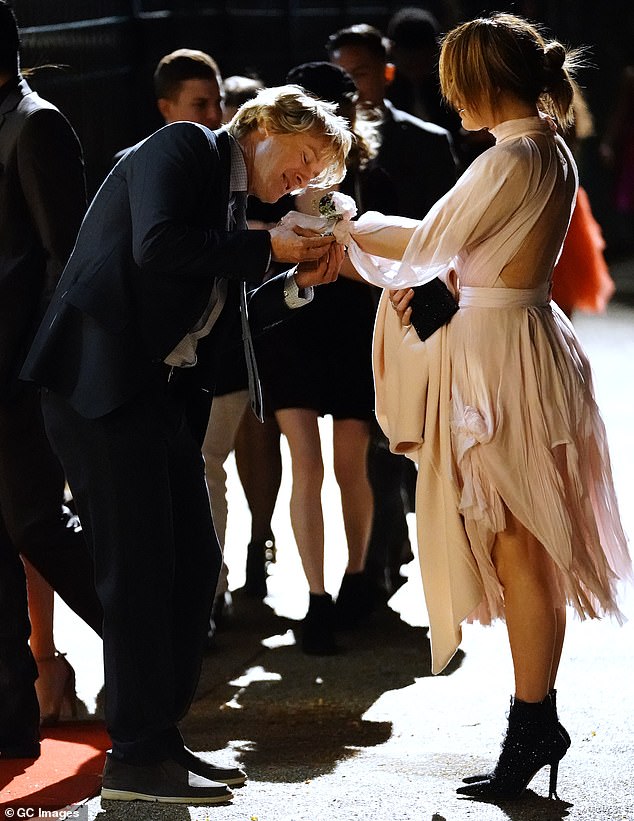
Owen Wilson’s Charlie is deliberately designed as Kat’s opposite. He’s soft-spoken, awkward, emotionally cautious, and grounded in routine. As a math teacher and single father, Charlie represents stability and sincerity — qualities often missing from Kat’s celebrity world.
Wilson’s charm has always been subtle, and here it works beautifully. He doesn’t compete with Lopez’s star power; instead, he balances it. His performance provides emotional credibility to the film’s fantastical setup, making the romance feel surprisingly believable.
The chemistry between Lopez and Wilson isn’t explosive, but it is gentle and reassuring — the kind of connection built on listening rather than spectacle.
Supporting Cast and Performances
The supporting cast adds texture and humor to the film. Maluma, in his acting debut, plays Bastian with a self-aware smirk, embodying the shallow confidence of a pop star more concerned with image than intimacy.
Sarah Silverman brings warmth and wit as Charlie’s best friend and fellow teacher, offering grounded advice and emotional perspective. Meanwhile, Chloe Coleman delivers a sweet performance as Charlie’s daughter, grounding the film’s emotional stakes.
Each supporting role serves a clear function, reinforcing the film’s central themes without overwhelming the main romance.
Music as Storytelling
Music plays a crucial role in Marry Me, functioning as both emotional expression and narrative device. Lopez’s original songs — produced in collaboration with real-world hitmakers — are polished, catchy, and thematically aligned with Kat’s journey.
The lyrics reflect Kat’s longing for authentic connection, while the performances highlight the contrast between her public persona and private insecurities. While the songs may not all be memorable chart-toppers, they effectively serve the story.
The film smartly integrates music without turning into a full musical, keeping the focus on character rather than spectacle.
Themes: Love in the Age of Exposure
At its core, Marry Me explores the challenges of intimacy in a world dominated by social media, celebrity culture, and constant public scrutiny. Kat’s life is consumed by likes, trends, and headlines, while Charlie’s world values consistency, honesty, and emotional safety.
The film asks whether love can survive when everything is performed for an audience — and whether vulnerability is possible when mistakes are broadcast in real time.
While these themes aren’t deeply interrogated, they provide a thoughtful backdrop for a genre typically driven by surface-level fantasy.
Direction and Visual Style
Director Kat Coiro keeps the film visually bright and accessible. Concert scenes are vibrant and energetic, while quieter moments are shot with warmth and intimacy.
The contrast between Kat’s hyper-stylized world and Charlie’s ordinary life is clearly defined through production design and cinematography. This visual duality reinforces the emotional divide the characters must overcome.
The pacing is steady, though the film occasionally lingers too long on predictable beats. Still, the runtime remains comfortable for a rom-com, never overstaying its welcome.
Predictability vs. Comfort
There are few surprises in Marry Me. The story follows a familiar rom-com structure, complete with misunderstandings, emotional withdrawal, and a final grand gesture.
Yet predictability isn’t necessarily a flaw in this genre. The film understands its audience and delivers exactly what it promises: romance, humor, and emotional reassurance.
Rather than subverting expectations, Marry Me leans into them — offering comfort at a time when many viewers seek escapism.

Cultural Context and Timing
Released during a period of heightened digital connectivity and emotional fatigue, Marry Me resonates as a reminder of the value of human connection. Its emphasis on sincerity over spectacle feels particularly relevant in an era defined by curated identities.
Jennifer Lopez’s presence also adds cultural weight. Her career, built on reinvention and resilience, mirrors the film’s message about choosing authenticity over performance.
Final Verdict
Marry Me may not redefine the romantic comedy, but it succeeds as a polished, heartfelt entry in the genre. Jennifer Lopez shines in a role that plays to her strengths, while Owen Wilson grounds the film with emotional authenticity.
The film’s glossy fantasy is balanced by moments of genuine warmth, making it an easy, enjoyable watch for fans of classic rom-coms and modern celebrity stories alike.
Read Also: Keep your face towards the sunshine and shadows will fall behind you
Watch Also: https://www.youtube.com/@TravelsofTheWorld24








Leave a Reply