

The act of kissing, often considered a uniquely human expression of affection, may have a far deeper evolutionary history than previously thought. Recent research suggests that kissing likely evolved in the common ancestor of humans and large apes approximately 21 million years ago. This surprising finding sheds light on the biological and social origins of intimate behavior, linking human romance to the ancestral behaviors of chimpanzees, gorillas, and other great apes.
Scientists argue that understanding the evolutionary roots of kissing not only explains why humans engage in this behavior but also highlights its connection to survival, bonding, and social cohesion.
The Fascinating Science of Kissing
Kissing is a widespread human behavior associated with affection, courtship, and even health benefits. In modern humans, it often serves as a signal of romantic interest or emotional attachment. Yet, anthropologists and evolutionary biologists have long debated its origins: is kissing purely cultural, or does it have biological roots?
Evidence from animal behavior, fossil studies, and comparative anatomy suggests that kissing is not merely a cultural invention. Instead, it may have evolved from behaviors that supported survival, such as food sharing, grooming, and social bonding.
Observations in the Animal Kingdom
Researchers have long observed behaviors in non-human primates that resemble human kissing. For instance:
-
Chimpanzees and bonobos frequently engage in mouth-to-mouth contact during greeting, reconciliation, or play.
-
Gorillas sometimes press lips against each other or gently nibble lips as a form of bonding or reassurance.
-
Orangutans and other large apes exhibit similar affiliative behaviors, including mouth-to-mouth interactions, though less frequently.
These behaviors are generally associated with social cohesion, trust-building, and nurturing relationships. Scientists posit that human kissing may have evolved from these ancestral behaviors, adapted for romantic and emotional purposes.
Evidence from Evolutionary Biology
The new research combines insights from primatology, anatomy, and evolutionary biology. By comparing facial muscles, lip structures, and oral sensitivity across primate species, scientists identified shared traits that could facilitate kissing behaviors:
-
Highly mobile lips capable of forming a seal
-
Sensory nerve density allowing fine tactile feedback
-
Social behaviors centered around grooming, food sharing, and close contact
The presence of these traits in both humans and large apes indicates that kissing may have been present, in some form, in their common ancestor roughly 21 million years ago—long before humans appeared.
Social and Reproductive Functions
Why would kissing—or a proto-kissing behavior—evolve in early primates? Researchers suggest several adaptive functions:
-
Mate assessment: Close contact allows individuals to evaluate potential partners through taste, smell, and pheromones.
-
Bonding and pair stability: Kissing strengthens emotional and social bonds, which is particularly important in species with long-term pair bonding.
-
Conflict resolution: Mouth-to-mouth gestures in apes often occur after disputes, promoting reconciliation and group harmony.
-
Parental bonding: In some species, mouth-to-mouth interactions occur between adults and offspring, enhancing nurturing and caregiving behaviors.
These functions likely contributed to survival and reproductive success, offering a selective advantage for individuals engaging in affiliative oral contact.
The Role of Sensory Perception
Kissing is not just a social behavior—it is a sensory experience. Humans use taste, smell, and touch to extract information about partners. Many scientists believe that ancestral mouth-to-mouth contact served a similar purpose, helping early primates assess genetic compatibility, health, and emotional state.
The evolution of specialized lip muscles and nerve endings supports this idea. The lips are among the most sensitive regions of the body, capable of detecting subtle cues that can guide mate selection and social interaction.
Cross-Cultural Consistency in Humans
While some anthropologists have argued that kissing is a purely cultural behavior, cross-cultural studies indicate otherwise. Although the frequency and style of kissing vary widely, many societies practice some form of mouth-to-mouth contact in romantic or affiliative contexts.
This widespread occurrence suggests that the human capacity for kissing is rooted in biology, not just culture. Cultural practices may shape how kissing is expressed, but the underlying instinct appears universal.
Insights from Fossil and Genetic Evidence
Although direct evidence of kissing in fossils is impossible to find, anatomical and genetic studies offer clues. Fossil skulls and jaw structures of early hominins show features consistent with the ability to perform kissing:
-
Flexible lips capable of sealing
-
Strong facial musculature for controlled movement
-
Oral sensory adaptations that likely facilitated tactile exploration
Genetic studies further support this idea, highlighting genes associated with sensory perception and social bonding in humans and large apes.
Connections to Grooming and Food Sharing
Many researchers trace kissing behavior to ancestral grooming and food-sharing practices. In primates, grooming reinforces social bonds and reduces stress. Early humans may have extended this behavior to mouth-to-mouth contact, strengthening pair bonds and group cohesion.
Similarly, food sharing, especially mouth-to-mouth feeding of infants or mates, could have provided the foundation for romantic kissing. Over evolutionary time, this functional behavior may have transformed into a ritualized display of affection and attraction.
Emotional and Psychological Benefits
Modern research confirms that kissing has measurable emotional and psychological benefits. It triggers the release of oxytocin, the so-called “bonding hormone,” promoting trust and attachment. Kissing also reduces stress, lowers blood pressure, and strengthens romantic bonds.
These benefits likely mirror the evolutionary advantages enjoyed by early primates. Individuals who engaged in affiliative oral contact may have enjoyed stronger social ties, improved cooperation, and better reproductive success.
Read Also: Keep your face towards the sunshine and shadows will fall behind you
Implications for Human Relationships
Understanding the evolutionary origins of kissing deepens our appreciation for its role in human relationships. Far from being a superficial act, kissing represents a complex interplay of biology, emotion, and social strategy.
-
Mate selection: Kissing helps individuals evaluate compatibility and health.
-
Bonding: Kissing reinforces emotional attachment, particularly in long-term partnerships.
-
Conflict resolution: Sharing intimate gestures can restore trust and harmony.
-
Social cohesion: Kissing, like grooming, strengthens group relationships and emotional networks.
By recognizing these evolutionary functions, researchers can better understand why kissing continues to be a central feature of human intimacy.
Comparing Human Kissing to Other Species
While humans may engage in more ritualized and passionate kissing than other primates, many similarities remain:
-
Chimpanzees and bonobos: Mouth-to-mouth contact during play, reconciliation, or sexual activity.
-
Gorillas: Gentle lip contact during grooming and social bonding.
-
Orangutans: Rare instances of mouth-to-mouth contact in nurturing contexts.
These parallels demonstrate that the roots of kissing predate humanity, emphasizing continuity with our closest relatives.
The Timeline: 21 Million Years Ago
The estimated timeline of 21 million years ago corresponds to the Miocene epoch, a period of significant diversification among primates. During this era:
-
Ancestors of humans and great apes were evolving key adaptations for social life.
-
Forested environments encouraged group living, cooperation, and affiliative behaviors.
-
Sensory adaptations supported complex communication, including tactile gestures like mouth-to-mouth contact.
Placing kissing in this evolutionary context highlights its adaptive value and deep history.
Challenges in Studying Kissing Evolution
Studying the origins of kissing presents unique challenges. Unlike bones or tools, behaviors leave no fossil record. Researchers must rely on indirect evidence, including:
-
Comparative studies of primate behavior
-
Anatomical and sensory adaptations
-
Genetic markers associated with bonding and sociality
-
Cross-cultural human studies
Despite these challenges, converging evidence strongly supports an ancient evolutionary origin for kissing.
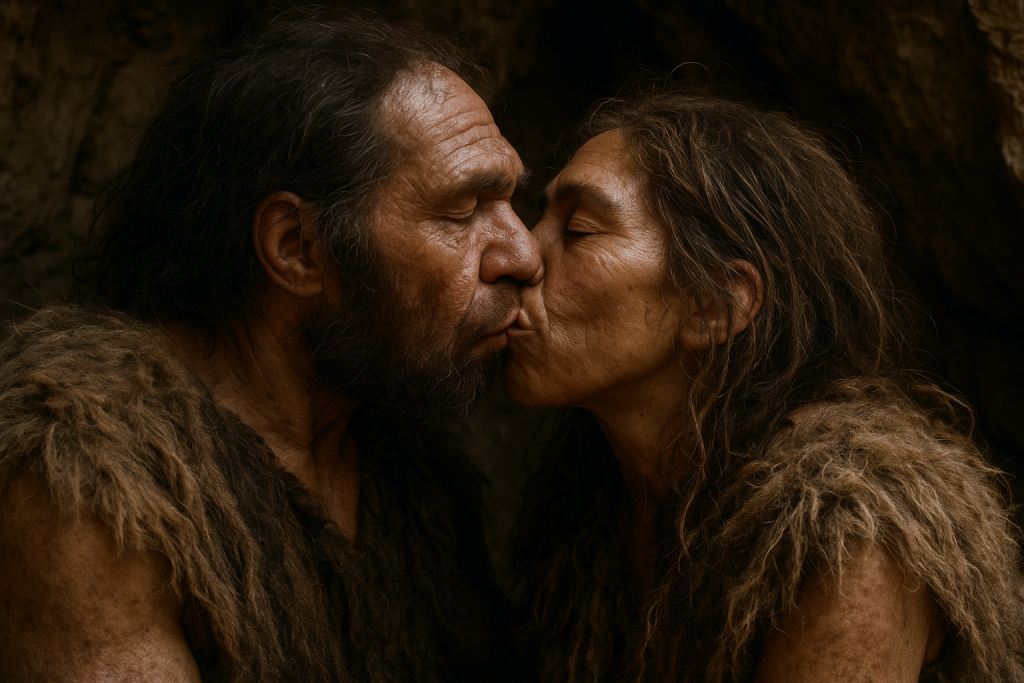
The Role of Culture and Innovation
Although kissing has biological roots, culture plays a key role in shaping its expression. Different societies have developed unique customs, norms, and rituals surrounding kissing. Some cultures emphasize romantic kissing, while others focus on greeting or social bonding.
Cultural evolution interacts with biological predispositions, allowing kissing to serve diverse social functions while retaining its deep evolutionary origins.
Kissing and Modern Health
Beyond its social significance, kissing may have health implications:
-
Boosts immune system exposure to new bacteria
-
Strengthens psychological well-being
-
Reinforces cardiovascular health through increased circulation and hormonal response
These benefits reinforce the adaptive value of kissing in both evolutionary and modern contexts.
Conclusion: A Behavior Rooted in Deep Evolution
The emerging evidence suggests that kissing is far more than a romantic ritual. Its origins likely trace back 21 million years, to the common ancestor of humans and large apes. Rooted in grooming, social bonding, and food sharing, kissing evolved as a behavior that strengthened relationships, promoted survival, and facilitated reproductive success.
By understanding kissing as an ancient, adaptive behavior, we gain a richer appreciation for the continuity between humans and our primate relatives. What may seem like a simple gesture of affection today reflects millions of years of evolutionary history, reminding us that intimacy, trust, and social connection are deeply embedded in our biology.
Watch Also: https://www.youtube.com/@TravelsofTheWorld24










Leave a Reply