
Bitcoin has long been regarded as the king of cryptocurrencies, dominating headlines, investor portfolios, and market sentiment. However, when Bitcoin’s price slips below major psychological levels—such as the $90,000 mark—it often triggers renewed debate across the crypto world. As volatility shakes confidence, investors and influencers alike begin promoting Bitcoin alternatives, commonly known as altcoins, as potentially better opportunities.
Whenever Bitcoin stumbles, the crypto ecosystem responds quickly. Projects, platforms, and traders highlight alternative cryptocurrencies that promise faster transactions, better technology, lower fees, or higher returns. This pattern raises an important question: Are Bitcoin alternatives genuinely better investments, or are they simply being marketed during moments of Bitcoin weakness?
Bitcoin’s Price Drop and Market Psychology
Bitcoin’s price movements heavily influence the entire cryptocurrency market. When Bitcoin falls below a key price level, fear and uncertainty often follow. Retail investors may panic, while seasoned traders look for opportunities elsewhere.
Historically, Bitcoin price dips have caused two major reactions:
-
Flight to stability – Investors move funds into stablecoins or exit the market
-
Rotation into altcoins – Traders seek higher short-term gains in alternative cryptocurrencies
This second reaction fuels narratives that “Bitcoin is old technology” or that “better coins are replacing Bitcoin,” even though Bitcoin remains the most secure and decentralized cryptocurrency.
Why Crypto Promoters Push Bitcoin Alternatives
When Bitcoin’s price weakens, altcoins gain attention for several reasons:
Lower Entry Prices
Many investors feel priced out of Bitcoin due to its high unit price. Altcoins often trade at much lower prices, creating the illusion of affordability—even though market capitalization matters more than coin price.
Promise of Higher Returns
Altcoins are frequently marketed as having greater upside potential. A smaller market cap allows for faster price increases, which attracts risk-tolerant investors.
New Technology Claims
Alternative cryptocurrencies often claim to solve Bitcoin’s perceived flaws, such as slow transaction speeds, high fees, or limited functionality.
Marketing and Hype Cycles
Altcoin projects rely heavily on marketing. During Bitcoin downturns, aggressive promotion increases as projects attempt to capture shifting investor attention.
Popular Bitcoin Alternatives Gaining Attention
As Bitcoin’s price slips, several cryptocurrencies are often promoted as strong alternatives.
Ethereum (ETH)
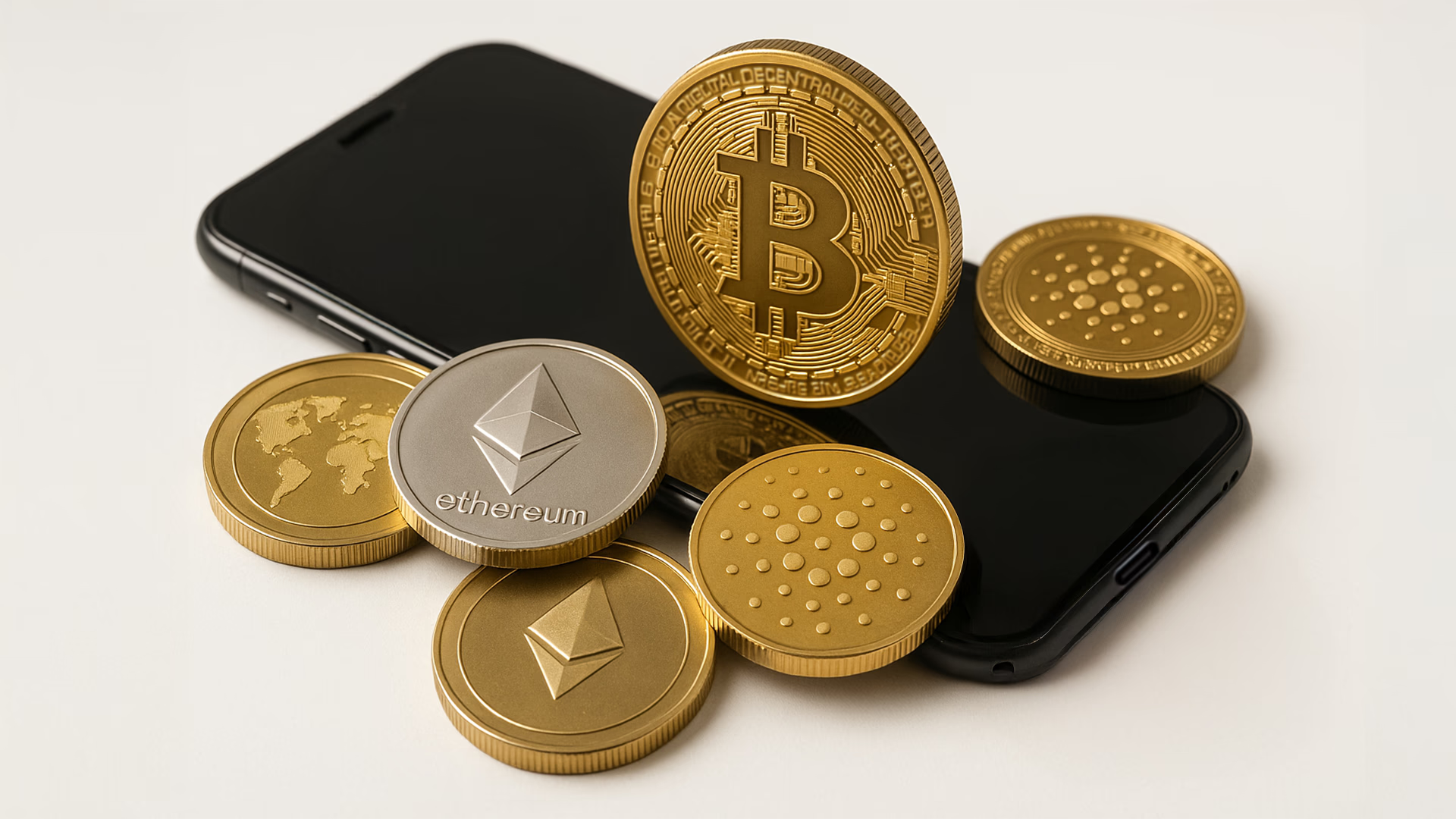
Ethereum is the second-largest cryptocurrency and the most established Bitcoin alternative. Unlike Bitcoin, Ethereum supports smart contracts, enabling decentralized applications (dApps), NFTs, and decentralized finance (DeFi).
Why it’s promoted:
-
Strong developer ecosystem
-
Used widely beyond payments
-
Transition to more energy-efficient mechanisms
Ethereum is often presented as a long-term competitor rather than a replacement for Bitcoin.
Solana (SOL)
Solana is frequently marketed as a high-speed, low-cost blockchain capable of processing thousands of transactions per second.
Why it’s promoted:
-
Extremely fast transaction speeds
-
Popular with NFT and gaming projects
-
Lower fees than Ethereum
However, Solana has faced criticism for network outages, raising questions about decentralization and reliability.
Cardano (ADA)
Cardano positions itself as a research-driven blockchain built on peer-reviewed academic principles.
Why it’s promoted:
-
Focus on scalability and sustainability
-
Environmentally friendly design
-
Strong long-term vision
Despite its promises, Cardano has been criticized for slow development and limited real-world adoption compared to rivals.
Avalanche (AVAX)
Avalanche emphasizes speed, scalability, and custom blockchain creation.
Why it’s promoted:
-
Fast finality
-
Growing DeFi ecosystem
-
Flexible blockchain architecture
It is often highlighted during Bitcoin dips as a “next-generation” blockchain.
Binance Coin (BNB)
Originally created to power the Binance exchange ecosystem, BNB has evolved into a major blockchain asset.
Why it’s promoted:
-
Strong backing from a major exchange
-
Wide use in trading, fees, and DeFi
-
Large existing user base
However, concerns remain about centralization and regulatory pressure.
Are Bitcoin Alternatives Actually Better?
While altcoins often look attractive during Bitcoin downturns, it is important to examine their risks.
Higher Risk and Volatility
Altcoins typically experience larger price swings than Bitcoin. While gains can be rapid, losses can be equally severe.
Lower Security
Bitcoin has the most secure blockchain, supported by the largest mining network in the world. Many alternatives lack comparable security.
Shorter Lifespans
Thousands of cryptocurrencies have disappeared over the years. Bitcoin has survived multiple market cycles, crashes, and regulatory challenges.
Dependence on Bitcoin
Ironically, most altcoins still depend on Bitcoin’s market direction. When Bitcoin falls sharply, altcoins often fall even harder.
Bitcoin’s Strength During Market Downturns
Despite price drops, Bitcoin retains several key advantages:
-
Highest level of decentralization
-
Strongest brand recognition
-
Most secure blockchain network
-
Growing institutional adoption
Many institutional investors view Bitcoin as digital gold rather than a speculative tech asset. This long-term perspective often differentiates Bitcoin from its alternatives.
Altcoin Season vs Bitcoin Dominance
Crypto markets move in cycles. When Bitcoin dominance declines, capital flows into altcoins—commonly referred to as “altcoin season.”
During these periods:
-
Bitcoin trades sideways or slightly down
-
Altcoins outperform Bitcoin in percentage gains
-
Speculative projects attract attention
However, these cycles are often short-lived. When market sentiment turns negative, Bitcoin usually recovers faster than most altcoins.
Marketing Narratives vs Reality
The crypto industry thrives on narratives. When Bitcoin struggles, stories emerge claiming that newer coins will “replace” Bitcoin. In reality, Bitcoin’s purpose differs from most alternatives.
Bitcoin focuses on:
-
Store of value
-
Monetary independence
-
Censorship resistance
Altcoins often focus on:
-
Smart contracts
-
Speed and scalability
-
Application development
Rather than competitors, many cryptocurrencies serve different roles within the broader crypto ecosystem.
Investor Considerations During Bitcoin Price Drops
When Bitcoin falls below major price levels, investors should consider:
-
Risk tolerance – Altcoins are higher risk than Bitcoin
-
Time horizon – Short-term trading vs long-term holding
-
Project fundamentals – Real-world use cases matter more than hype
-
Portfolio balance – Diversification can reduce risk
Blindly chasing alternatives during Bitcoin dips can lead to significant losses if market conditions worsen.
The Role of Media and Influencers
Crypto media and influencers play a major role in promoting Bitcoin alternatives. Headlines emphasizing “Bitcoin is falling” often accompany stories about “the next big crypto opportunity.”
While some recommendations are well-researched, others are driven by:
-
Affiliate marketing
-
Token holdings
-
Short-term speculation
Investors must separate educational analysis from promotional content.
Long-Term Outlook for Bitcoin and Its Alternatives
Bitcoin’s price slipping below $90,000 does not necessarily indicate failure. Price corrections are common in emerging asset classes. Historically, Bitcoin has recovered from far larger declines.
At the same time, alternative cryptocurrencies will continue to innovate, compete, and attract users. The future of crypto is unlikely to belong to a single coin. Instead, Bitcoin may coexist with a range of specialized digital assets.
Conclusion
When Bitcoin’s price slips below major milestones like $90,000, the crypto market reacts predictably. Alternative cryptocurrencies are promoted aggressively, promising better technology, higher returns, and faster growth. While some Bitcoin alternatives offer genuine innovation, many carry higher risk and rely heavily on market hype.
Bitcoin remains the foundation of the cryptocurrency ecosystem—resilient, decentralized, and widely trusted. Rather than viewing alternatives as replacements, investors should see them as complements with different purposes.
In a volatile market, understanding fundamentals matters more than chasing trends. Bitcoin alternatives may offer opportunities, but Bitcoin’s role as the backbone of digital finance remains firmly intact—even during price dips.
Read Also: Keep your face towards the sunshine and shadows will fall behind you
Watch Also: https://www.youtube.com/@TravelsofTheWorld24








Leave a Reply