
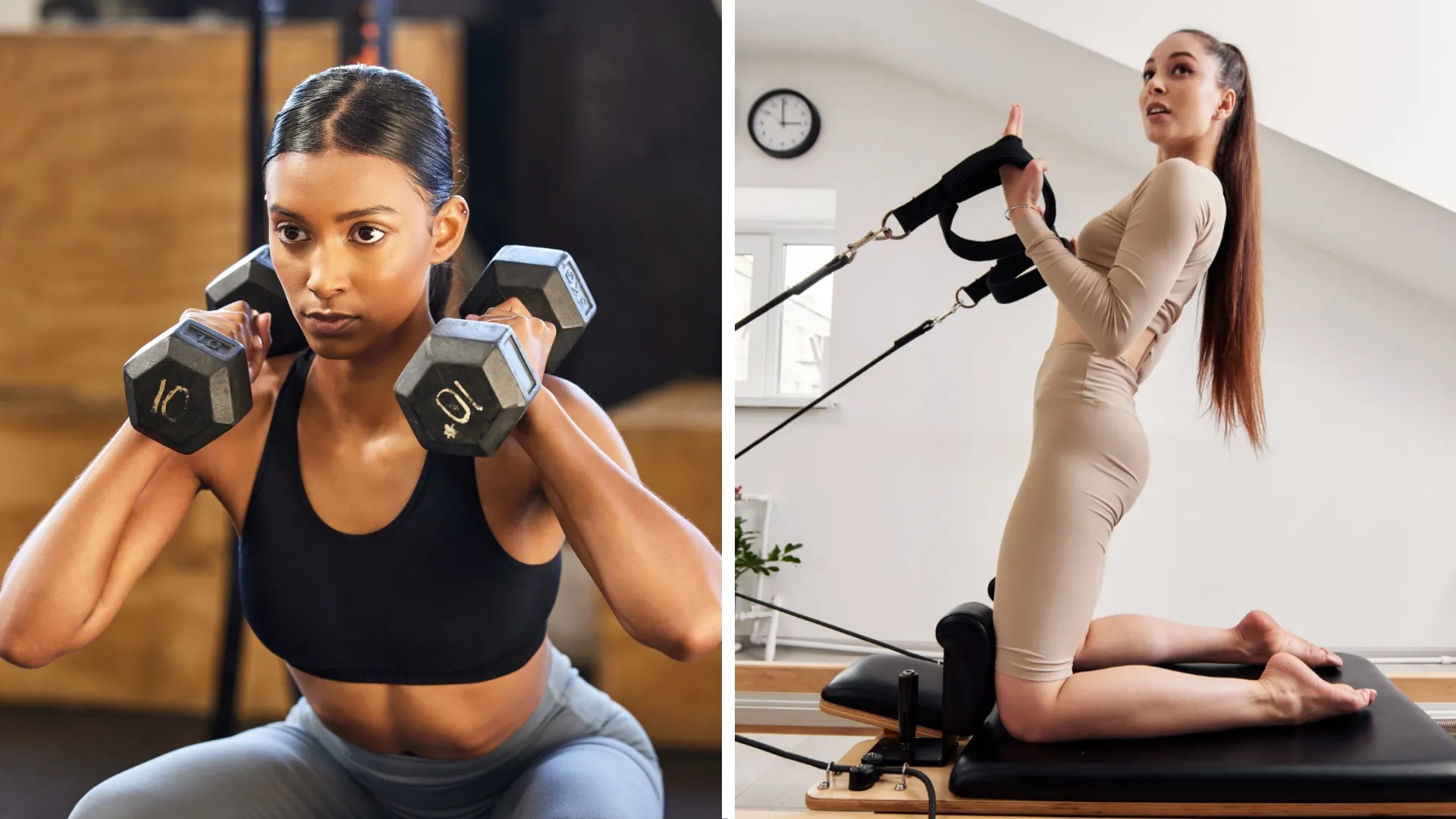
Choosing the right type of exercise can be challenging, especially when there are multiple options promising health, strength, and aesthetic benefits. Among the most popular and effective fitness approaches are Pilates and weight training. Both forms of exercise offer unique advantages, and understanding their differences can help you align your workout routine with your personal fitness goals.
This article explores Pilates and weight training, comparing their benefits, techniques, and suitability for different objectives, so you can make an informed decision about which approach works best for you.
1. Understanding Pilates
Pilates is a low-impact exercise method developed by Joseph Pilates in the early 20th century. It focuses on strengthening the core muscles, improving flexibility, and enhancing mind-body awareness.
Key Principles of Pilates:
-
Control: Movements are precise and deliberate
-
Concentration: Full focus on form and technique
-
Centering: Emphasis on core strength and stability
-
Breathing: Coordinated breathing patterns with movements
-
Flow: Smooth, continuous transitions between exercises
Pilates can be performed on a mat using body weight or with specialized equipment like the Reformer, Cadillac, or Wunda Chair, which provide resistance and support for varied intensity levels.
Benefits of Pilates:
-
Strengthens deep core muscles
-
Improves posture and spinal alignment
-
Enhances flexibility and mobility
-
Reduces risk of injury through controlled movements
-
Supports mental focus and relaxation
Pilates is often recommended for individuals seeking gentle yet effective workouts that prioritize functional strength, injury prevention, and overall body awareness.
2. Understanding Weight Training
Weight training, also known as resistance or strength training, involves lifting free weights, using machines, or performing bodyweight exercises to build muscle mass, strength, and power. It is a high-intensity approach that directly challenges muscular development.
Key Principles of Weight Training:
-
Progressive Overload: Gradually increasing weight or resistance to stimulate muscle growth
-
Repetition and Sets: Structured patterns of exercise to target specific muscles
-
Compound vs. Isolation Exercises: Compound exercises engage multiple muscles, while isolation targets specific muscles
-
Rest and Recovery: Allowing muscles time to repair and grow stronger
Benefits of Weight Training:
-
Increases muscle strength and mass
-
Boosts metabolism and promotes fat loss
-
Enhances bone density and joint health
-
Improves athletic performance and functional strength
-
Supports long-term weight management
Weight training is suitable for individuals aiming to build strength, improve physique, or enhance sports performance through targeted resistance exercises.
3. Core Differences Between Pilates and Weight Training
While both Pilates and weight training contribute to overall fitness, they differ in purpose, intensity, and outcomes.
| Aspect | Pilates | Weight Training |
|---|---|---|
| Primary Focus | Core stability, flexibility, posture | Muscle strength, hypertrophy, power |
| Impact Level | Low-impact | Can be high or moderate impact |
| Equipment | Mat or specialized Pilates equipment | Free weights, machines, resistance bands |
| Mind-Body Connection | Strong emphasis on awareness, control, and breathing | Less focus on mind-body, more on muscle engagement |
| Target Audience | Beginners, rehab, flexibility-focused | Strength goals, bodybuilding, athletic performance |
| Fat-Burning Potential | Moderate | High (especially with compound lifts and HIIT integration) |
4. How Pilates Supports Fitness Goals
a) Core Strength and Stability
Pilates is unparalleled in targeting deep abdominal muscles, spinal stabilizers, and postural muscles. This enhances balance, supports athletic performance, and reduces back pain.
b) Flexibility and Mobility
Pilates movements encourage stretching while strengthening muscles, improving joint mobility and reducing stiffness.
c) Injury Prevention and Rehabilitation
The controlled nature of Pilates makes it ideal for those recovering from injuries or seeking low-impact workouts that strengthen muscles without strain.
d) Mind-Body Awareness
Pilates emphasizes mental focus, which enhances body awareness and ensures proper form during exercises, reducing the risk of injuries.
e) Suitable for All Fitness Levels
Pilates can be modified for beginners, older adults, or those with physical limitations, making it accessible and versatile.
5. How Weight Training Supports Fitness Goals
a) Building Strength and Muscle Mass
Weight training is the most effective way to increase muscle size and strength. Compound movements like squats, deadlifts, and bench presses engage multiple muscles and joints, promoting functional strength.
b) Fat Loss and Metabolic Boost
Muscle mass increases basal metabolic rate, helping burn more calories at rest. Weight training combined with cardio enhances fat loss.
c) Bone Health
Resistance exercises strengthen bones and reduce the risk of osteoporosis, particularly important for aging populations.
d) Enhanced Performance and Power
Athletes rely on weight training to improve explosive power, speed, and endurance for sport-specific movements.
e) Customizable Intensity
Weight training can be adjusted in resistance, sets, reps, and tempo, making it suitable for beginners and advanced lifters alike.
6. Combining Pilates and Weight Training
Many fitness enthusiasts and athletes benefit from combining Pilates and weight training, as the two complement each other:
-
Pilates improves core stability, flexibility, and control, reducing injury risk during weight lifting.
-
Weight training builds strength, muscle mass, and power, enhancing overall performance in Pilates exercises.
A hybrid approach ensures comprehensive fitness: strong muscles, flexible joints, balanced posture, and mental focus. For example, you might do Pilates 2–3 times a week for core and mobility while performing weight training 2–4 times a week for strength and hypertrophy.
7. Choosing the Right Exercise Based on Your Goals
If Your Goal is Core Strength and Posture:
-
Prioritize Pilates
-
Focus on controlled movements and mind-body awareness
If Your Goal is Muscle Growth and Strength:
-
Prioritize Weight Training
-
Incorporate compound lifts and progressive overload
If Your Goal is Fat Loss:
-
Combine weight training with cardio
-
Integrate Pilates for flexibility and active recovery
If Your Goal is Injury Prevention or Rehab:
-
Emphasize Pilates
-
Gradually incorporate light resistance training under professional guidance
If Your Goal is Overall Wellness:
-
Alternate Pilates and weight training
-
Include functional movements, stretching, and recovery sessions
8. Tips for Success with Either Approach
Pilates Tips:
-
Focus on proper breathing and alignment
-
Move slowly and deliberately to engage muscles fully
-
Use modifications and props for support
-
Attend classes or follow guided sessions to ensure correct form
Weight Training Tips:
-
Start with lighter weights and proper technique
-
Gradually increase resistance to avoid injury
-
Warm up before and stretch after workouts
-
Track progress to maintain motivation and achieve goals
9. Common Misconceptions
-
Pilates makes you bulky: False. Pilates builds lean, toned muscles without excessive bulk.
-
Weight training is only for bodybuilders: False. Resistance training benefits everyone, including women and older adults, by improving strength and metabolism.
-
Pilates isn’t intense enough: False. Advanced Pilates can be highly challenging, especially with equipment-based exercises.
-
Weight training is bad for joints: False. Proper technique and controlled progression protect joints and enhance long-term mobility.
10. Conclusion
Both Pilates and weight training offer unique benefits and can contribute significantly to your fitness journey. Pilates excels in core strength, flexibility, posture, and mind-body connection, making it ideal for injury prevention, rehabilitation, and functional fitness. Weight training focuses on building strength, muscle mass, metabolism, and bone health, supporting performance and physique goals.
Choosing between Pilates and weight training depends on your individual goals, fitness level, and personal preferences. For many, a combination of both provides the most comprehensive approach to health and fitness, delivering strength, flexibility, balance, and mental resilience.
Ultimately, the best exercise is the one you enjoy, can perform consistently, and aligns with your goals. By understanding the unique benefits of Pilates and weight training, you can make informed choices, optimize your workouts, and achieve sustainable fitness results.
Read Also: Keep your face towards the sunshine and shadows will fall behind you
Watch Also: https://www.youtube.com/@TravelsofTheWorld24

Leave a Reply