
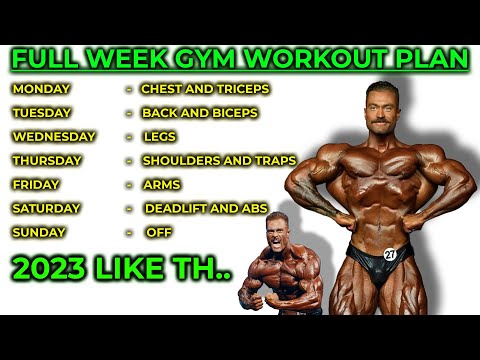
A full week gym workout plan offers a structured approach to training that ensures every major muscle group is worked, recovery is optimized, and progress toward muscle building and physical fitness is steady. Effective workout scheduling helps you balance intensity, volume, and rest so you can train smart and achieve consistent gains in strength, size, and performance. This plan follows a 7‑day split routine, where each day focuses on a specific muscle group or training theme, allowing dedicated attention to individual areas while reducing the risk of overtraining.
The weekly schedule begins on Monday with a chest workout. Chest training is a cornerstone of upper‑body development, involving exercises that predominantly push the weight away from the body. A typical chest session starts with barbell flat bench press, the foundational exercise for building strength and mass in the pectoral muscles. Following this, barbell incline bench press targets the upper chest and anterior deltoids, while barbell decline bench press emphasizes the lower chest to create balanced chest development. Machine‑based exercises such as Pec Deck Fly and standing cable fly provide a deep stretch and muscle contraction, helping to isolate the chest fibers. Higher‑cable variations like high cable crossover and low standing cable fly further engage the chest with controlled tension throughout the movement. Together, these exercises help sculpt the entire chest region, improve pressing power, and enhance muscular definition.
On Tuesday, the focus shifts to back training, which targets the posterior chain including the latissimus dorsi, rhomboids, traps, and lower back muscles. A strong back not only improves posture but also enhances strength in compound lifts and protects the spine during heavy efforts. The session typically includes lat pulldown (wide grip), which widens the back by emphasizing the lats, and seated cable row, which strengthens the mid‑back and improves scapular stability. Deadlifts are a critical compound movement, working the entire posterior chain, including the hamstrings, glutes, erector spinae, and core, making them one of the most important strength exercises in the gym. Bent‑over rows further develop the mid‑back and help build thickness, while back extension (hyperextensions) specifically target the lower back and improve spinal erector strength. Combined, these movements build a resilient and muscular back capable of supporting heavy lifts and functional strength.
Mid‑week, Wednesday is dedicated to biceps, focusing on arm strength and forearm engagement. Isolation work becomes the priority, beginning with dumbbell bicep curls to promote symmetrical strength and muscular pump. Close‑grip EZ bar curls bring extra tension to the biceps, while EZ‑bar preacher curls help eliminate cheat reps by stabilizing the upper arm. Dumbbell hammer preacher curls shift emphasis onto the brachialis, an important muscle that supports overall arm thickness, and dumbbell reverse curls target both the biceps and forearms. To round out the session, seated barbell wrist curls strengthen the forearm flexors, improving grip strength for other lifts throughout the week. Focusing on biceps with varied grips and angles improves peak development and increases arm size over time.
Thursday combines triceps and abs training, ensuring the arms are balanced and the core is engaged. Triceps contribute significantly to pushing power and help stabilize the elbow during pressing movements. Triceps bench dips are a classic bodyweight exercise that works all three heads of the triceps. This is followed by dumbbell overhead extensions and pulley push‑downs, which create a strong stretch and contraction for the long head and lateral head of the triceps. Dumbbell kickbacks isolate the triceps further by maintaining tension through a controlled movement. After the arm work, a comprehensive abs routine develops core strength and stability. Exercises such as sit‑ups and bicycle crunches engage the rectus abdominis and obliques, while incline straight‑leg raises and hip raises target the lower abs. Hanging knee and leg raises enhance lower abdominal activation, and weighted Russian twists and weighted sit‑ups increase intensity for core hypertrophy. Training the core not only improves aesthetics but also boosts performance in compound lifts by stabilizing the trunk.
By Friday, shoulder and trap muscles are the main focus, which contributes to upper‑body width and posture improvement. Shoulder training begins with dumbbell side raises to isolate the lateral deltoids, promoting broader shoulders. Dumbbell front raises emphasize the anterior deltoids, which are also active in many pushing movements. Seated dumbbell shoulder presses are a key compound exercise that works all three heads of the shoulder while also involving the triceps. Additional movements such as cable front raises, reverse pec deck, and face pulls support shoulder health by targeting the rear deltoids and upper back muscles. Dumbbell shrugs focus on the trapezius muscles, which sit atop the shoulders and contribute to a defined upper back and neck area. This comprehensive shoulder session ensures balanced development, enhances stability, and reduces injury risk.
Saturday is leg day, which is one of the most important sessions of the week due to the size and demand of the leg muscles. Lower‑body strength supports overall hypertrophy and hormonal responses that benefit full‑body growth. Barbell squats (back squat) are the central lift of the day, targeting the quadriceps, glutes, hamstrings, and core. Barbell lunges add unilateral strength, improving balance and correcting muscular imbalances. Hip thrusts strongly activate the glutes, which are essential for both athletic performance and aesthetic goals. Leg press and leg extension machines isolate the quadriceps, while lying leg curls emphasize the hamstrings. Seated calf raises focus on the calves, an often‑ignored muscle that completes the lower leg appearance and supports ankle stability. Working legs heavily also contributes to overall metabolic stress, which can accelerate fat loss and muscle gain when paired with proper nutrition.
Finally, Sunday is designated as a rest day to allow muscles and the central nervous system to recover after six intense days of lifting. Recovery is an essential part of any effective workout plan, as it allows muscles to repair and grow stronger after the micro‑tears that occur during resistance training. Rest also supports hormone regulation, reduces injury risk, and keeps motivation high for the next training week. Incorporating a full rest day ensures long‑term sustainability and improved performance in the gym.
In summary, this 7‑day gym workout schedule is structured to maximize muscle growth, strength gains, and overall fitness. By splitting workouts into daily focus areas — chest, back, biceps, triceps, shoulders, and legs — the plan provides high training volume while allowing adequate recovery. Each session incorporates compound exercises for overall strength and isolation movements for targeted hypertrophy. Core and accessory work enhance stability and definition, while a dedicated rest day supports recovery and long‑term consistency. Sticking to this routine consistently, adjusting intensity, and combining it with proper nutrition and sleep will help you achieve balanced muscle growth and physical progress.
Read Also: Keep your face towards the sunshine and shadows will fall behind you
Watch Also: https://www.youtube.com/@TravelsofTheWorld24







Leave a Reply