
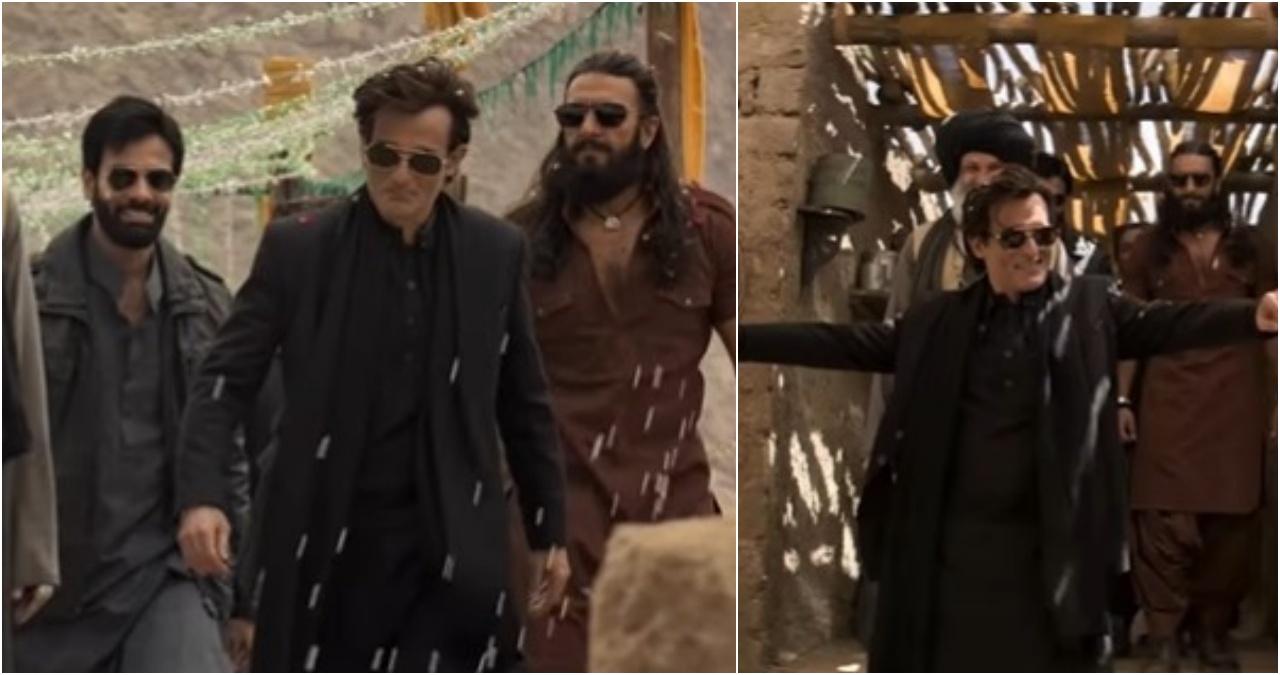
The recently released Bollywood action‑thriller Dhurandhar has been one of the biggest talking points of the year — not just for its star‑studded cast and high‑octane sequences but also for the controversy it has generated, particularly across borders. Amidst box‑office success and social media buzz, a strong and emotional response has come from an unexpected quarter: Noreen Aslam, the widow of the late Karachi police officer Chaudhry Aslam. She has publicly criticised how the film depicts Rehman Dakait, the notorious gangster from Pakistan’s Lyari area, and raised concerns over Dhurandhar’s representation of real events and people.
A Portrayal She Says Is Exaggerated and Misleading
In an appearance on a Pakistani podcast, Noreen didn’t hold back her criticism. She called the depiction of Rehman Dakait in the film “wildly exaggerated” and insisted that he “was nothing in front of Aslam.” According to her, while Rehman was involved in criminal activity — extortion, kidnappings and public murders — he was never the larger‑than‑life don that Dhurandhar portrays. She argued that his influence was confined to a specific area and that the film’s depiction inflates his status beyond reality.
Noreen’s central point was blunt: Rehman was not as powerful as the movie suggests. She contrasted his cinematic image with the real legacy of her late husband, Chaudhry Aslam, a celebrated police officer known for his fearless stance against criminals and terrorists. Aslam’s reputation, she said, was such that his name “struck fear in criminals” — a legacy she feels Dhurandhar fails to honour appropriately.
Beyond Rehman — Defence of Chaudhry Aslam’s Legacy
The criticism didn’t stop at the gangster’s portrayal. Noreen also raised concerns about how her husband is represented in the film. According to multiple reports she shared, certain derogatory or sensational terms used in the movie’s dialogues to describe Chaudhry Aslam — such as references to “son of the devil” and “jinn” — were, in her view, disrespectful. She stressed that such language was not only unfair to her husband’s memory but also hurtful to his mother, a woman she described as “simple and honest.”
Aslam, who rose through the ranks of the Sindh Police and led the Lyari Task Force, became a symbol of courage and resilience in confronting gang violence in Karachi. Noreen highlighted that her husband was admired in life — including being a fan of Bollywood actor Sanjay Dutt — and felt the film’s portrayal did a disservice to his real achievements and personality.
Threat of Legal Action and Broader Outrage
Noreen has openly hinted at the possibility of legal action if Dhurandhar continues to spread what she deems “propaganda” or inaccurate depictions of her husband. She stressed that if the film presents her husband wrongly or misrepresents his legacy, she would take all the legal steps she can to seek redress.
This legal warning taps into a larger controversy surrounding the film’s use of real names, real historical figures and real events. In fact, Dhurandhar had already drawn pre‑release attention when the parents of Major Mohit Sharma, an Ashoka Chakra awardee, sought a Delhi High Court stay over unauthorised depiction of his life, prompting the Central Board of Film Certification (CBFC) to address objections before allowing release. 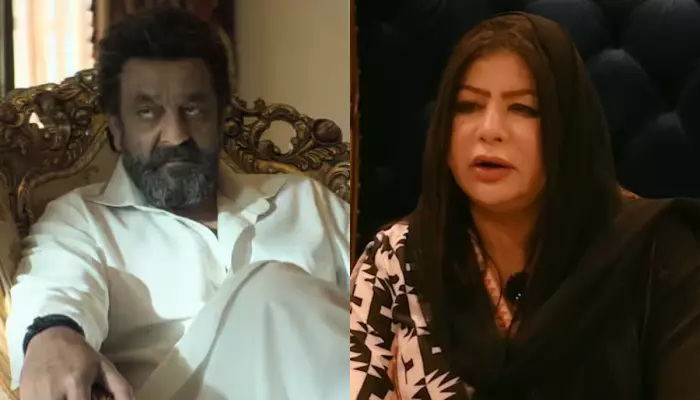
Who Was Rehman Dakait — Separating Fact from Fiction
To understand the dispute, it’s important to look at who Rehman Dakait was and how he is represented in Dhurandhar. Born Sardar Abdul Rehman Baloch in the mid‑1970s in Karachi’s Lyari district, he became involved in criminal activities at a young age, joining a gang and committing serious crimes. He reportedly killed his own mother at age 19 and led a violent gang alongside his cousin Uzair Baloch before being killed in a police encounter in 2009 at age 34.
In Dhurandhar, actor Akshaye Khanna portrays Rehman Dakait as a ruthless, powerful underworld figure — a representation that has drawn both praise from fans for its intensity and criticism for its larger‑than‑life image. Some social media discussions and audience reactions suggest that the character’s swagger and dominance even overshadow parts of the narrative meant to focus on the lead hero.
However, Noreen and others argue that while Dakait was indeed a criminal, the film’s embellishment makes him out to be a more formidable figure than historical reality would support. The claim is that the film amplifies his influence beyond local crime to suit cinematic drama, which can distort audience perceptions of real history.
Public and Fan Reactions — A Divided Discourse
The Dhurandhar controversy isn’t limited to Noreen Aslam’s remarks. On social media platforms like Reddit, users are actively debating the film’s portrayal of real events and characters. Some commentators argue that the film indulges in propaganda or nationalistic bias, while others defend it as cinematic fiction loosely based on historical figures.
Critics on platforms like r/PakistanDiscussions have highlighted how Dhurandhar blends real footage and historical references with dramatized storytelling, sometimes in ways that blur the line between fact and fiction. Some posts argue that assertions linking Pakistani criminal figures to terrorism or espionage in the movie stray far from reality and carry problematic undertones.
Other Reddit threads emphasize that while the narrative may draw from real gang wars in Lyari, many creative liberties were taken — something that local audiences familiar with Karachi’s history have noticed and openly discussed. These include debates over the scale of Rehman Dakait’s influence and how characters are depicted relative to documented events.
Cinematic vs. Historical Representation — Where Should the Line Be?
The Dhurandhar debate highlights a longstanding tension in cinema between dramatic storytelling and factual accuracy. Films that take inspiration from real events often walk a fine line: dramatic embellishment can elevate a narrative, but it can also risk misrepresenting people and history, especially when audiences might not distinguish between fact and fiction.
In this case, critics like Noreen Aslam argue that Dhurandhar may go too far in crafting its narrative. Their concern isn’t just about dramatic license but about how real individuals and legacies are portrayed within that license. When names, identities and historical events are involved, the ethical burden on filmmakers becomes heavier.
Meanwhile, defenders of cinema’s artistic freedom assert that films should not be held to strict documentary standards and that audiences are generally aware that commercial movies take creative liberties. The debate here reflects deeper questions about cultural representation, collective memory and cinematic responsibility.
Commercial Success Amid Controversy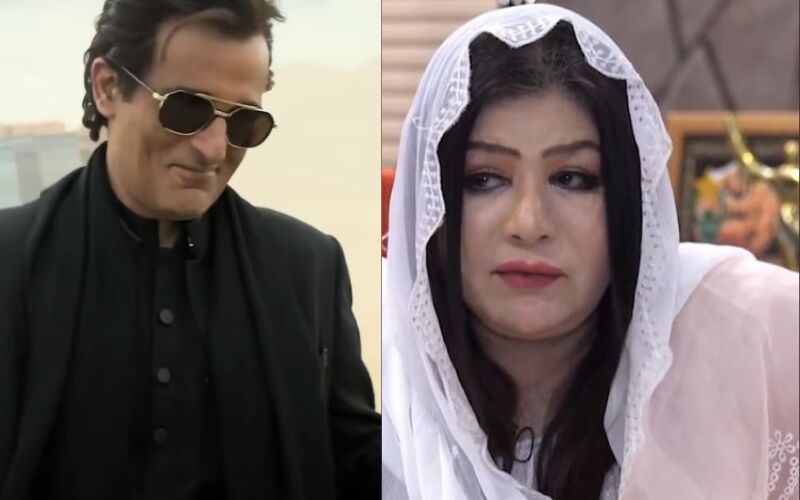
Despite the controversy, Dhurandhar continues to perform well commercially. Reports indicate strong box‑office numbers, particularly overseas, with its opening weekend marking one of the biggest global openings for a Bollywood film in 2025.
The film’s combination of high production values, action sequences and star power — featuring Ranveer Singh, Sanjay Dutt, Akshaye Khanna, R. Madhavan and Arjun Rampal — has attracted audiences, even as critical conversations unfold around its content.
Yet controversies like this often shape a film’s cultural footprint as much as, if not more than, its box‑office performance. The emotional and public responses from families connected to the real events portrayed add another layer of complexity to how Dhurandhar will be remembered in cinematic and public discourse.
Looking Ahead — Impact on Filmmaking and Storytelling
What emerges from this debate is not just a clash over one film’s portrayal but an indication of evolving audience expectations — and sensitivities — around films inspired by real life. In an age where global audiences have unprecedented access to information, films that claim roots in true stories are scrutinised more intensely than ever.
For filmmakers working with real historical figures, the Dhurandhar situation underscores the importance of navigating respectful representation while preserving artistic vision. It is a reminder that when films cross national, cultural or historical boundaries — especially involving real people with living relatives — the responsibility to balance dramatization with empathy becomes paramount.
For viewers around the world, the conversation around Dhurandhar becomes a case study in how cinema intersects with memory, identity and history — and how audiences increasingly demand nuance, accuracy and sensitivity even in high‑impact entertainment.
Read Also: Keep your face towards the sunshine and shadows will fall behind you
Watch Also: https://www.youtube.com/@TravelsofTheWorld24















Leave a Reply