
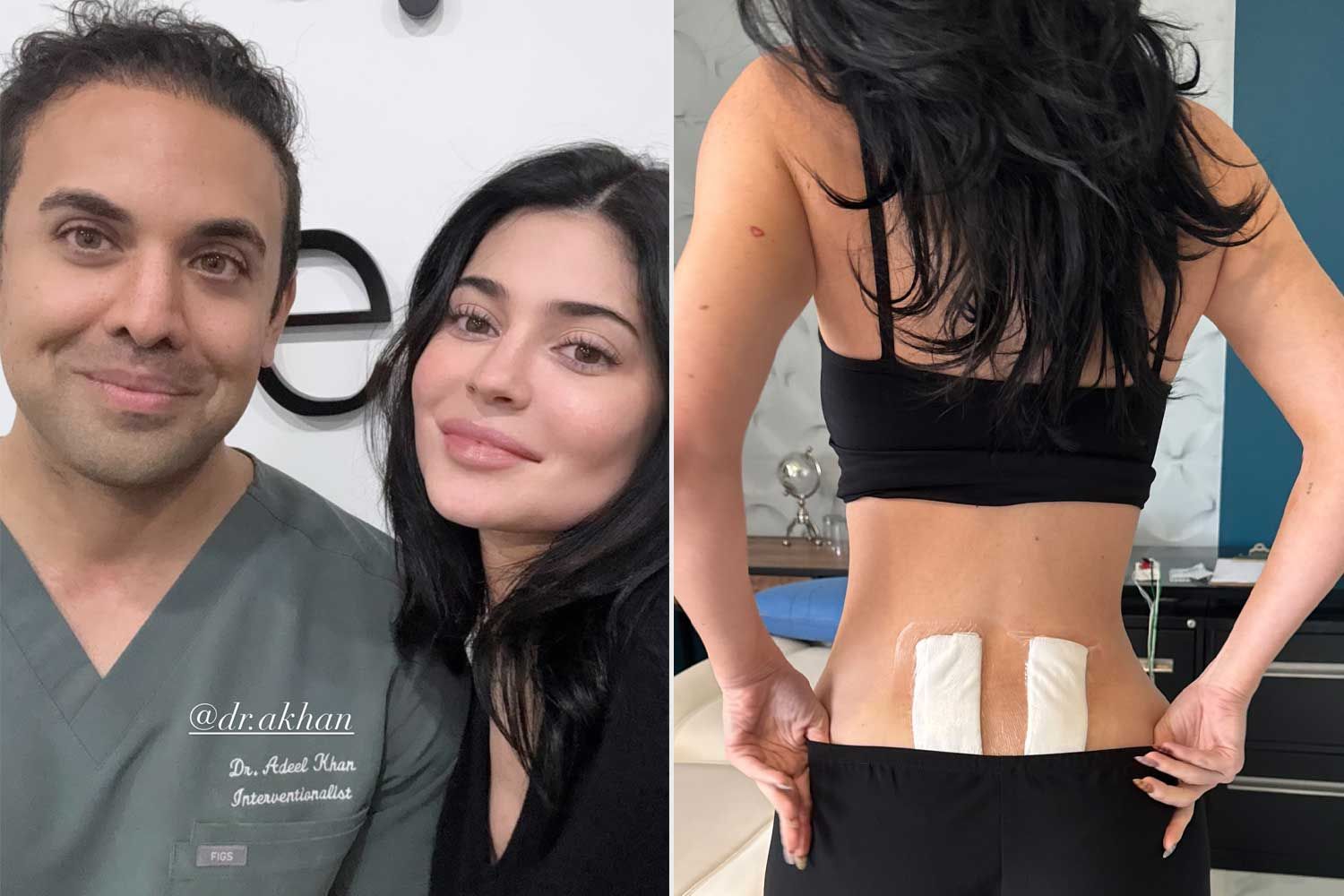
Kylie Jenner, a well-known media personality, entrepreneur and mother, recently revealed she underwent stem cell therapy to treat chronic back pain that began after her most recent pregnancy.
Kylie is mother to two children: a daughter named Stormi, and a son named Aire. According to her, her son’s birth was followed by persistent back pain — pain that reportedly lasted for almost three years and resisted all conventional treatments she tried.
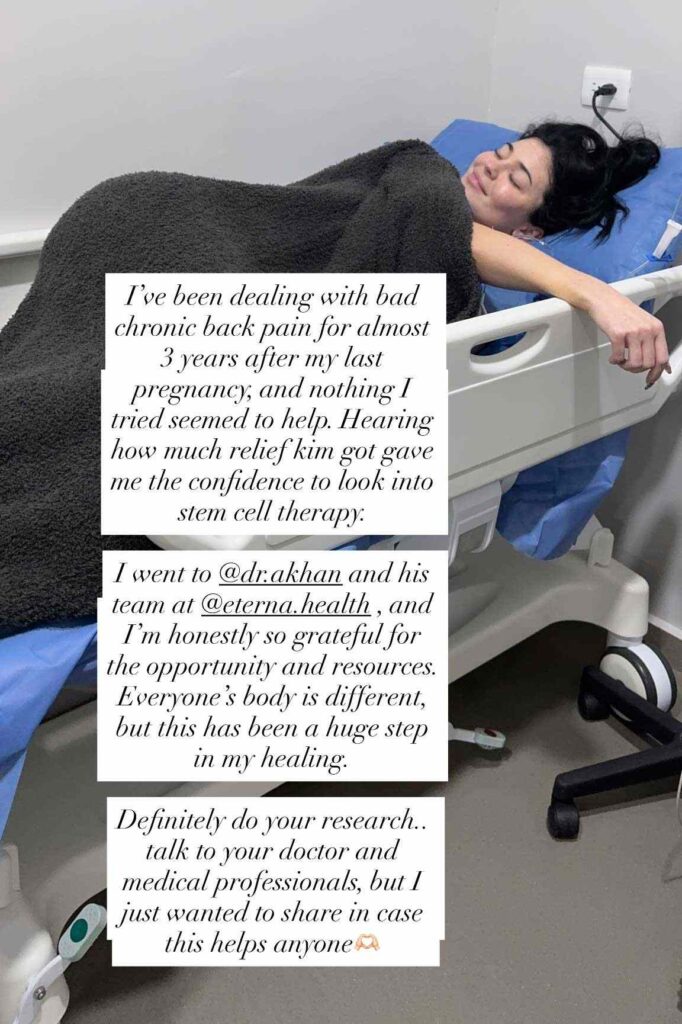
In her own words, “I’ve been dealing with bad chronic back pain for almost 3 years after my last pregnancy, and nothing I tried seemed to help.”
Faced with such persistent discomfort, Kylie decided to explore a more experimental route — stem cell therapy — inspired in part by her older half-sister’s positive experience with the same treatment.
What Is the Treatment — And What Did Kylie Do
Kylie revealed via her social-media (Instagram Stories) that she visited Dr. Adeel Khan and his team at a clinic known as Eterna Health for the procedure.
In her Instagram post, she shared photos of herself on a hospital bed, as well as images showing bandages on her lower back after the procedure — visible signs of where the therapy was administered.
Her caption to followers was candid: acknowledging that every body responds differently, but describing this stem cell therapy as “a huge step in my healing.”
She also urged caution and responsibility: “Definitely do your research… talk to your doctor and medical professionals, but I just wanted to share in case this helps anyone.”
What She Said It Did: Relief, Healing, Hope
According to Kylie, the stem cell therapy provided relief where everything else had failed. She emphasized that nothing before the therapy had successfully alleviated her chronic back pain.
She described the treatment as a major milestone in her journey towards healing.
Though she did not promise it’s a universal cure — she stressed that “everybody’s body is different.”
Her willingness to publicly share the experience — including hospital-bed photos and post-procedure details — suggests she hopes her journey might offer hope or guidance to others facing similar chronic pain after pregnancy or childbirth.
What Is Stem Cell Therapy — And What Are Its Promises & Caveats
Stem cell therapy refers to medical procedures that use stem cells — undifferentiated cells with the potential to develop into different specialized cell types — to repair or regenerate damaged tissue. In contexts like back pain, the idea is that stem cells might help heal or rejuvenate spinal tissues, reduce inflammation, and restore function.
Many people suffering from chronic pain — especially pain related to wear, injury, or stresses such as pregnancy — have begun exploring regenerative medicine including stem-cell treatments. For individuals whose bodies have not responded to conventional therapy (physiotherapy, medications, rest, etc.), stem-cell therapy offers a potential alternative.
That said — medical experts and researchers often caution that this field remains experimental for many conditions like chronic back pain. While there is promising early research, outcomes can vary widely, and long-term safety and efficacy are still being evaluated.
Indeed, in some countries, such therapies may not yet be approved for all uses, pushing individuals to travel — a phenomenon sometimes referred to as “stem-cell tourism.”
Why Kylie’s Public Disclosure Matters — And What It Reflects
When a high-profile celebrity like Kylie Jenner opens up about medical issues such as chronic pain and treatment through stem cell therapy, the ripple effects go beyond tabloids. Several dimensions stand out:
-
Visibility and destigmatization — By sharing her struggle with postpartum-related chronic back pain, she brings visibility to what many new mothers quietly suffer through. It may encourage others experiencing similar issues to seek help or consider options.
-
Attention to alternative medicine/regenerative care — Her story draws public attention to regenerative therapies. For many readers, it might be the first time they learn that stem-cell treatments — though niche — exist as potential interventions.
-
Celebrity influence and medical responsibility — Yet, given her reach, there’s also tension: celebrity endorsements of medical treatments risk giving undue legitimacy or making therapies seem more proven than they are. Her caveats (“everybody’s body is different… talk to your doctor…”) show some caution, but the impact is still significant.
-
Inequalities in access — Treatments like these are expensive and often not covered by standard health-care systems. For many people, especially outside privileged social circles, such therapies remain out of reach — which raises questions around equity in healthcare access.
-
Growing trend: Post-pregnancy health issues + regenerative medicine — Kylie’s case may reflect a broader movement: women (especially new mothers) increasingly seeking non-traditional, advanced therapies to address long-term consequences of pregnancy on their bodies.
Medical Perspective: What’s Known — And What Remains Uncertain
While stem cell therapy shows promise, medical professionals stress that for chronic back pain (especially pain emerging after pregnancy), the science is still evolving:
-
There is no guarantee of “cure” — because back pain has many causes (muscular, skeletal, ligamentous, nerve, posture-related). Stem cells may help with certain tissue damage or inflammation, but success depends heavily on individual conditions and precise diagnosis.
-
Regulatory and safety considerations — In many countries (including the U.S.), regulatory bodies like U.S. Food and Drug Administration (FDA) have not approved many stem-cell therapies for musculoskeletal pain or chronic back pain. Treatments offered abroad may fall outside these regulatory safeguards.
-
Long-term effects are still unclear — While some patients report relief, long-term data on durability of results, possible side-effects (e.g. overgrowth, abnormal tissue formation), or relapse is limited.
-
Need for caution, informed consent, and alternative options — Experts recommend pursuing conventional, evidence-based treatments (physiotherapy, lifestyle modification, medical consultations) before resorting to experimental regenerative therapy.
Parenthood, Postpartum, and the Body — Why This Resonates
Pregnancy and childbirth exert enormous stress on the body. For many women, the postpartum period involves recovery not just mentally and emotionally — but physically. Persistent back pain is a commonly reported complaint by many mothers, sometimes lasting months or years after birth.
When conventional treatments (rest, physiotherapy, medication, core strengthening) fail to provide sufficient relief, the appeal of regenerative therapies can grow — especially for someone juggling motherhood, public life, career, and social expectations.
Kylie’s public revelation may resonate with many mothers worldwide: it brings to light that postpartum effects can linger long-term, and that seeking help — even unconventional — does not need to be shameful.
It also reopens an important conversation on maternal health, bodily recovery after childbirth, and how medical systems (or lack thereof) support — or fail to support — long-term postpartum wellness.
What Experts — and Potential Patients — Should Keep in Mind
If you, or anyone reading, consider treatments similar to Kylie’s, keep these guidelines in mind:
-
Do your research thoroughly — Understand what stem cell therapy means, what it can and can’t do; look for peer-reviewed studies and credible medical guidance.
-
Consult qualified medical professionals — Get a complete diagnosis: back pain can have many causes and might respond well to conventional treatment.
-
Be cautious of “miracle cure” marketing — Especially from unregulated clinics abroad. Many therapies offered in “medical tourism” hubs are experimental and not approved by regulatory authorities.
-
Consider long-term risks and benefits — Ask about what is known (and not known) post-procedure: efficacy duration, side-effects, maintenance, cost.
-
Support from family and mental health care — Physical recovery is one part; postpartum and chronic pain can affect emotional and mental well-being too. Addressing both is crucial.
Final Thoughts: What Kylie’s Story Tells Us — And What It Doesn’t
Kylie Jenner’s openness about undergoing stem cell therapy for chronic back pain after pregnancy is more than a celebrity health update. It reflects the intersection of modern medicine, motherhood, public influence, privilege, and the search for healing beyond traditional approaches.
Her journey underscores the very real physical toll pregnancy can take — even for high-profile, well-resourced individuals — and how, sometimes, desperation or hope leads to exploring cutting-edge treatments.
However, it also serves as a cautionary tale: regenerative medicine is still young. What works for one person may not work for another, and what you see in glossy social-media posts may not reflect the full medical risks or long-term outcomes.
For now, Kylie’s story offers hope — but also a reminder to approach such choices with informed caution, realistic expectations, and medical guidance.
If you like, I can pull up 5–10 expert opinions from recent medical literature or physicians (2024–2025) on stem cell therapy for back pain — to help you see how doctors view such treatments generally.
Read Also: Keep your face towards the sunshine and shadows will fall behind you
Watch Also: https://www.youtube.com/@TravelsofTheWorld24













Leave a Reply