
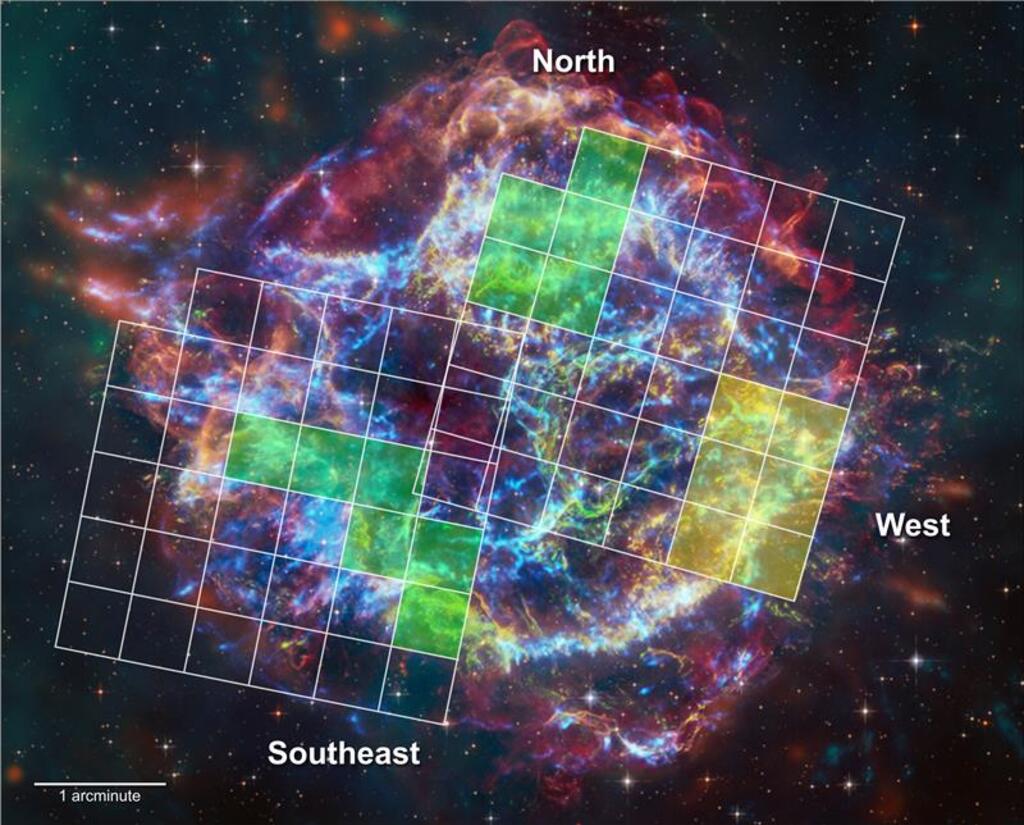
In December 2025, XRISM made a landmark discovery: for the first time, scientists detected clear X‑ray signatures of chlorine (Cl) and potassium (K) in the debris of a destroyed star — specifically in the well‑known supernova remnant Cassiopeia A (“Cas A”).
Using its cutting-edge spectrometer named “Resolve,” XRISM observed Cas A in December 2023 and identified unusually strong emission lines corresponding to chlorine and potassium. The detection of potassium was particularly significant — its signal registered above the 6 σ level, meaning it’s statistically highly robust. There was also a possible hint of another element, phosphorus (P), complementing earlier infrared-based hints of P in Cas A.
These findings mark the first unambiguous X‑ray detection of these “odd‑Z” elements (elements whose atomic number is odd) in a supernova remnant.
Why This Discovery Matters: Linking Stars to Life’s Building Blocks
Stellar Alchemy & Cosmic Chemistry
Stars are cosmic forges. Over their lives, they fuse light elements (like hydrogen, helium) into heavier ones — building up an “onion-like” structure of elemental layers. Then, when massive stars die in cataclysmic supernova explosions, they scatter those elements across space.
Astronomers have long known that supernovae produce abundant elements such as oxygen, carbon, neon, silicon, sulfur, iron — and these have been detected in remnants like Cas A for decades.
But odd-Z elements — like chlorine, potassium, phosphorus — are harder to form and harder to detect. Their yields from standard supernova models are typically predicted to be very low. As a result, their cosmic origin has remained poorly constrained.
Now, XRISM’s detection shows that at least some supernovae can forge and eject these rarer but life‑critical elements — providing direct evidence that the explosive deaths of stars help seed the universe with the chemical ingredients essential for planets and — potentially — life. “This discovery helps illustrate how the deaths of stars and life on Earth are fundamentally linked.”
Challenging and Refining Supernova Models
The unusually high amounts of Cl and K detected in Cas A are much greater than what standard supernova nucleosynthesis models have predicted.
This mismatch suggests that our models are missing important physics: perhaps effects of stellar rotation, binary interactions, or shell mergers (interactions between different fusion layers inside the star) before explosion.
Thus, XRISM’s data is not just confirming existence of certain elements — it forces astrophysicists to revisit and improve the theoretical framework underlying stellar evolution and nucleosynthesis.
What the Observations Reveal About the Original Star and Explosion
Asymmetry in Explosion & Element Distribution
By mapping where in Cas A the chlorine and potassium concentrated, researchers found that the elements are not evenly spread. Instead, potassium appears strongly in the southeast and northern parts of the remnant; weaker signals appear toward the west.
This uneven distribution suggests that the original star — before exploding — had internal asymmetries; or that during the explosion, its interior underwent chaotic mixing. That mixing likely produced conditions for odd‑Z element creation, and then ejecta were blasted out unequally in certain directions.
Such asymmetries have implications beyond element yield: they might explain how the remaining neutron star got a “kick” velocity, or how various layers of the star mixed before and during the blast. Indeed, earlier studies of Cas A and other supernova remnants had already hinted at asymmetric explosions; XRISM’s elemental mapping adds further weight to those ideas. 
High‑Resolution Spectroscopy Makes the Difference
The key to this breakthrough is XRISM’s Resolve spectrometer — capable of exceptionally high energy resolution in X‑rays. That sensitivity allows it to detect faint emission lines of rare elements, which previous missions could not isolate clearly.
Combined with multi‑wavelength data from other observatories (optical, infrared, older X‑ray data), astronomers can now paint a richer, more detailed picture of how supernovae distribute elements — not just the common ones, but the rarer, biologically important ones too.
Broader Implications: What This Means for Cosmic Chemistry & Life in the Universe
Tracing Life’s Origins — On Earth and Beyond
Potassium plays a vital role in biological processes (e.g., muscle and cell function). Chlorine is also important for planetary chemistry (e.g., salts, ocean chemistry). Detecting these in supernova remnants connects the cosmic origin of life‑essential elements to stellar death.
This strengthens the idea that planets like Earth — rich in the elements needed for life — are built from the ashes of ancient stars. XRISM’s findings tighten the link between stellar physics and astrobiology.
Updating the Cosmic Chemical Inventory
Astronomers build “cosmic chemical evolution” models to understand how galaxies, stars, and planets accumulate elements over time. Having accurate data on odd‑Z element abundances helps calibrate these models, yielding better predictions for star formation, planet formation, and chemical enrichment of galaxies.
A New Era for X-ray Astronomy
XRISM’s success demonstrates the power of high‑resolution X‑ray spectroscopy. While visible, infrared, and radio astronomy remain vital, X‑ray spectroscopy is proving indispensable in probing extreme environments — like supernova remnants — where densities, temperatures, and element synthesis produce unique signals that only X‑rays can reveal.
Future observations of other supernova remnants with XRISM (or successor missions) could uncover more examples of rare elements, improve statistics, and reveal diversity in how stars explode and seed the cosmos.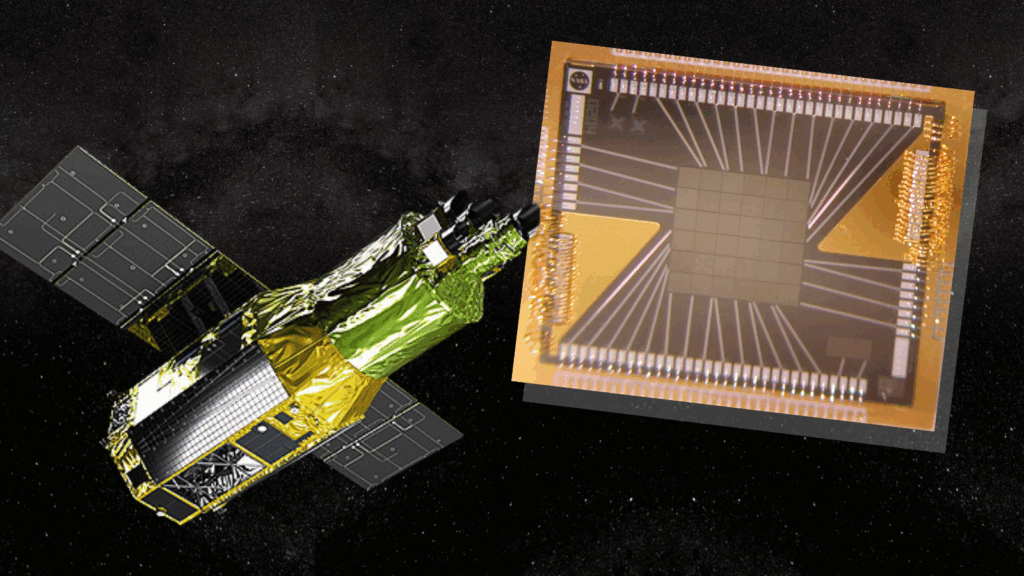
Technical Details: What XRISM Is and How the Observation Was Done
-
XRISM stands for X‑ray Imaging and Spectroscopy Mission. It’s a collaboration led by JAXA, with major contributions from NASA and ESA. The mission carries a high-resolution spectrometer called Resolve.
-
In December 2023, Resolve observed the Cas A supernova remnant, collecting X‑ray spectra across its debris cloud.
-
Scientists repeated observations to ensure signal reliability and identify emission lines belonging to chlorine, potassium — and tentatively phosphorus.
-
The spectral data showed element abundances much higher than standard models — suggesting enriched synthesis mechanisms inside the progenitor star.
What We Still Don’t Know — and What to Explore Next
While this discovery is groundbreaking, it also raises many new questions:
-
How common is this enriched production of odd‑Z elements? Was Cas A exceptional, or are many supernovae similarly “over-producing” chlorine and potassium?
-
What internal stellar processes cause this enrichment? Is it stellar rotation, mixing, binary interactions, or something else?
-
How do these elements get distributed across the remnant — uniformly, or with directional biases? The asymmetry in Cas A indicates complexity, but more cases need study.
-
What about other rare elements — phosphorus, manganese, etc.? XRISM and other missions may help detect them in future observations, shedding light on the full suite of life‑enabling elements generated by stars.
-
What does this mean for planet formation and habitability in other parts of the universe? If odd‑Z element production is more widespread than thought, it improves prospects for Earth‑like chemistry elsewhere.
Conclusion: A Stellar Origin of Life’s Essentials — Revealed
The recent findings by XRISM — chlorine and potassium in the debris of the Cas A supernova remnant — represent a major leap forward in our understanding of cosmic nucleosynthesis, stellar death, and the chemical foundations of life.
-
For the first time, rare but biologically important elements have been unambiguously traced to a supernova remnant.
-
The results challenge existing theoretical models, calling for revisions that account for enriched production of odd‑Z elements via stellar mixing, rotation, or complex pre‑explosion history.
-
The asymmetric distribution of these elements in the remnant offers clues about how stellar explosions might behave — not as neat, symmetrical events, but as chaotic, uneven blasts that scatter elements in complex patterns.
-
More broadly, this discovery reinforces a profound cosmic truth: that the atoms in our bodies, in our planet, in every living cell — were once forged in the hearts of distant stars, and scattered across space by titanic explosions.
As XRISM continues its mission, and as other observatories contribute complementary data, astronomers inch closer to unraveling the full story of how stars seeded the universe with the ingredients for planets — and possibly, for life itself.
Read Also: Keep your face towards the sunshine and shadows will fall behind you
Watch Also: https://www.youtube.com/@TravelsofTheWorld24









Leave a Reply