
The Best Water Aerobics Workouts and Exercises

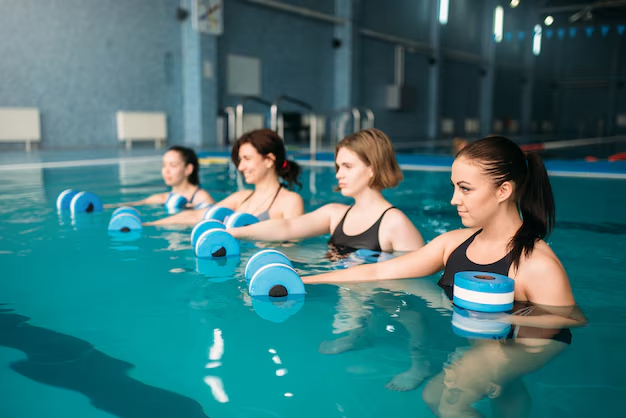
Water aerobics has quickly become one of the most effective and enjoyable ways to stay fit. Whether you’re looking to build strength, burn calories, improve joint mobility, or simply enjoy a refreshing workout, the pool offers endless possibilities. What makes water aerobics unique is how it combines cardio, strength, flexibility, and resistance training into one low-impact routine that’s gentle on the body and suitable for almost everyone.
In this guide, we break down the best water aerobics workouts and exercises, explaining how each move benefits your body and how you can easily incorporate them into your fitness routine—whether you’re attending a class or exercising on your own.
Why Water Aerobics Workouts Are So Effective
Water provides natural resistance—up to 12 times greater than air. This means every movement requires effort, helping you build strength while staying cushioned by water’s buoyancy. The pool environment also reduces impact on the joints, making water aerobics perfect for beginners, seniors, people with arthritis, pregnant women (with doctor approval), and anyone recovering from injury.
Key benefits include:
-
Full-body toning
-
Improved heart health
-
Enhanced flexibility
-
Better balance and coordination
-
Stress relief
-
High calorie burn
Now let’s explore the top workouts and exercises that offer the biggest benefits.
1. Water Walking and Jogging

How to Do It
Walk or jog from one end of the pool to the other while keeping your core engaged. Increase speed to make it more challenging.
Why It Works
-
Strengthens legs, glutes, and core
-
Boosts cardiovascular endurance
-
Safe alternative for people with knee or hip pain
Variations
-
High-knees water jogging
-
Backward water walking
-
Side-step walking
This is often used as a warm-up, but it can also stand alone as a full cardio workout.
2. Flutter Kicks
How to Do It
Hold onto the pool wall or a kickboard. Straighten your legs and kick them rapidly in an alternating motion.
Benefits
-
Strengthens the lower abs
-
Tones the legs and hips
-
Improves swimming endurance
Intensity Boost
Kick faster, or perform kicks vertically in the deep end with a buoyancy belt.
3. Water Aerobics Jumping Jacks

How to Do It
Just like on land—jump legs wide and bring arms overhead, then return to starting position.
Why It’s Effective
-
Low-impact but high-intensity
-
Works arms, legs, chest, and core
-
Great calorie burner
Water resistance slows the movement, which means deeper muscle engagement.
4. Aqua Leg Lifts
How to Do It
Stand with one hand on the pool wall. Lift one leg sideways, forward, or backward. Repeat 10–15 times per leg.
Benefits
-
Strengthens hips and glutes
-
Improves balance
-
Helps with joint mobility
Leg lifts are especially beneficial for older adults and those recovering from lower-body injuries.
5. Tuck Jumps
How to Do It
In chest-deep water, jump slightly and pull your knees toward your chest. Lower your legs and land softly.
Benefits
-
Builds core strength
-
Improves coordination
-
Raises heart rate quickly
Because water absorbs impact, tuck jumps are much gentler than land versions.
6. Aqua Push-Downs With Water Dumbbells
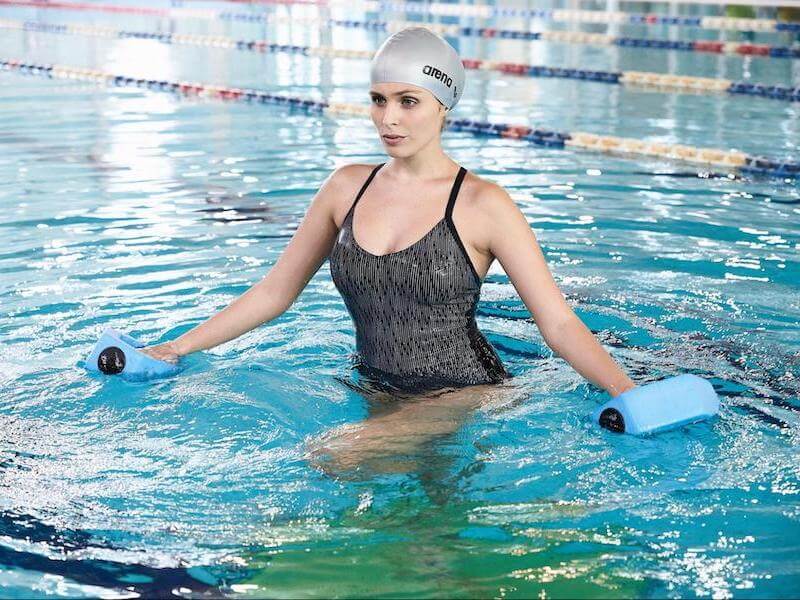
Hold foam dumbbells under the water. Push them down toward your hips, then slowly raise them back up.
Works
-
Shoulders
-
Chest
-
Upper back
-
Arms
Why It’s Great
Water dumbbells offer adjustable resistance—push harder for more intensity.
7. Bicycle Kicks
How to Do It
Lean against the pool wall or hold onto a noodle. Pedal your legs underwater like riding a bicycle.
Benefits
-
Strengthens core, quads, glutes
-
Improves hip mobility
-
Lowers back strain compared to land cycling
Deep-water bicycle kicks activate more muscles because you must stabilize your torso.
8. Aqua Ski Jump Exercise
How to Do It
Stand straight and jump your legs forward and backward like a skiing motion while swinging your arms.
Why It Works
-
Excellent cardio
-
Works inner thighs, outer thighs, and core
-
Improves rhythm and coordination
This move is commonly used in group classes because it’s both fun and effective.
9. Inner and Outer Thigh Squeezes
How to Do It
Place a water noodle between your legs. Squeeze to keep it submerged, then release.
Benefits
-
Targets inner and outer thighs
-
Strengthens pelvic floor
-
Supports lower-body toning
This is a favourite among those looking to tone legs and improve functional strength.
10. Deep-Water Running

How to Do It
Wear a flotation belt and “run” in the deep end without touching the pool floor.
Benefits
-
Zero impact on joints
-
Excellent cardio alternative to treadmill running
-
Activates stabilizer muscles
Athletes often use this during injury recovery because it maintains endurance safely.
11. Aqua Punching and Boxing Moves
How to Do It
Stand in waist-deep water and punch forward, upward, or downward. Add hooks and uppercuts for variety.
Why It’s Effective
-
Builds arm and shoulder strength
-
Engages chest and upper back
-
Great for releasing stress
Use water gloves to increase resistance.
12. Pool Planks
How to Do It
Hold onto a foam noodle or kickboard and extend your legs behind you until your body forms a straight line.
Benefits
-
Strengthens deep core muscles
-
Safer alternative to floor planks
-
Improves posture and stability
Hold for 20–45 seconds for best results.
13. Water Aerobics Circuit Workout (Sample Routine)
If you want a complete session, try this 20–25 minute beginner-friendly circuit:
Warm-Up (3 minutes)
-
Water walking
-
Arm circles
-
Light kicks
Main Workout (15 minutes)
-
Jumping Jacks – 1 minute
-
Flutter Kicks – 1 minute
-
Aqua Punches – 1 minute
-
Leg Lifts – 1 minute
-
Ski Jumps – 1 minute
-
Repeat all moves once more
Deep-Water Run (3 minutes)
Run or jog with a flotation belt.
Cool Down (3–4 minutes)
-
Slow water walking
-
Full-body stretching
-
Deep breathing
This routine targets cardio, strength, and flexibility in one session.
14. Tips for Getting the Most Out of Water Aerobics
-
Wear water shoes for better traction.
-
Keep your core engaged during all movements.
-
Increase intensity by pushing harder or moving faster underwater.
-
Stay hydrated even though you’re in water.
-
Use equipment like noodles, belts, or dumbbells to increase resistance.
Conclusion
Water aerobics offers a refreshing and powerful workout that strengthens your body, improves cardiovascular health, boosts flexibility, and supports overall well-being. With the natural resistance of water and the low-impact environment of the pool, it’s one of the safest and most effective ways to stay active—no matter your age or fitness level.
Read Also: The Race to 300 mph: Will Hennessey or Koenigsegg Break the Speed Record in 2025?
Watch Also: https://www.youtube.com/@TravelsofTheWorld24




Leave a Reply