
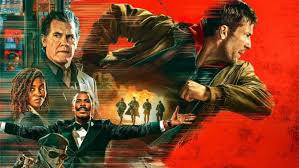
Few films have captured the imagination of audiences as vividly as The Running Man, the 1987 dystopian action thriller starring Arnold Schwarzenegger. Based loosely on the 1982 novel by Stephen King (under the pseudonym Richard Bachman), the movie presents a futuristic society dominated by authoritarian control, televised spectacle, and the brutal commercialization of violence. Though rooted in the 1980s cultural landscape, its themes of media manipulation, societal control, and the ethics of entertainment continue to resonate, making it a relevant and thought-provoking experience for modern audiences.
Set in a totalitarian United States of the near future, The Running Man introduces viewers to a society where unemployment, poverty, and fear dominate the lives of ordinary citizens. To pacify the public, the government promotes a series of violent game shows that allow condemned individuals to participate in life-or-death competitions for the amusement of the masses. The titular “Running Man” game show is the most popular of these, blending gladiatorial combat with televised drama in a chilling display of state-controlled entertainment.
The film’s protagonist, Ben Richards (Arnold Schwarzenegger), is a wrongfully accused police officer who becomes a participant in The Running Man after being framed for a violent crime he did not commit. His journey through the game show is both literal and metaphorical: he must outrun deadly “stalkers” hired by the producers while simultaneously navigating a society that thrives on fear, misinformation, and spectacle. Richards embodies resilience, intelligence, and moral fortitude, qualities that make him a compelling hero in a narrative that critiques the corrupting influence of power.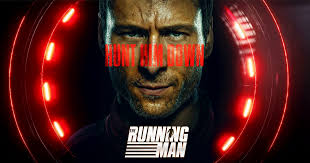
One of the most striking aspects of The Running Man is its satirical critique of media and consumer culture. The game show within the film is a hyperbolic version of reality television, highlighting the dangers of sensationalism and the public’s appetite for violence disguised as entertainment. Producers manipulate narratives, exaggerate conflicts, and glamorize brutality, all while framing the contestants’ suffering as captivating drama. This depiction, though exaggerated for effect, serves as a cautionary tale, anticipating many of the ethical debates surrounding reality television and the entertainment industry today.
The film’s action sequences are designed to thrill and provoke reflection simultaneously. Richards must survive a series of increasingly dangerous encounters with the show’s professional killers, known as “stalkers,” each representing a particular method of lethal efficiency. From the masked and armed Dynamo to the towering and sadistic Subzero, these antagonists test Richards’ ingenuity and determination. While the sequences are visually arresting and adrenaline-fueled, they also emphasize the grotesque spectacle of televised violence and the way entertainment can desensitize audiences to real-world suffering.
Another critical element of the movie is its exploration of social inequality and authoritarianism. In The Running Man, the divide between the ruling elite and the impoverished masses is stark. The government uses fear, propaganda, and entertainment to control the population, ensuring compliance through distraction and intimidation. By placing ordinary citizens in perilous situations for public amusement, the film underscores the dangers of unchecked power and the ethical compromises inherent in mass media manipulation. This critique resonates even today, as audiences grapple with issues of media bias, political spin, and social influence.
The Running Man also benefits from Schwarzenegger’s iconic screen presence. His portrayal of Ben Richards combines physical prowess with moral conviction, creating a hero who is both formidable and relatable. Schwarzenegger’s performance anchors the film, balancing intense action with moments of reflection, humor, and human connection. Supporting actors, including Maria Conchita Alonso as Amber Mendez, provide depth and emotional stakes, reminding viewers that even in dystopian worlds, compassion and loyalty remain essential.
Cinematically, the film embraces a distinctive 1980s aesthetic, blending neon-drenched cityscapes, high-tech propaganda, and dystopian architecture to create a visually memorable universe. Director Paul Michael Glaser leverages stylized sets, practical effects, and kinetic camera work to amplify tension, making viewers feel the immediacy of danger while immersing them in a world simultaneously familiar and unsettling. The music, score, and sound design further enhance the film’s dramatic intensity, emphasizing both the spectacle and the darker undercurrents of the story.
Read Also: The Race to 300 mph: Will Hennessey or Koenigsegg Break the Speed Record in 2025?
What sets The Running Man apart from many action films of its era is its underlying social commentary. Beyond the thrilling chase sequences and violent confrontations, the film interrogates the ethics of entertainment, the role of government in shaping public perception, and the responsibilities of individuals in resisting oppression. The narrative challenges audiences to question their own consumption of media and to recognize the potential consequences of passivity in the face of authoritarian control.
The movie’s cultural impact extends beyond its initial release. The Running Man has inspired numerous discussions about dystopian fiction, media ethics, and the relationship between violence and entertainment. Its prescient depiction of reality television as a tool for social control anticipates contemporary concerns about the blending of entertainment, news, and propaganda. Memorable quotes, characters, and set pieces have cemented the film in pop culture, influencing subsequent works in film, television, and video games that explore dystopian themes and the spectacle of televised competition.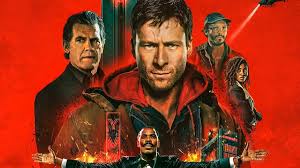
Although the film diverges significantly from Stephen King’s original novel — which is darker, more politically charged, and grim in tone — the adaptation succeeds in creating a thrilling, socially resonant experience. By focusing on high-octane action and satirical humor, the filmmakers crafted a narrative that is both entertaining and intellectually engaging, balancing spectacle with critique in a way that few action films manage.
In conclusion, The Running Man remains a standout in the annals of dystopian cinema. Its combination of compelling characters, gripping action, and incisive social commentary ensures its lasting relevance. The film is a cautionary tale about the dangers of media manipulation, authoritarian control, and societal desensitization to violence, yet it remains entertaining, engaging, and thought-provoking. As a cultural artifact, it continues to resonate with audiences, prompting reflection on power, morality, and the enduring struggle for justice in societies driven by spectacle and control.
Whether revisited for nostalgia or discovered by new viewers, The Running Man exemplifies how action films can offer more than thrills: they can provoke thought, inspire conversation, and illuminate enduring truths about human nature, society, and the power of media. Nearly four decades after its release, the film stands as both a thrilling adventure and a prescient reflection on the intersections of entertainment, politics, and morality.
Watch Also: https://www.youtube.com/@TravelsofTheWorld24











Leave a Reply