
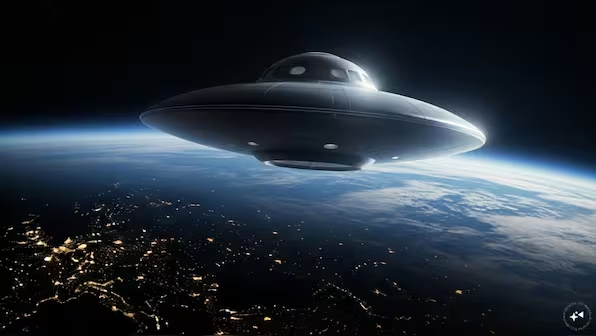
For decades, the idea of an alien spacecraft entering our solar system has been the foundation of science-fiction movies, conspiracy theories, and imaginative speculation. But recent astronomical discoveries and the detection of unusual interstellar objects have revived a serious scientific question: What if an artificial object—an alien spacecraft—were heading toward Earth? Could humanity detect it in time, evaluate its threat, and respond? While the possibility remains extremely small, exploring the scenario helps us better understand our cosmic environment, our technological limitations, and the steps scientists are taking to prepare for unexpected visitors from beyond.
The Rise of Interstellar Mysteries
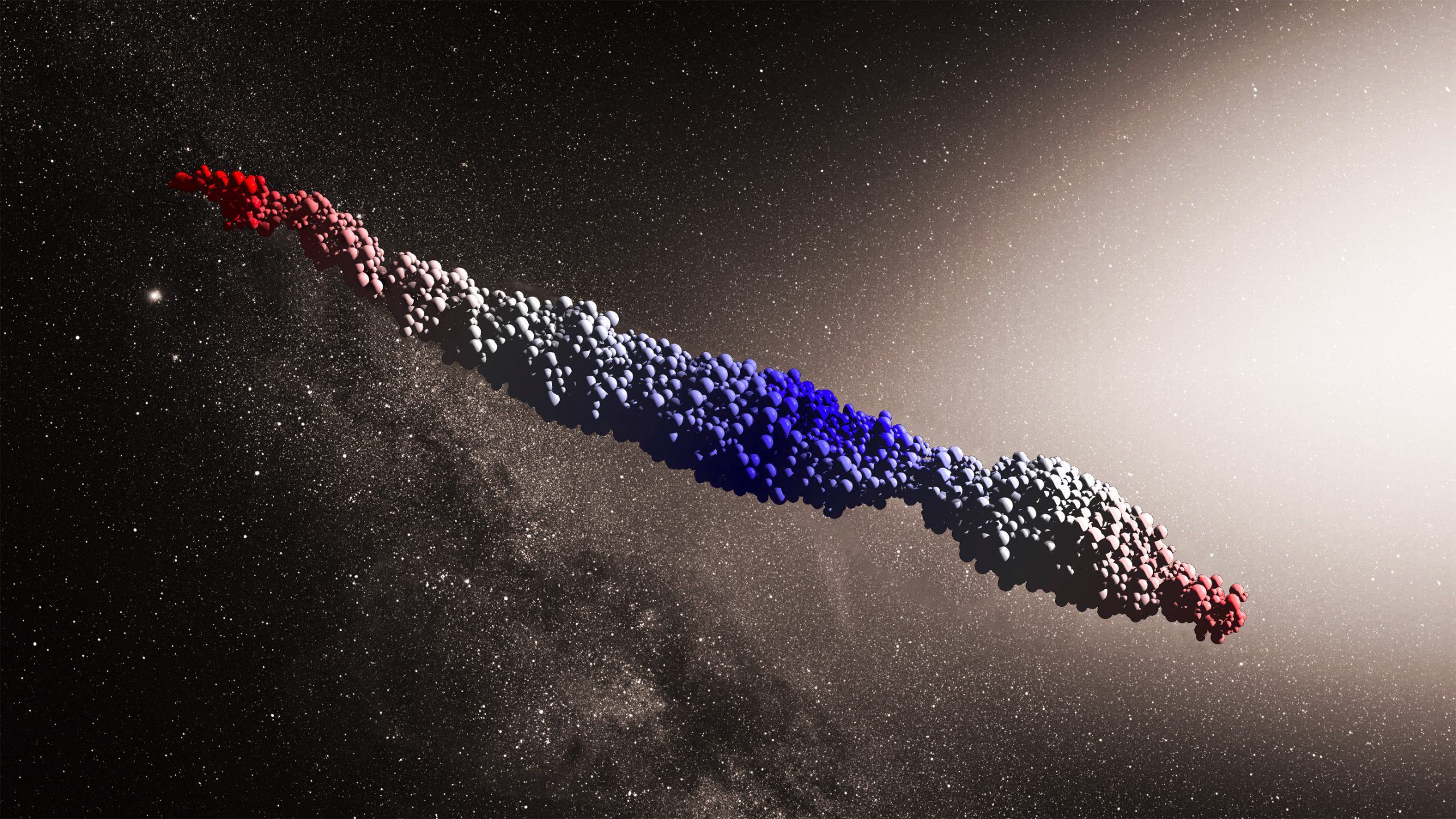
Interest in interstellar visitors exploded in 2017 with the discovery of ‘Oumuamua, the first known object from outside our solar system. Unlike asteroids typically observed near Earth, ‘Oumuamua behaved strangely—accelerating without visible propulsion, tumbling in an unusual pattern, and possessing a shape unlike anything seen before. This led some scientists, including Harvard’s Avi Loeb, to theorize that it might be artificial, possibly a fragment of alien technology such as a solar sail.
Although the majority of experts view ‘Oumuamua as a natural object, its unexplained features ignited a fresh global debate: if an artificial object entered our solar system, how would we distinguish it from a natural asteroid or comet? And more importantly, would we know if it was heading toward Earth?
The discovery of a second interstellar object, 2I/Borisov, in 2019 confirmed that interstellar visitors are not unique. These detections proved that objects from other star systems do pass through our cosmic neighborhood, and more may be on the way.
Could an Alien Spacecraft Be Approaching Earth?
From a scientific standpoint, the odds that an incoming interstellar object is an alien spacecraft remain extremely low. The universe is vast, distances between stars are enormous, and traveling across interstellar space requires unimaginable energy. However, scientists do acknowledge that technology far exceeding ours could make such journeys possible.
Today’s telescopes and detection systems continuously scan the skies. If something unusual were approaching Earth, we would likely detect it through one of several channels:
1. Infrared Signatures
Artificial spacecraft using engines, reactors, or propulsion systems might emit heat detectable by infrared observatories such as NASA’s NEOWISE telescope.
2. Unusual Acceleration or Movement
If an object moved in ways that defy known physics—like ‘Oumuamua’s unexplained acceleration—astronomers would flag it for further analysis.
3. Radio or Electromagnetic Signals
Sensitive instruments like those used by the SETI program monitor the sky for structured, intentional signals that cannot be produced naturally.
4. Anomalous Shape or Reflectivity
A spacecraft may reflect sunlight differently than rock or ice, indicating metallic surfaces or artificial geometry.
So far, no confirmed evidence of an alien spacecraft approaching Earth has been found. But the possibility, however remote, is intriguing enough that space agencies and researchers are preparing for such scenarios.
Why the Fear of an Alien ‘Invader’ Persists
Humanity has always feared the unknown, and the concept of extraterrestrial visitors—friendly or hostile—touches deep psychological buttons. Movies and stories often portray aliens as conquerors, colonizers, or predators. This narrative shapes public perception, making any strange interstellar object seem like a potential threat.
But scientists approach the idea differently. From a rational perspective, any civilization capable of traveling light-years to reach Earth would possess technology far beyond ours. They would not need to “invade” using crude physical force. If their intentions were harmful, they could observe or influence Earth from a distance without ever landing.
Thus, most experts believe that if aliens arrived, it would be out of curiosity, exploration, or scientific interest—much like how humans send probes to distant planets.
Is Earth Prepared for an Interstellar Encounter?
While the likelihood of a hostile spacecraft appearing is extremely small, space agencies have begun developing protocols for unexpected cosmic threats, both natural and artificial.
Detection Networks
Organizations like NASA’s Planetary Defense Coordination Office track thousands of near-Earth objects. New telescopes, including the upcoming Vera Rubin Observatory, will soon be able to detect interstellar objects earlier and more accurately than ever before.
Scientific Response Teams
If an object with unknown origin were detected, international teams of astronomers, physicists, and communication specialists would collaborate to:
-
analyze its trajectory
-
determine if it is natural or artificial
-
assess any potential risk
-
prepare appropriate responses
Communication Protocols
Groups such as the SETI Institute and the International Academy of Astronautics have developed guidelines for messaging extraterrestrial intelligence. These include:
-
verifying signals before public announcements
-
coordinating global communication
-
ensuring transparent reporting
Planetary Defense
If an object—even a natural one—were on a collision course with Earth, technologies like kinetic impactors, gravity tractors, or nuclear deflection methods could, in theory, change its path. These plans remain untested on a real threat, but their development shows that humanity is thinking seriously about cosmic dangers.
Why an Alien Spacecraft Is Unlikely to Be Hostile
While the idea of a hostile invasion fuels exciting stories, scientists argue that aggression is unlikely for several reasons:
1. Enormous Distance and Effort
A species capable of crossing interstellar distances would have already solved major challenges—energy, longevity, propulsion. Their focus would likely be exploration, not conquest.
2. Limited Resource Motivation
Earth’s resources are abundant to us, but may be insignificant to an advanced species capable of harvesting the energy of stars.
3. Non-Interference Logic
Advanced civilizations may follow a principle similar to our own planetary protection rules: avoid interfering with less developed worlds.
4. Technology Gap
If aliens wanted to harm Earth, they could do so without physical invasion. Their ability to reach us implies access to technologies beyond our imagination.
In short, the arrival of a spacecraft—if it ever happened—would likely be an opportunity for discovery rather than a threat.
So, Is Earth in Danger?
Based on all available scientific evidence: No. Earth is not currently in danger from an incoming alien spacecraft.
Astronomers continue to monitor interstellar objects, and while some behave strangely, none have shown features that definitively indicate artificial origin. The cosmos remains vast and mysterious, but for now, our planet is safe.
Still, the ongoing search for interstellar visitors—natural or otherwise—is crucial. Each discovery brings us closer to understanding our place in the universe and answering one of humanity’s greatest questions: Are we alone?
Until we know for certain, we watch the skies, we listen for signals, and we continue to prepare—not for fear, but for the incredible possibility that someday, someone out there might reach back.
Read Also: Keep your face towards the sunshine and shadows will fall behind you
Watch Also: https://www.youtube.com/@TravelsofTheWorld24














Leave a Reply