
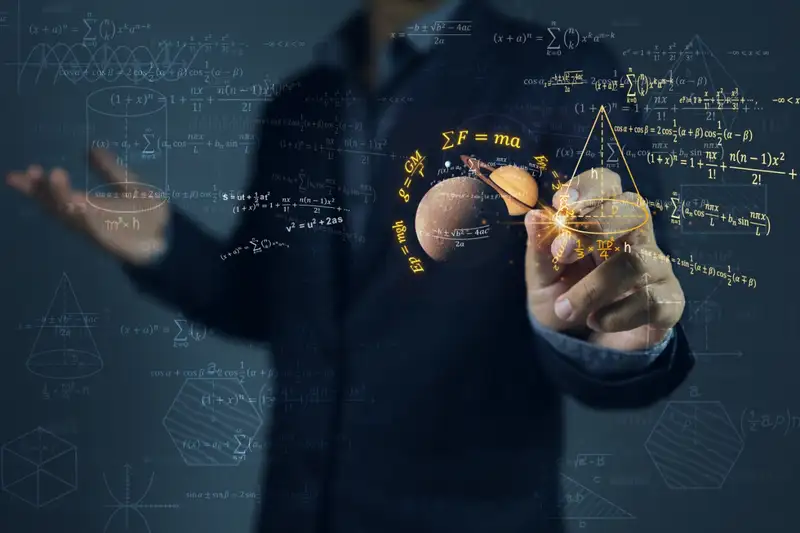
Science and mathematics have shared a deep, interdependent relationship for centuries. From explaining the movement of planets to decoding the behavior of atoms, mathematics has served as the backbone of scientific progress. Yet, as scientific thinking evolves, a debate often resurfaces: Does science rely too heavily on mathematics? While mathematics undeniably strengthens scientific inquiry, an overdependence on it can sometimes narrow our understanding of complex, real-world phenomena. Exploring this balance reveals how science benefits from mathematics, and where this reliance may unintentionally limit creativity, interpretation, and holistic understanding.
The Historical Roots of the Science–Math Bond
The relationship between science and mathematics began long before modern physics or computer science. Ancient civilizations used basic mathematical principles to observe the stars, predict seasons, and measure land. As human knowledge expanded, so did the need for precise ways to quantify natural events. Mathematics became essential because it gave scientists a universal language that transcended culture and time.
The Scientific Revolution further strengthened this bond. Figures like Isaac Newton, Galileo Galilei, and Johannes Kepler built entire theories based not only on observation but on mathematical equations. Newton’s laws of motion, Maxwell’s equations of electromagnetism, and Einstein’s theory of relativity all rely heavily on mathematical structures. Without mathematics, these groundbreaking scientific models would be incomplete or perhaps even impossible.
However, as science advanced, its mathematical backbone grew more complicated. Today, much of theoretical physics, climate modeling, artificial intelligence, and cosmology depends on highly abstract mathematics—sometimes far removed from direct observation.
Why Science Needs Mathematics
Before addressing why science may rely too much on mathematics, it is important to understand why mathematics plays such a central role in the first place. There are several key reasons:
1. Precision and Clarity
Mathematics allows scientists to express ideas with unmatched precision. Words can be vague or interpreted differently, but numbers and formulas leave little room for doubt. If a physicist says the acceleration due to gravity is 9.81 m/s², the meaning is clear and universal.
2. Predictive Power
Science depends on the ability to predict future events. Mathematics enables this with extraordinary accuracy. Weather forecasts, population projections, and orbital paths of satellites all depend on mathematical models. These predictions are essential for technology, engineering, and applied sciences.
3. Logical Structure
Mathematics enforces logical consistency. Scientific theories need internal structure, and mathematics provides rules that prevent contradictions. Without mathematical logic, many theories would fall apart under scrutiny.
4. Universal Language
Scientists from different countries, backgrounds, and languages can collaborate through mathematics. A chemical formula or a differential equation means the same thing in every corner of the world, making collaboration easier and more effective.
Where Science Relies Too Much on Mathematics
Despite the undeniable benefits, the growing complexity of mathematics in modern science raises important concerns. Many branches of science now rely so heavily on mathematical models that empirical evidence and intuitive understanding sometimes take a secondary role.
1. When Mathematics Replaces Observation
The goal of science is to understand the natural world, yet some modern theories are built almost entirely on mathematical assumptions rather than physical evidence. For example, certain areas of theoretical physics—such as string theory—are mathematically elegant but have little experimental confirmation. Critics argue that when a theory is driven more by mathematical beauty than by observable reality, it stops being science and becomes speculation.
2. Over-Complex Models Can Mislead
In fields like economics, epidemiology, and climate science, complex mathematical models are widely used to predict trends. While many models are useful, others oversimplify reality or rely on uncertain assumptions. A mathematical model is only as good as the data fed into it. When models become too abstract, they may give a false sense of certainty and mislead policymakers or researchers.
3. Mathematics Can Limit Creativity
The structure of mathematics is both a strength and a limitation. Its strict rules and logical boundaries can sometimes hinder creative thinking. Some scientific breakthroughs come from intuition, imagination, and unconventional thinking—qualities that cannot always be expressed mathematically. When scientists rely too heavily on equations, they may overlook alternative explanations or innovative ideas.
4. Accessibility and the “Mathematical Barrier”
Modern scientific papers are often filled with advanced formulas, making them inaccessible to the general public—and even to scientists from other fields. This creates a barrier between experts and society, reducing public trust and understanding of science. A scientific idea should be understandable without needing a PhD in advanced calculus. Overreliance on mathematics reinforces intellectual exclusivity and limits broader participation in scientific discourse.
5. Uncertainty Hidden Behind Calculations
Numbers often give the illusion of certainty. When scientists present statistical results, probability models, or large data analyses, the mathematical structure can hide underlying uncertainties. For example, a prediction stated as “95% confidence” can sound extremely reliable, but it may still rely on assumptions that are not fully understood or accurate. Overdependence on mathematical output can create false confidence in results.
The Balance Between Mathematics and Reality
Despite concerns about overreliance, the question is not whether science should use mathematics—it must—but whether it uses it appropriately. The best scientific theories combine mathematical structure with real-world evidence and conceptual understanding.
1. Observation Comes First
Science should begin with observation. Mathematics should help describe and explain what we observe, not replace the need for observation. Many great scientists—Darwin, Faraday, and Mendel among them—made revolutionary discoveries without relying heavily on mathematics. Their work shows that fundamental scientific insights can emerge from careful observation and experimentation.
2. Mathematics as a Tool, Not a Master
Mathematics should guide scientific thought, but not control it. Theories must be testable and falsifiable. If a mathematical model cannot be verified experimentally, it should be treated cautiously. Science progresses by finding a harmony between mathematical predictions and real-world validation.
3. Encouraging Interdisciplinary Thinking
Fields like biology, psychology, and environmental science often involve complex systems that cannot always be captured through equations alone. Qualitative reasoning—observation, pattern recognition, conceptual explanations—can sometimes offer deeper insight than mathematical models. Science becomes richer when different approaches are allowed to complement one another.
4. Simplifying Without Oversimplifying
Mathematical models should aim for simplicity while accurately representing reality. A good model balances clarity with complexity. When mathematics becomes too abstract or difficult to interpret, it loses its value as a tool.
Conclusion
Science and mathematics will always be partners. Mathematics provides structure, precision, and predictability, allowing science to explain the universe with remarkable clarity. But when science depends too heavily on mathematics—at the expense of observation, intuition, and empirical testing—it risks becoming detached from reality.
A balanced approach is essential. Science should use mathematics to strengthen ideas, not to replace physical evidence or limit creativity. When both work together—empirical observation guiding mathematical models and mathematics refining scientific theories—human knowledge advances in the most powerful and meaningful way.
Read Also: Keep your face towards the sunshine and shadows will fall behind you
Watch Also: https://www.youtube.com/@TravelsofTheWorld24









Leave a Reply