
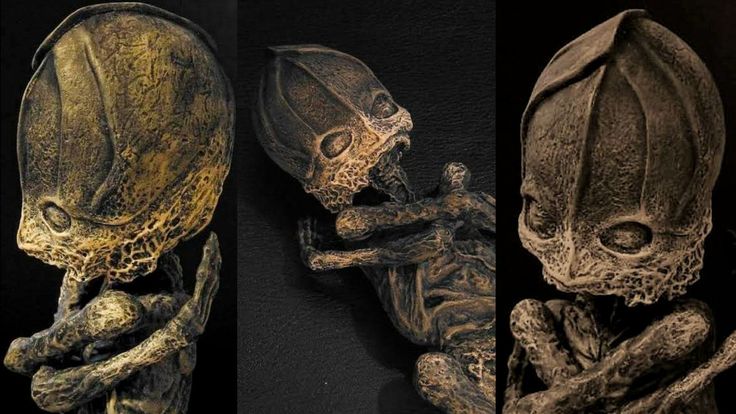
In 1996, deep in the woods near a small village in Russia’s Chelyabinsk region, a strange and unsettling discovery stirred local gossip and global curiosity. The remains of a tiny, deformed infant — later nicknamed Alyoshenka — were found near the village of Kaolinovy (close to Kyshtym). To some, the infant’s unusual appearance marked it as something other than human. Some even speculated it was extraterrestrial. To others, it was a tragic case of severe birth defects — perhaps worsened by environmental contamination.
More than two decades later, the story of Alyoshenka remains one of the most controversial and enigmatic in the history of modern UFO and cryptid lore. Below we trace the discovery, the controversy, the investigations — and why, even after 23 years, the mystery still refuses to fade.
What Was Found: The “Baby” in the Woods
According to reports, in May 1996, an elderly woman from the village of Kaolinovy stumbled across what appeared to be a small, human‑like corpse while collecting water in the nearby forest. The body was described as an infant roughly 25 centimetres (about 9.8 inches) long. But its features were far from typical:
-
The skin was reportedly greyish‑green, not the usual flesh tone.
-
It had large dark eyes — disproportionately large for its size.
-
The skull was smooth but oddly shaped, lacking a lower jaw; reports mention strange ridges converging in a central ridge, a structure unlike normal human cranial anatomy.
-
The corpse reportedly lacked external ears, and there was no visible umbilical cord or genital organs — unusual for a fetus or newborn.
Taken together, these anomalies fueled a wave of sensational reactions. Local villagers claimed it was “not of this planet,” and soon after, the story drew attention from national and even international UFO‑hunting communities. The infant was dubbed “Alyoshenka,” and some began referring to it as an “alien baby.”
Initial Reactions and Investigation
The elderly woman, upon finding the creature, took it home and treated it as a child — wrapping it in cloth and reportedly trying to care for it. However, alarmed villagers contacted authorities, and the woman was hospitalized for psychiatric evaluation. The body, subsequently taken for examination, became a subject of intense scrutiny.
A preliminary anatomical analysis by a team of Russian researchers concluded that the remains were that of a premature human female infant, severely deformed — possibly as a result of environmental pollution. Chelyabinsk Oblast had long suffered from contamination following a major nuclear accident in 1957 — the Kyshtym Disaster — which had caused radiation leaks. Some scientists proposed that genetic mutations caused by radiation exposure could explain the malformations.
Despite this explanation, among the local population, and within ufology or cryptid circles, belief in a non-human origin persisted. Some medical personnel who viewed the remains voiced doubt, citing the unusual bone structure in the skull and the absence of expected human anatomical features.
Thus began a divide between skeptical scientific analysis and more speculative — or even conspiratorial — interpretations.
Why Some People Still Believe It Was “Alien”
Even after experts declared Alyoshenka a human fetus with deformities, many remained unconvinced. Several factors contribute to this persistent belief:
1. Visual Evidence Still Circulates
Numerous photographs and video clips of the corpse still exist online. To the untrained eye, the alien‑like appearance — greyish skin, oversized eyes, deformed skull — is striking. Such images stir curiosity, fear, and hope among those open to alternative explanations.
2. Inconsistencies in Official Records
Critics of the official explanation point out that full peer‑reviewed studies appear lacking or inaccessible. Some individuals present as having medical expertise have claimed the skull’s structure is “nothing like a human being.”
3. The Nuclear Fallout Theory
The idea that the deformities were caused by radiation exposure links Alyoshenka to a larger, tragic history — that of the Kyshtym Disaster. For some, that lends tragic credence to the human‑defect hypothesis; for others, it raises deeper, more unsettling questions about long‑term effects of radiation and whether unknown mutations might result — perhaps even “alien‑like” mutations.
4. The Allure of the Unknown
Human fascination with extraterrestrials, UFOs, and the paranormal is enduring. Stories like Alyoshenka’s — dramatic, spooky, unresolved — tap into that fascination. For many, the lack of closure is part of the appeal. The possibility that something truly anomalous existed is more intriguing than a definitive but unsettling conclusion of severe birth defects.
Scientific and Critical Perspectives
Mainstream scientists addressing the case tend to reject the “alien” label. Their arguments rest on fundamental principles:
-
Extraordinary claims require extraordinary evidence. Photos and anecdotal reports simply don’t meet the standard for proving extraterrestrial origin.
-
Genetic mutations can produce extreme deformities. Radiation exposure, inbreeding, or other environmental stressors have been documented to cause severe congenital abnormalities. Cases of hydrocephalus, anencephaly, and other developmental disorders sometimes result in skull deformities and unusual proportions. While rare, they are part of recorded medical history.
-
Lack of verifiable biological data. To date, there has been no publicly available DNA analysis from the remains. Without genetic testing, claims about non‑human origin remain speculative.
In 2004, Russian scientists officially stated that the remains belonged to a premature infant with severe deformities — seemingly closing the case.
Still, sceptics point out that original biological samples were reportedly lost, and only photographs or anecdotal testimonies remain — making independent verification virtually impossible. This erodes confidence in the finality of the conclusion.
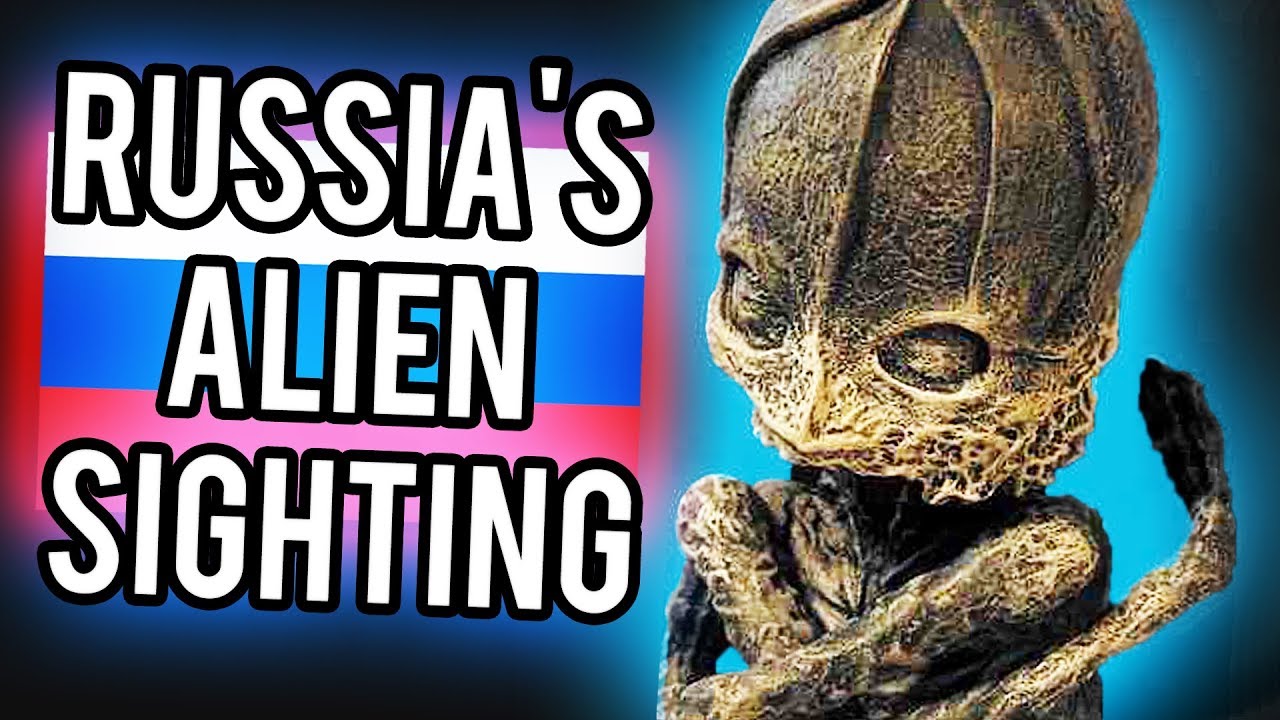 Why the Story Keeps Surviving — 23 Years Later
Several factors explain why the Alyoshenka case remains alive in public memory and discussion even decades later:
📸 Circulating Images and Videos
Old photographs and low-resolution videos continue to circulate across social media, mit using terms like “alien baby,” “mystery corpse,” or “proof of extraterrestrials.” For many, seeing is believing — the striking visuals reignite interest and speculation.
Cultural & Psychological Resonance
The story blends fear, tragedy, mystery, and cosmic wonder. It reflects human anxieties: about nuclear fallout, about mutation and deformity, about the unknown dangers hidden in the environment — and, for some, about the possibility that humanity is not alone in the universe.
Distrust of Official Narratives
Past nuclear disasters, governmental secrecy, and environmental neglect in the region contribute to distrust in official explanations. For some, the “human deformity” verdict seems convenient, even dismissive.
Narrative Power
Whether seen as a tragic victim or a potential proof of extraterrestrial life, Alyoshenka’s story captivates. It has all the elements of a myth: found abandoned, strange appearance, disputed origin, and a disappearance of the physical evidence. Myths survive — and sometimes thrive — precisely because they resist closure.
What Remains Unknown — and What Might Never Be Known
Despite decades of interest, many key questions remain unresolved — and may remain so forever:
-
Where are the remains now? According to records, the physical remains were reportedly lost or misplaced after the initial examinations. Without actual biological samples, further testing (e.g. DNA, isotope analysis) is impossible.
-
Is there reliable documentation? Most of what remains are photos, witness accounts, and media reports. There’s no publicly available, peer‑reviewed scientific paper detailing the full analysis.
-
Could the deformities match known medical conditions? Experts say yes — but without tissue samples and full medical reports, conclusions remain speculative.
-
Could radiation or environmental toxins have played a role? Possibly — but again, without remains and data, there’s no conclusive link.
In short: for believers, Alyoshenka remains a haunting enigma; for skeptics, the case is a cautionary tale about rumors, sensationalism, and the fragility of “evidence.”
What the Alyoshenka Case Teaches Us
Beyond the controversy and fascination, the story offers several broader lessons:
-
The power and danger of photographic evidence. Images can captivate — but they can also mislead. Without context, verification, or scientific backing, photos may provoke strong emotions but weak conclusions.
-
The importance of scientific transparency. Extraordinary claims tied to unusual biological evidence need rigorous documentation: sample preservation, independent testing, and peer review.
-
Human psychology and mysteries. When people feel uncertain — about health, environment, destiny — stories of the unknown become compelling. Tales like Alyoshenka’s fill emotional and existential gaps.
-
Respect for tragedy and dignity. Even if the creature was born with severe deformities, it was a human being. Sensationalizing such tragedies can dehumanize victims and trivialize real suffering.
Closing Thoughts: An Unsolved Mystery, But a Lasting Story
More than 23 years have passed since that grim day in 1996 when an old woman discovered a small, silent body in the woods near Kyshtym. Scientists declared it a severely deformed human fetus. Many accepted this as the final word. Yet for countless others, the questions remain — and with them, the fascination.
Whether Alyoshenka was a tragic human victim or something far stranger is a matter of perspective: one backed by scientific caution, the other by wonder, fear, and the longing to believe that we are not alone.
In the end, the case stands as a reminder: some stories refuse to die. They persist in photos, in memory, in the imaginations of those who dare to ask “what if?”
And sometimes — when evidence is lost, witnesses fade, and time passes — the mystery becomes the legacy.
Read Also: Keep your face towards the sunshine and shadows will fall behind you
Watch Also: https://www.youtube.com/@TravelsofTheWorld24





Leave a Reply