
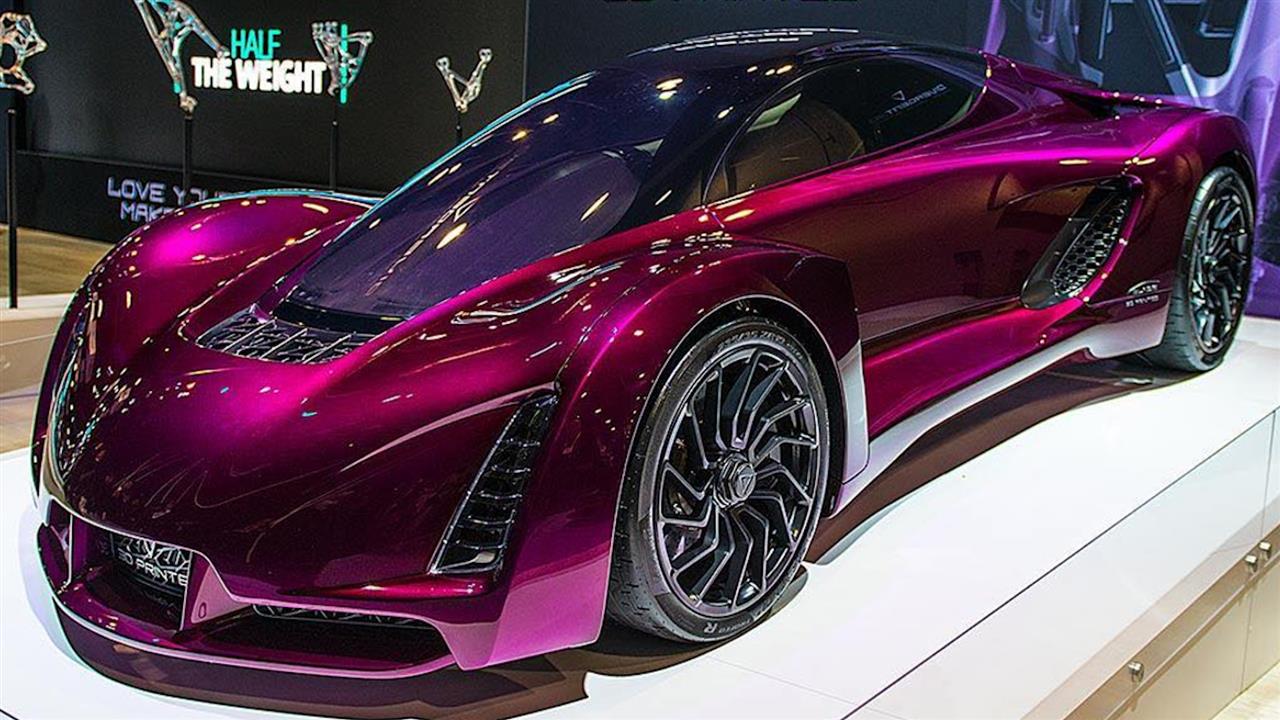
The automotive industry is at the cusp of a technological revolution. Among the most intriguing innovations is 3-D printing, also known as additive manufacturing. While initially used for prototypes and small components, recent advancements have made it possible to 3-D print entire vehicles. This raises a compelling question: could 3-D printed cars represent the future of automobiles?
What Is 3-D Printing?
3-D printing is a process that creates three-dimensional objects layer by layer from digital models. Unlike traditional manufacturing, which relies on subtractive methods (cutting, molding, or machining), additive manufacturing builds objects precisely and efficiently.
In the automotive sector, 3-D printing is used to produce:
-
Prototypes for design and testing
-
Lightweight components
-
Complex parts impossible to manufacture conventionally
-
Custom or limited-run vehicle components
Now, innovators are pushing the boundaries to print entire vehicles, integrating body, chassis, and interior parts into cohesive structures.
 How 3-D Printed Cars Work
The process of 3-D printing a car involves several steps:
-
Digital Design: Engineers create a full 3-D model using CAD (Computer-Aided Design) software.
-
Material Selection: Various materials, including plastics, metals, and composites, are chosen based on structural requirements.
-
Printing Process: Large-scale 3-D printers deposit material layer by layer. For metals, methods like selective laser melting or sintering are used.
-
Post-Processing: Printed parts may require finishing, polishing, or coating to ensure durability and aesthetic appeal.
-
Assembly: In some designs, the car is printed as a single integrated structure, reducing assembly steps; other models require joining subcomponents.
Companies like Local Motors and XEV have already showcased functional 3-D printed cars, demonstrating the potential of this technology.
Benefits of 3-D Printed Cars
1. Reduced Manufacturing Costs
Traditional car manufacturing involves expensive molds, assembly lines, and tooling. 3-D printing eliminates much of this overhead, reducing costs — especially for small production runs or custom vehicles.
2. Faster Production
Design-to-production cycles can shrink dramatically. What used to take months in traditional factories can now be achieved in weeks or even days using 3-D printing.
3. Lightweight and Fuel-Efficient Vehicles
3-D printing allows for the creation of complex, lattice-like structures that are strong yet lightweight. Reducing vehicle weight improves fuel efficiency and lowers carbon emissions.
4. Customization and Personalization
Consumers could customize every aspect of their car, from body shape to interior features, with a level of precision previously impossible in mass production.
5. Sustainability
Additive manufacturing generates less waste than traditional subtractive methods. Additionally, recycled or biodegradable materials can be used, contributing to a more sustainable automotive industry.
Challenges and Limitations
Despite the exciting potential, 3-D printed cars face several hurdles:
1. Material Limitations
While plastics are easy to print, metals and composites suitable for structural components require advanced printers and are costly. The durability and longevity of printed parts must meet automotive safety standards.
2. Production Scale
Mass production remains a challenge. 3-D printing is slower for high-volume manufacturing compared to traditional stamping and assembly lines. Scaling production for millions of cars annually is still a distant goal.
3. Regulatory and Safety Standards
Automobiles must pass rigorous crash, safety, and environmental standards. Ensuring that 3-D printed vehicles meet these standards is complex, particularly when experimenting with new materials and designs.
4. Technology Costs
High-end 3-D printers capable of producing metal and composite car parts are expensive. Investments in research and development, as well as post-processing equipment, are substantial.
5. Consumer Acceptance
While enthusiasts and early adopters may embrace 3-D printed cars, mainstream consumers may be wary of vehicles produced using unconventional methods. Building trust in safety and reliability is essential.
Real-World Examples
Several companies are already pioneering 3-D printed cars:
-
Local Motors Strati: A small electric vehicle, largely 3-D printed, including chassis and body. It demonstrates modular design and lightweight construction.
-
XEV LSEV: A low-speed electric vehicle made using 3-D printing, targeted at urban mobility in crowded cities.
-
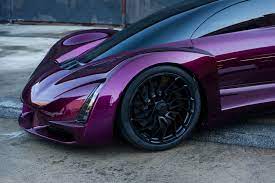
Divergent 3D Blade: A supercar concept using 3-D printed aluminum alloys for the chassis, highlighting high performance and sustainability.
These examples show that 3-D printed vehicles are not just concepts—they are functional and road-ready.
The Future of 3-D Printed Cars
Urban Mobility
In congested cities, lightweight and customizable 3-D printed cars could revolutionize urban transportation. Small electric 3-D printed vehicles may replace traditional gas-powered cars for short commutes.
Electric Vehicles (EVs)
EVs benefit from lightweight materials. 3-D printing could reduce battery demands and increase vehicle range by creating lighter, structurally optimized components.
On-Demand Manufacturing
In the future, car owners may order a vehicle online and have it printed locally, reducing shipping costs and enabling rapid customization.
Space and Extreme Environments
3-D printed vehicles could be used in environments where traditional manufacturing is difficult, such as remote locations, disaster zones, or even extraterrestrial colonies on the Moon or Mars.
Potential Impacts on the Automotive Industry
-
Supply Chain Transformation: Reduced dependence on large factories and complex supply chains.
-
Job Market Shifts: Traditional assembly-line jobs may decline, while demand for digital design, materials science, and 3-D printing technicians rises.
-
Environmental Benefits: Less waste and lighter vehicles contribute to reduced emissions.
-
Innovation Acceleration: Rapid prototyping enables faster innovation cycles and experimentation with new designs and technologies.
Conclusion
3-D printed cars represent a promising but still emerging frontier in the automotive world. While challenges remain in materials, production scale, and regulatory compliance, the potential benefits—cost savings, customization, sustainability, and speed—are transformative.
As technology advances, 3-D printed vehicles may complement or even disrupt traditional manufacturing, particularly in electric vehicles, urban mobility, and specialized applications. The dream of printing a car on-demand is no longer science fiction—it is slowly becoming reality.
For the future of automobiles, 3-D printing offers a vision of faster, lighter, and more sustainable vehicles, customized to the individual, and designed for a rapidly changing world.
Read Also: Keep your face towards the sunshine and shadows will fall behind you
Watch Also: https://www.youtube.com/@TravelsofTheWorld24





Leave a Reply