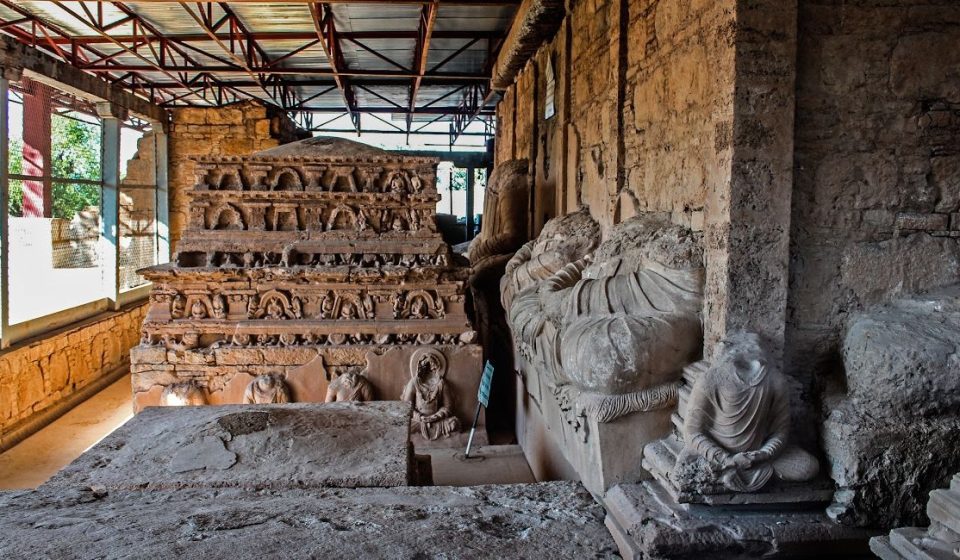

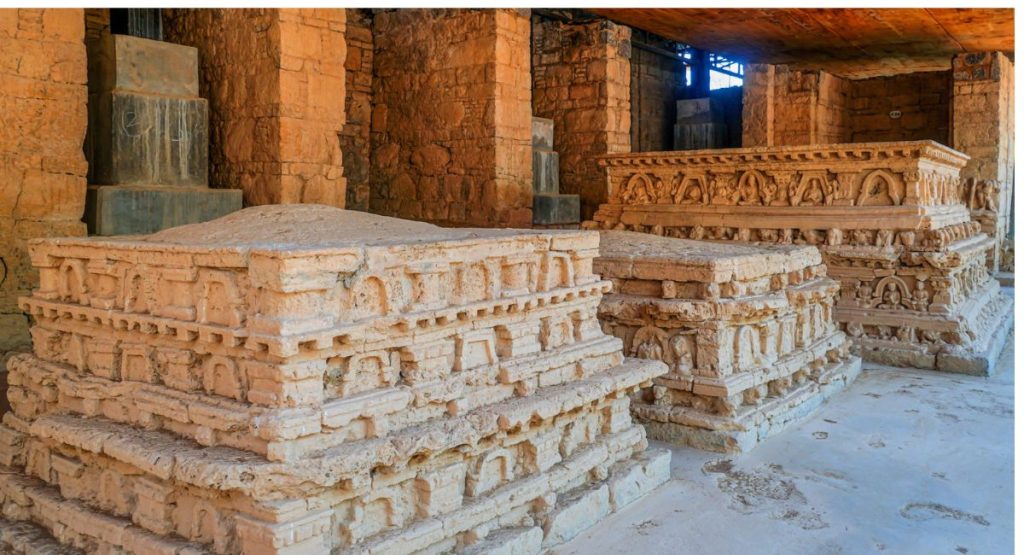
The picture above captures a captivating section of the ancient Jaulian Monastery in Taxila, Pakistan. This historical site is known for its outstanding Buddhist sculptures, architectural elements, and holy structures that are nearly two millennia old. Poised on a hill overlooking the Taxila Valley, Jaulian was once a thriving hub for Buddhist education, meditation, and spiritual activities during the Gandhara period. Presently, the monastery stands as one of the most well-preserved Buddhist sites in South Asia.
Its intricately crafted stone reliefs, meditative chambers, stupas, and images of Buddha provide deep insights into the daily lives and spiritual practices of the monks who resided there. The striking ruins displayed in the image reflect the creative mastery of the Gandhara civilisation, a culture that harmoniously combined influences from Greek, Persian, Central Asian, and Indian sources to produce a unique art form that still captivates scholars and travellers worldwide.
Back in the Day:
A Look at Jaulian Monastery
The establishment of the Jaulian Monastery dates back to the Kushan era, approximately in the 2nd century CE. At that time, Taxila was a prominent regional city and a major centre for trade, religion, and learning. Jaulian thus emerged as a significant religious centre where monks could engage in the study of Buddhist doctrine and the practice of meditation. Over centuries, the monastery sustained its importance, attracting students, pilgrims, and academics from various parts of Asia.
Situated along key trade routes, it facilitated the exchange of ideas and cultures, contributing to the widespread dissemination of Buddhism throughout the continent.
Gandhara’s artistic legacy:
The monastery itself is a testament to the celebrated Gandhara civilisation, which thrived between the 1st century BCE and the 5th century CE. Gandhara’s strategic geographic position, acting as a bridge between South Asia and the Middle East and Central Asia, facilitated cultural cross-pollination. Its distinctive artistic style was born out of the fusion of indigenous traditions with Greek and Roman artistic sensibilities. A particularly notable accomplishment of Gandharan artists was the creation of realistic likenesses of the Buddha, a departure from earlier representations using symbolic imagery.
These artists laid the groundwork for the iconic visual depiction of Buddha, which went on to permeate Asian art. The stone carvings and statues evident at Jaulian are quintessential examples of this masterful artistic expression.
Layout of the monastic sanctuary:
The Monastery’s design was purposefully arranged to facilitate both religious activities and the mundane life of its residents. – Sacred Courtyard – At the monastery’s core was a central worship courtyard surrounded by stupas and shrines, forming the focal point for religious observance. – Residents’ living quarters – surrounding the courtyard were numerous modest cells for the monks, embodying the Buddhist principle of simple living. – meditation – Areas were designated for prayer and meditative practices, where monks would spend hours contemplating the divine.
– Places of study – The monastery also served as a centre for education, where Buddhist philosophy and writings were studied. This meticulous plan integrated religion, learning, and communal living in an exemplary ancient Buddhist complex. – Colossal Buddha sculptures – – Giant Buddha reliefs built into the walls is one of Jaulian’s distinguishing features, as depicted in the photograph. Despite the inevitable erosion of time, these reliefs stand as outstanding achievements of ancient craftsmanship.
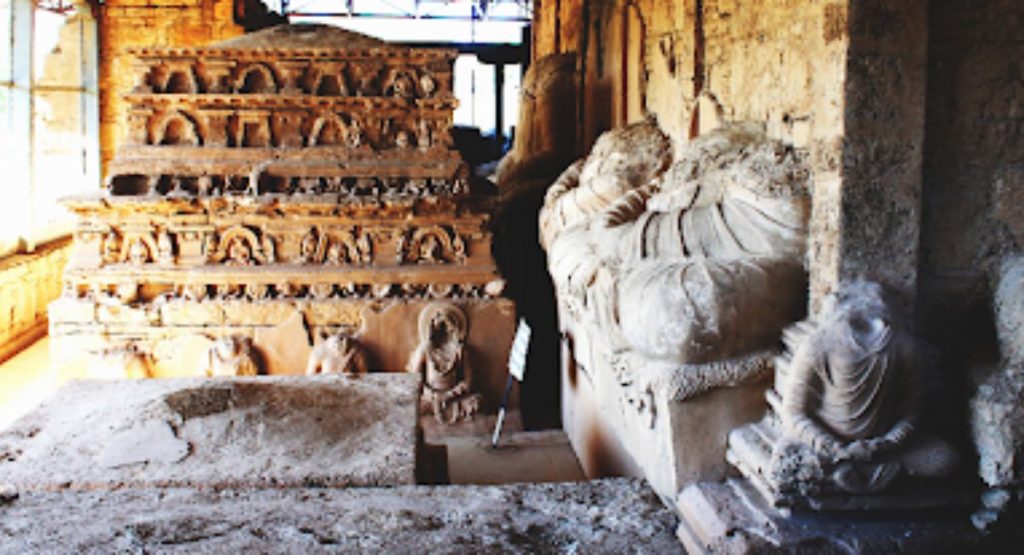 Their sheer size and meticulous detail were intended to inspire devotion and guide the monks on their path to enlightenment, thus embodying the importance of religious art in their daily lives. The flowing robes, carefully proportioned figures, and detailed facial features strongly convey the influence of Gandharan art. Even in their worn state, these ancient depictions continue to impress with their beauty and historical significance.
The spiritual mission of the Jaulian monastery:
It was more than simply a place for monks to live; Jaulian was a hub for religious practice and communal spiritual growth. Pilgrims and monks would assemble to offer prayers, seek divine guidance, and pay homage to revered relics and figures. This facility was vital in preserving Buddhist teachings at a time when the religion was spreading across Asia. Various stupas and shrines scattered throughout the site served as centres for spiritual gatherings and contemplation.
Daily routines of the monks: Daily life within the monastery followed a rigid structure. Monks traditionally rose before dawn for prayer and meditation. The majority of their time was spent poring over Buddhist texts, engaging in philosophical debate with their teachers and peers. The tranquil atmosphere of the hilltop location lent itself ideally to self-reflection and discipline.
In addition to spiritual and intellectual pursuits, the monks took care of the monastery’s physical needs, including building maintenance, food preparation, and hospitality for visitors, thereby balancing a life of intellectual engagement with spiritual contemplation.
Artistic splendor:
The artistic remnants found at Jaulian demonstrate the immense skill of the Gandharan artists. The ornate carvings adorning stupas and shrines often depict scenes from the Buddha’s life, religious symbols, and human forms, executed with precision in the treatment of cloth folds and individual facial characteristics. Many sculptures clearly display classical Greek aesthetic influences. These artistic breakthroughs influenced the development of Buddhist art throughout Asia and are significant evidence of ancient cultural exchanges.
Archaeological excavations:
Archaeology has unearthed many artifacts at Jaulian that shed light on the community’s life.
Among these treasures are:
– Buddha sculptures – stucco decorations – pottery shards – antique coins – religious scriptures – monastic Cells – Architectural elements. These finds help historians better comprehend the operational mechanisms of Buddhist communities and the monastery’s evolution over the years. Much of the treasure found at Jaulian is displayed in the Taxila Museum, offering insight into the area’s rich past.
Decline:
The heyday of Jaulian was the 5th century CE. Political disruptions, economic decay and invasions of white Huns caused the downfall of Buddhist religious organisations across Gandhara. Many monasteries deteriorated or were abandoned in that period. As Buddhism declined in the region, Jaulian fell out of favour, becoming a ruin.
Natural phenomena have buried several areas of the sanctuary. However, much of the ruins survived and remain as important evidence of the monastery’s glorious past.
 Read more at: https://www.discovernewsdaily24.com/taxila-museum-two-thousand-years-in-a-single-garden/
Rediscoveries:
Modern-day excavation began in the early 20th century. Sir John Marshall was the main researcher whose team uncoveredJaulian and made it famous internationally. Through thorough Documentation of architecture, sculptures and artifacts, historians reconstructed the monastery’s history and affirmed Jaulian as an influential Buddhist Center. Jaulian continues to stand today as a key archaeological site in Pakistan.
The Site for Tourism:
Jaulian is a popular destination for both local and foreign visitors who come to admire its ruins and absorb Buddhist history. Tourists visiting the sanctuary can traverse the grounds of the ancient monastery and get a sense of how the monks lived, studied, and meditated there. Its peaceful atmosphere, architectural beauty, and Artistic treasures draw visitors to this site of historical Importance; Jaulian is a UNESCO World Heritage Site, along with the other archaeological sites in Taxila, symbolising Pakistan’s cherished cultural Heritage.
Maintenance and Preservation:
The Preservation of archaeological sites demands continual efforts. Archaeological conservation experts work to safeguard Jaulian against erosion, deterioration, and other threats, employing structures like that seen in the photograph to preserve the delicate statues and architecture. This conservation helps guarantee future Generations will be able to learn about and appreciate the monastic sanctuary. It also maintains the Educational and historical value of the monastery.
CONCLUSION:
Jaulian monastery represents a significant monument to Buddhist civilisation in Gandhara, flourishing for nearly two millennia as a hub of spirituality, learning, meditation and artistry. The Giant Buddha reliefs, elegantly carved stupas and meticulously planned structures of the monastic buildings epitomise the mastery of the civilisation that created them. The monastery, though uninhabited for centuries, continues to inspire admiration and Curiosity. Jaulian stands today as a profound testament to Taxila’s role as a cradle of scholarship and spiritual practice, safeguarding a valuable fragment of human history for the Enjoyment of all.
See Also: https://www.youtube.com/watch?v=iyU4cZor_Gg