
About the Dharmarajika Stupa
One of the prominent historical archaeological sites in Pakistan is the Dharmarajika Stupa. This important site is in the historical city of Taxila in the Punjab Province of Pakistan. The historic stupa became an attraction for historians, archeologists, travellers, and even for the Buddhist pilgrims of all over the world. Today it is a mute spectator of the ages-old spiritual veneration, exchange of cultures and also the architectural excellence of the Gandhara Civilisation.
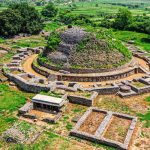
The above-mentioned image is the famous historic site that shows the ancient relic complex comprising of brick buildings and also stonework. It gives you a glimpse into what once used to be a sacred centre for the Buddhist. The ruins signify the period when Taxila used to be the key learning centre of Asia.
History of Dharmarajika Stupa
Dated as 3rd Century BCE, the Dharmarajika Stupa, according to legend, was built by the most important emperor of ancient India – Ashoka. King Ashoka of India converted to Buddhism after his destructive and yet so impactful Kalinga war. Post his conversion, King Ashoka was instrumental in spreading the teachings of the Buddha across the regions of South Asia and started constructing Buddhist structures at significant places across his kingdom.
The name Dharmarajika is derived from Ashoka himself being the ‘King of Dharma’. It is also believed that it was Ashoka’s order to build several stupas at prominent places across his empire to house the Buddha relics or any other part associated with Buddha. This religious centre was built by Emperor Ashoka around 3rd Century BC. It is considered the main structure in Taxila.
The area at Taxila at this time used to be a flourishing centre for trade, art and learning.
The Significance in Buddhism
As the name depicts, it has some association with dharma or in other words, is related to the life of Buddha. The relic chamber at the stupa housed various relics connected with the life and also his belongings of Buddha and his followers. The stupas were considered holy monuments and used for pilgrimage by the Buddhist community. Pilgrims from across Central Asia visited it for spiritual reasons, religious purposes and meditation.
The site turned into a significant seat of both Buddhist pilgrimage and religious education for centuries, and its surrounding area used to be dotted with stupas and monasteries that made the entire region into a vibrant religious hub.
Architecture
The design and construction style is evidence of the architectural marvel and great engineering feat of the Gandhara Civilisation. As most of the parts of the stupa is ruined now, the design of the originally built structure is largely deduced by the archeologists and historians through excavations. However, based on the evidence found, it was originally designed on a circular plan. Beside the main stupa were scattered numerous smaller structures, including small stupas, monasteries, chapels, and cells of monks.
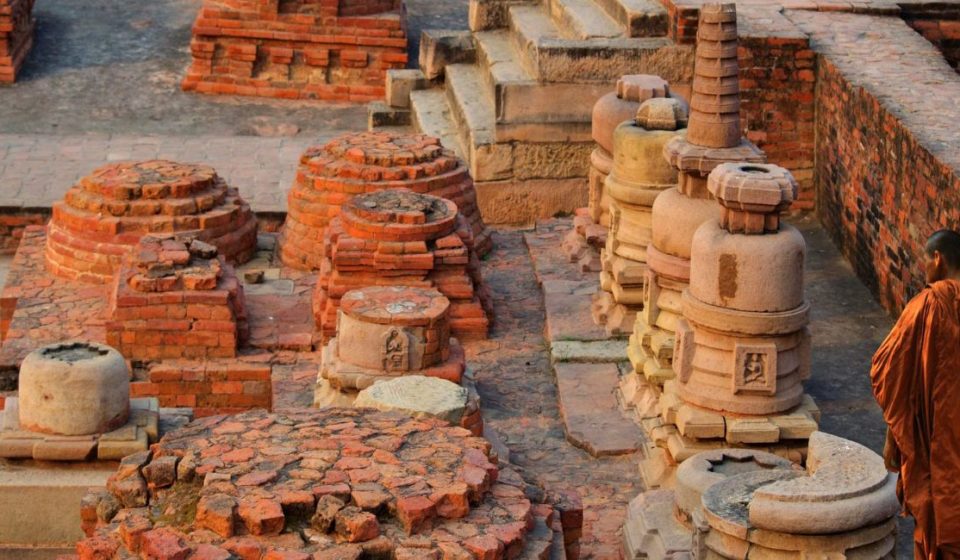
These additional constructions were made by pious individuals over several generations, perhaps with gifts to the Buddhist community at large. The use of stone blocks and bricks clearly indicates excellent planning and craftsmanship. Many decorative elements were found in the complex, indicating the skills of Gandhara artists and artisans.
Gandhara Civilization
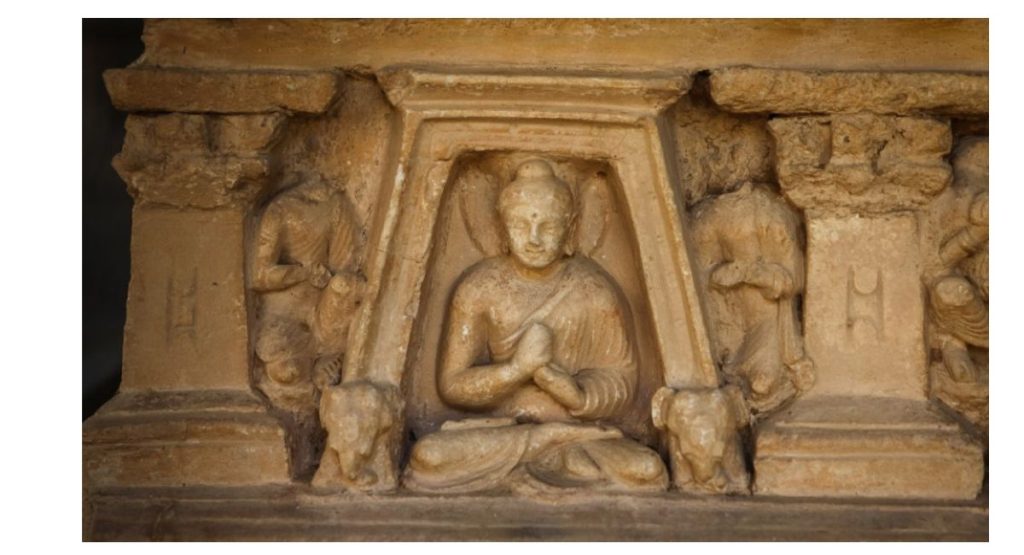 The Dharmarajika stupa can be said to represent the Gandhara civilisation. Gandhara was strategically placed along the main trade routes of Asia from Asia Minor to India, and back in that ancient era. This placement enabled interaction between different peoples and traditions, leading to a vibrant culture in Gandhara, with influences from Greek, Persian and Indian traditions. Art forms from this era reflect the influences clearly, and many stupas, including Dharmarajika, boast Gandhara art.
Discovery and excavation
With the decline in the popularity and spreading of the Buddhist faith in the sub-continent due to various reasons, including foreign invasion and rise of other ideologies, most Buddhist sites remained abandoned for a long period. The Dharmarajika stupa was no exception to this and after becoming disused for many centuries. After falling into decay and being covered by earth and vegetation for a long time it remained obscure until the modern days, when it was discovered and subsequently excavated by the archeologists of that time under British rule, starting in the early twentieth century by Sir John Marshall. His comprehensive excavation of the Taxila region and specifically the Dharmarajika stupa in the 1910’s yielded the extensive remains you see today and helped to revive this ancient history.
Religious Structures In The Complex
The site contains not just the stupa itself but also the ruins of numerous other religious structures. This is due to the fact that the complex was an extensive religious centre over hundreds of years.
Monasteries
Numerous ruins are visible in the complex, some of which have been identified as monasteries where the Buddhist monks would stay for their religious practices, education and training.
Votive Stupas
There are various small stupas built by pilgrims and others over time to signify their religious devotion. Some of these stupas likely contain some small sacred relics themselves.
Chapels and Shrines
The complex shows remains of some of the small chapels and shrines that would have housed statues and sculptures of Buddha and other Buddhist deities.
Meditation Centers
Dedicated spots that were likely used for meditation for the monks.
Taxila As A Place of Learning
Taxila was once one of the most famous centres of learning in the world with a university of repute where students from many countries came to study a vast array of subjects from astronomy, mathematics to law, warfare, logic, grammar, art and of course Buddhism. Hence, the Dharmarajika stupa also served as a focal point for Buddhist students studying at Taxila. Monks in the various monasteries housed in the vicinity often lectured and discussed philosophical matters related to the Buddhist religion.
Artistic Contributions of Gandhara
The archaeological excavations carried out in Taxila and specifically in and around the Dharmarajika Stupa site have unearthed many fantastic artworks that give insight into the rich artistic tradition of the Gandhara civilisation. These include excellent stone sculptures depicting various forms and scenes of the Buddha, Bodhisattvas, along with intricate friezes that tell narratives from Buddhist literature. Many of these creations are marked by Greek influences from the art styles that became prevalent in the region following Alexander the Great’s military ventures and that developed into Gandharan artistic styles.
Read more at: https://www.discovernewsdaily24.com/taxila-museum-two-thousand-years-in-a-single-garden/
UNESCO World Heritage Site
The archaeological sites of Taxila, including the Dharmarajika stupa and surrounding complex, have been declared as a UNESCO World Heritage Site owing to their historical significance and contribution to world heritage. This listing helps in the preservation of the site and raises international awareness for it.
Tourism and Visitors
The Dharmarajika Stupa today serves as one of the primary tourist destinations at Taxila. It is visited by thousands of local and foreign tourists, including pilgrims, scholars and students every year. People coming here get the rare chance to walk through the ruins of a historic city, feel a connection with past ages and reflect upon the enduring significance of Buddhism in the region. The visitors might also visit the Taxila Museum to see the fascinating artifacts discovered at the site to complement their visit.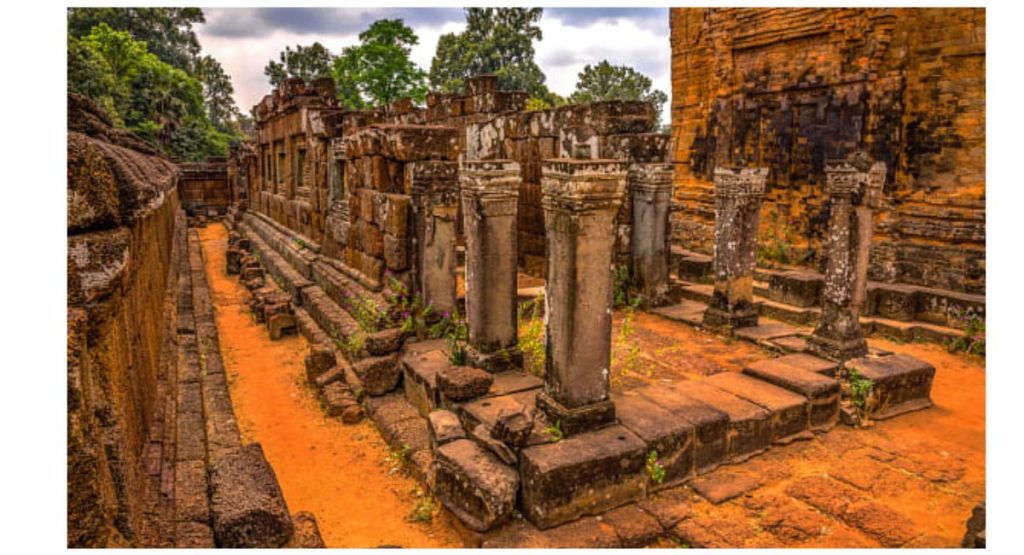
Challenges for preservation
Given that the site is many centuries old, maintenance and preservation are constant challenges. The ruins face damage from weathering, natural erosion and also, unfortunately, vandalism. However, dedicated measures are being taken by relevant authorities for the conservation of the historic site.
Legacy of Dharmarajika Stupa
The Dharmarajika Stupa is much more than mere ruins; it stands as a testament to the spread of Buddhism in ancient South Asia, to the rich Gandhara civilisation and its artistry, and to the human quest for spiritual and intellectual enlightenment. It is of great importance to historians, archeologists and the Buddhist world. The ancient structure, though worn and faded with time, continues to convey stories of piety, scholarship, artistry, and enduring faith. It inspires awe and respect for the heritage of mankind.
Summary of Dharmarajika Stupa
In a nutshell, the Dharmarajika Stupa of Taxila is of immense significance as it represents the historical narrative of a deeply devotional age in Buddhism; the advanced craftsmanship of the Gandhara people and their assimilation of diverse cultural influences; the intellectual hub Taxila provided centuries ago, and much more. It is a symbol that, through the remnants of its stones and bricks, echoes a timeless message of spirituality, learning and a rich human history across South Asia.
See Also: https://www.youtube.com/watch?v=iyU4cZor_Gg