
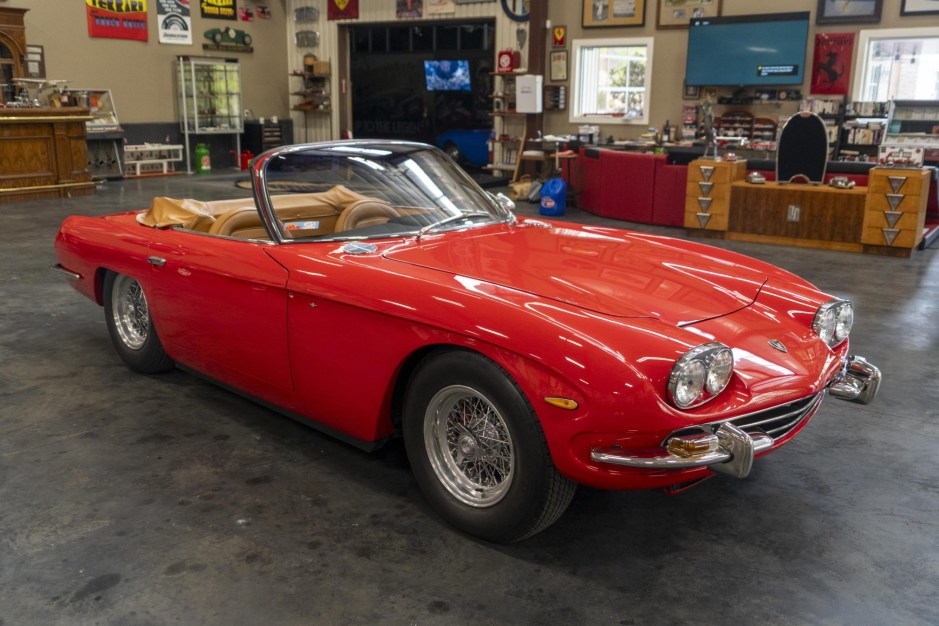
The 1967 Lamborghini 400 GT Spider Conversion is one of those rare automotive creations that instantly grabs attention. It combines the elegance of a classic grand tourer with the excitement of open-top driving. What makes it even more interesting is that it is not a factory-built Spider. Instead, it is a carefully crafted conversion, turning a rare coupe into a unique convertible version that feels even more special.
The original Lamborghini 400 GT was produced in the mid-1960s and is already considered a highly desirable classic. It was designed during the early years of Lamborghini, when the brand was still building its identity. The 400 GT was known for its smooth styling, refined interior, and strong performance for its time. It represented a more luxurious and elegant side of Lamborghini compared to the aggressive supercars we see today.
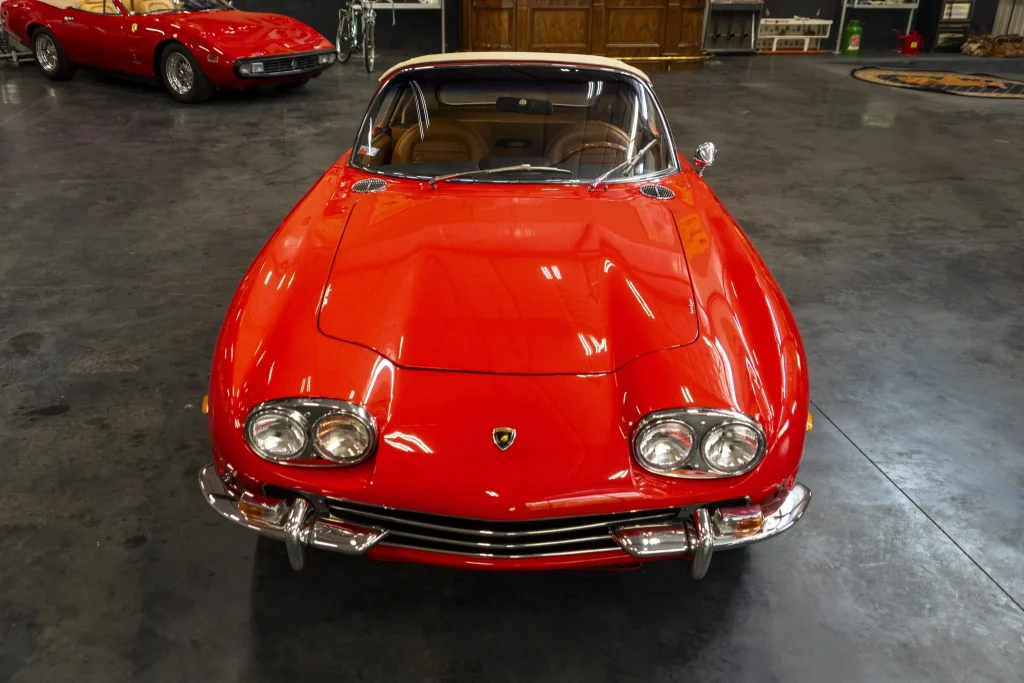
1967 Lamborghini 400 GT Spider Conversion: Open-Top Classic Beauty
Under the hood, the 400 GT came with a 4.0-liter V12 engine developed by Lamborghini. This engine produced impressive power for the 1960s and delivered a smooth, high-revving driving experience. The V12 sound is one of its most memorable features—deep, mechanical, and full of character. It is the kind of engine that makes driving feel emotional, not just practical.
Now, when we talk about a Spider conversion, things get even more interesting. The original 400 GT was a coupe, meaning it had a fixed roof. Converting it into a Spider involves removing the roof and reinforcing the body to maintain strength and safety. This is a complex and delicate process because the original structure was not designed for open-top driving.
A proper conversion requires careful engineering. The chassis must be strengthened to prevent twisting or flexing when the roof is removed. This usually involves adding support bars or reinforcing key structural areas. The goal is to keep the car stable while still maintaining its original beauty and proportions.
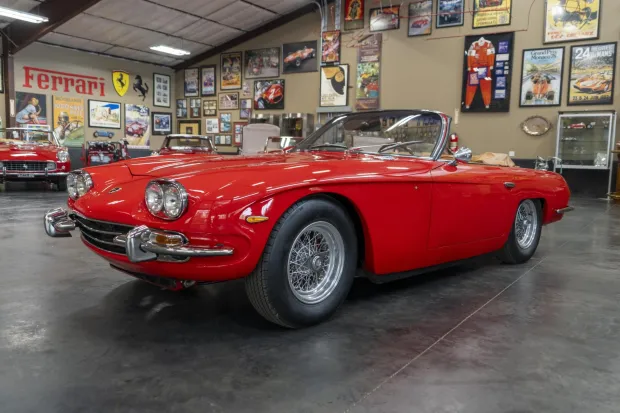
1967 Lamborghini 400 GT Spider Conversion: Open-Top Classic Beauty
The result is a rare open-top version of a classic Lamborghini that was never officially produced by the factory. This makes it extremely unique. Spider conversions are often one-of-a-kind builds, meaning no two cars are exactly the same. Each one reflects the vision and craftsmanship of the builder.
Visually, the 1967 Lamborghini 400 GT Spider Conversion is stunning. The long hood, flowing body lines, and classic 1960s design language remain intact, but the absence of a roof gives it a completely different personality. It feels more open, more connected to the environment, and more dramatic in appearance.
The interior of the 400 GT is already elegant, with leather upholstery, wood or metal accents, and a simple but refined dashboard. In a Spider conversion, the cabin becomes even more inviting. With the top down, the driver and passenger experience the full sound of the engine, wind, and surroundings. It creates a very raw and emotional driving experience that modern cars often cannot match.
Driving this car is not about speed alone. It is about feeling. The steering is mechanical and direct, giving the driver a strong sense of connection to the road. The V12 engine responds smoothly, building power in a natural and progressive way. It is not aggressive like modern supercars, but it has a refined and satisfying flow.
The suspension setup in a classic like this is tuned more for comfort and grand touring than sharp track performance. That means it handles bumps and rough roads reasonably well, while still offering a stable and controlled ride. On open roads, especially scenic routes, this car feels perfectly at home.
Because it is a conversion, rarity plays a big role in its appeal. Original 400 GT models are already rare, but Spider conversions are even more exclusive. Many were done by specialist builders or custom shops, often for collectors who wanted something truly unique. This makes each example a piece of automotive art rather than just a standard production car.
Maintenance and preservation are also important aspects of owning such a vehicle. Classic Lamborghinis require careful attention. The engine, suspension, and bodywork all need regular care to keep them in good condition. Finding parts can be challenging, which is why owners often rely on specialists who understand vintage Italian engineering.
Despite these challenges, the value of such a car goes beyond practicality. It is about owning a piece of history. The 400 GT represents the early vision of Lamborghini—before the brand became fully focused on extreme supercars. It shows a more elegant and sophisticated side of the company’s identity.
When you drive a 1967 Lamborghini 400 GT Spider Conversion, you are not just driving a car. You are experiencing a moment in automotive history. The sound of the V12, the open sky above you, and the classic design all come together to create something unforgettable.
It also stands out in today’s world because it is so different from modern cars. Today’s vehicles are full of screens, sensors, and digital systems. This classic Lamborghini offers something more pure and mechanical. Everything feels direct and real, from the steering to the engine response.
Collectors value cars like this not only for their rarity but also for their emotional impact. It is the kind of vehicle that draws attention at car shows and events, not because it is loud or flashy, but because it has a timeless presence.
In the end, the 1967 Lamborghini 400 GT Spider Conversion is more than just a modified classic. It is a rare blend of heritage, craftsmanship, and individuality. It preserves the elegance of the original 400 GT while adding the thrill of open-top driving.
It stands as a reminder of a different era in automotive design—one where beauty, simplicity, and driving enjoyment were at the heart of every creation.
Read Also: Keep your face towards the sunshine and shadows will fall behind you
Watch Also: https://www.youtube.com/@TravelsofTheWorld24










Leave a Reply