
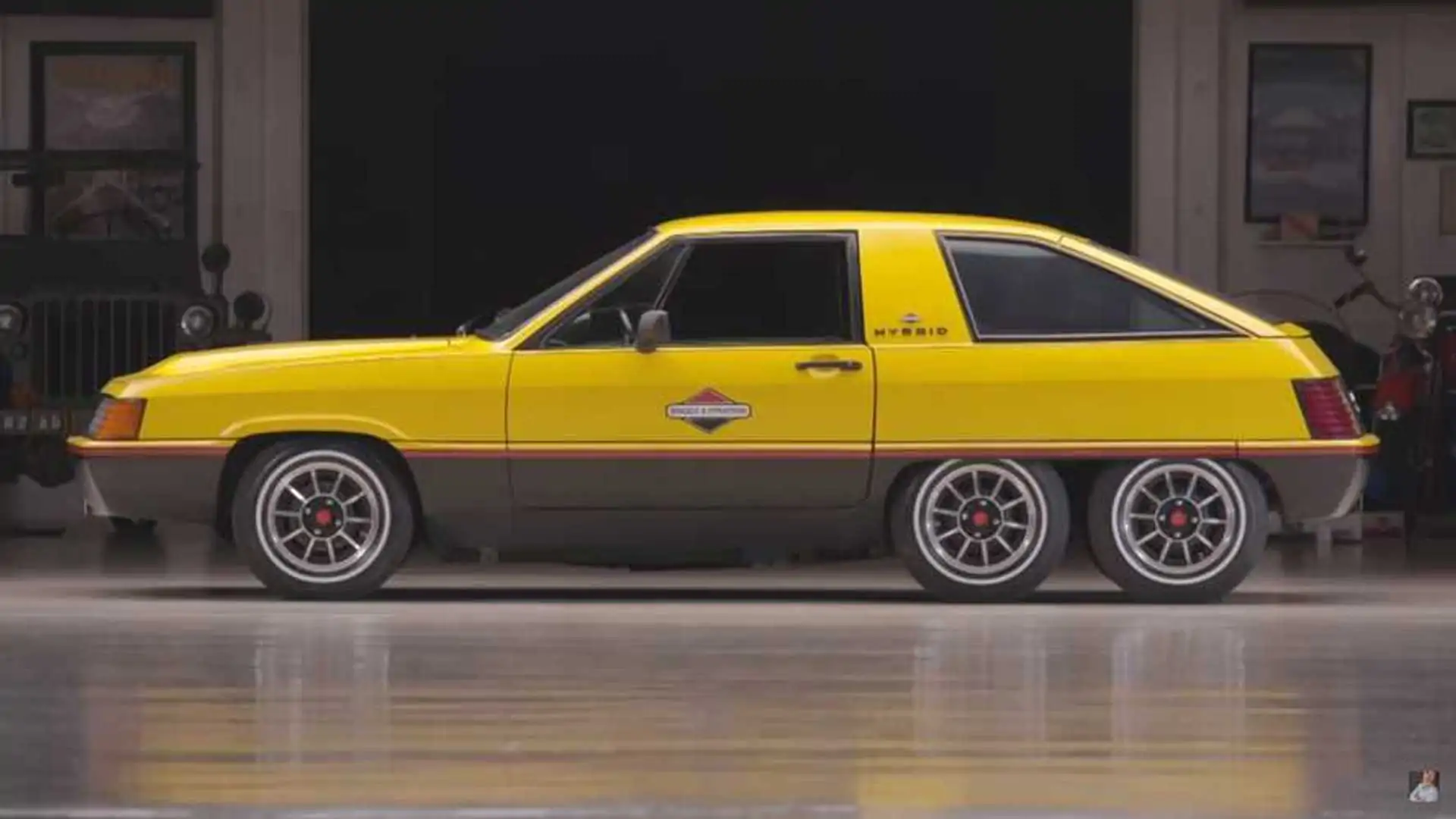
When you hear Briggs & Stratton, most people think of lawn mowers, generators, and small engines — not cars. But in 1980, this company came up with something really surprising: a gasoline‑electric hybrid concept car long before hybrids became common. It was unusual, forward‑thinking, and weird in the best way — a six‑wheeled hybrid built to show what might be possible in fuel‑efficient travel.
In this easy guide, I’ll walk you through what this strange machine was all about — how it was made, why it mattered, what it looked like and how it worked, and why it still captures attention today. This isn’t a tech textbook — it’s just the story of a quirky vehicle that dared to be different.
1. Who Are Briggs & Stratton?
Before we talk about the hybrid, let’s understand the company behind it.
Briggs & Stratton is an American company founded in 1908 that became famous for making small gasoline engines used in lawn mowers, generators, garden tractors, and other equipment. Over the years, they became one of the most recognized engine makers in the world, even though most people didn’t know their name unless they fixed or used equipment with their engines.
So in a way, the idea of a Briggs & Stratton car seems strange — they never made cars for sale. But they did know engines, and that knowledge led them to something unusual in the late 1970s and early 1980s.
2. Why Build a Hybrid in 1980?
To understand why Briggs & Stratton tried this experiment, you need a bit of background.
In the 1970s, the oil crisis made fuel expensive and people started worrying about running out of gas or paying too much for it. Car buyers and governments began looking for ways to improve fuel economy. Many companies experimented with new ideas, including hybrids — cars that use both gasoline and electricity to reduce fuel use.
For most big automakers, this was scary and expensive. But for Briggs & Stratton, it was a chance to show that even a small‑engine company could contribute to cleaner, more efficient machines. Their idea was simple: what if a small gasoline engine worked with an electric motor to move a car? That dual power source is the basic idea of a hybrid car.
The result was the 1980 Briggs & Stratton Hybrid — a unique prototype that showed their take on fuel‑saving technology long before names like Toyota Prius became mainstream.
3. What Was the 1980 Briggs & Stratton Hybrid?
The 1980 Briggs & Stratton Hybrid was not a production car you could buy. It was a one‑off concept vehicle — meaning only one was built — created to demonstrate new technology and fuel‑saving design. It was built beginning in 1978 and completed around 1980 as a work of engineering and creativity.
What made this vehicle so unusual?
- Six wheels: Most cars have four wheels, but this one had three axles — two at the rear to support extra weight.
- Gasoline‑electric hybrid power: It used both a gasoline engine and an electric motor.
- Hybrid powertrain: It could run on gas, electricity, or a mix of both — just like modern hybrids.
- Borrowed parts: To save time and money, parts like the front suspension, steering, and transmission came from a Ford Pinto, and the doors and windshield were from a Volkswagen Scirocco.
- Prototype purpose: It wasn’t built for customers — it was a demonstration of what could be possible with hybrid technology.
4. How It Looked — Six Wheels and Strange Style
Visually, this hybrid was unlike most cars you’ve seen.
The first thing most people notice is the six wheels — two pairs of rear wheels instead of the usual one pair. Those extra wheels weren’t for traction like on a big truck — they were there to support the heavy bank of batteries in the rear.
The body style looked a bit like a hatchback from the era, and some parts borrowed styling from cars of the late 1970s and early 1980s. It wasn’t a sleek sports car, but it had an interesting shape that hinted at practicality over pure looks.
The overall effect was unusual — a hybrid concept long before people expected that kind of technology, wrapped in a body that mixed parts from other cars with custom panels.
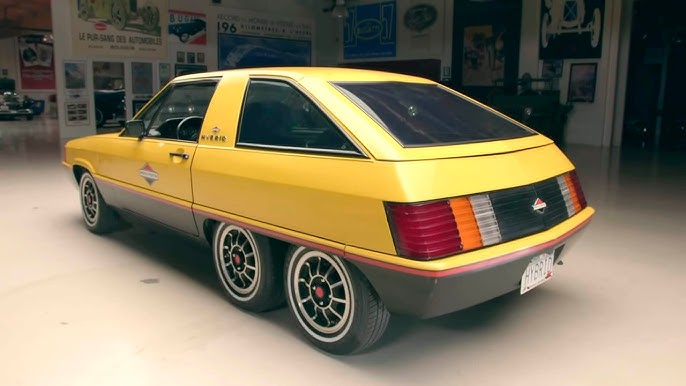
1980 Briggs & Stratton Hybrid: The Six-Wheel Car Ahead of Its Time
5. What Powered It? The Gasoline and Electric System
The heart of this hybrid was its powertrain, which combined:
Gasoline Engine
- A Briggs & Stratton air‑cooled twin‑cylinder engine with about 18 horsepower (hp).
- This was a small engine, similar to what you might find in larger lawn equipment, but adapted for vehicle use.
Electric Motor and Batteries
- The hybrid used a large bank of 12 six‑volt lead‑acid batteries — heavy by modern standards — to power an electric motor.
- These batteries connected to an electric motor that could drive the car on its own or work with the gasoline engine.
Hybrid Setup
The system was a parallel hybrid, which means:
- The electric motor could power the car by itself.
- The gasoline engine could take over.
- Or both could work together for better efficiency.
This concept is similar to how many modern hybrids work — using electricity for low‑speed or short trips and gasoline for longer distances or higher speeds.
Transmission was taken from a Ford Pinto four‑speed manual, which connected the combined power to the wheels.
Even with that small gasoline engine, this hybrid could reach speeds around 60–68 mph (about 97–109 km/h) — enough for highway driving at the time.
6. How It Drove and Performed
Because this was a prototype and not a production car, its performance wasn’t spectacular by modern standards. But for a research vehicle in 1980, it was impressive.
Electric Range: On electric power alone, the car could reportedly travel around 40–60 miles before the batteries ran low — not bad considering lead‑acid battery limits and the era.
Blended Power: With both gas and electric working together, the idea was to use the electric motor to get up to speed and then let the gasoline engine cruise.
Fuel Efficiency: Estimates from tests and historical coverage suggest this hybrid could achieve around 30 miles per gallon (MPG) on combined power, which was quite good for the time and showed the potential of hybrid systems.
Handling: With the heavy battery pack in the rear, the extra axle was important to keep the weight balanced and help the car stay stable. It wasn’t a sports car, but it worked well for showing hybrid technology.
7. Public Reaction Then and Now
When the Briggs & Stratton Hybrid was built, the world was just beginning to think about fuel economy seriously. Most people didn’t expect a lawn‑engine company to build a hybrid car, so it raised eyebrows even among auto enthusiasts.
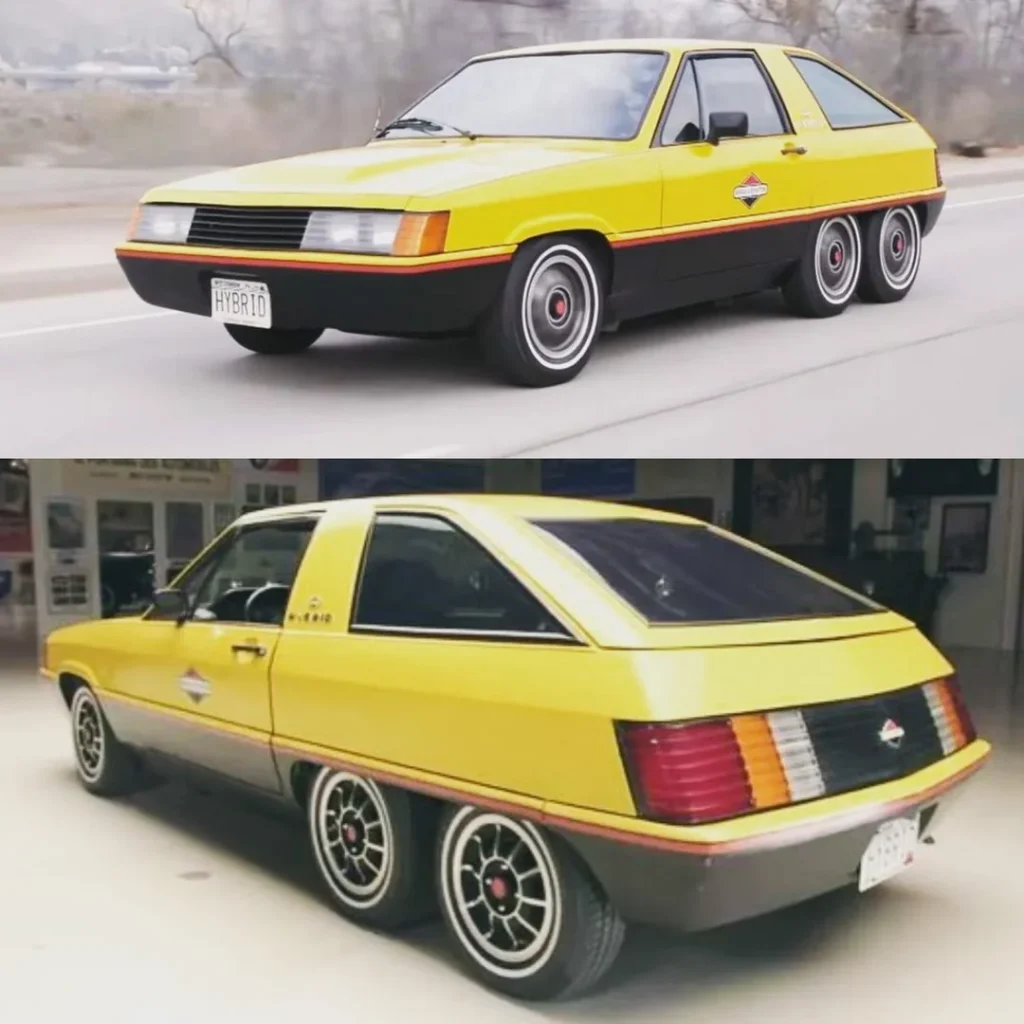
1980 Briggs & Stratton Hybrid: The Six-Wheel Car Ahead of Its Time
By the late 1980s, the vehicle was retired from active use and lived in Briggs & Stratton’s own museum in Milwaukee, Wisconsin. It wasn’t seen on roads again until automotive fans rediscovered it decades later.
In recent years, the hybrid got renewed attention when it appeared on “Jay Leno’s Garage”, a popular YouTube and TV series where host Jay Leno showcases unique and historic cars. In that episode, mechanics were able to run the hybrid on real roads again, showing that it still worked after all those years.
Today, people look at the 1980 Briggs & Stratton Hybrid with a mix of amusement and respect. It was a strange, bold experiment long before hybrids became modern and mainstream.
8. Why It Matters in History
When we think of hybrid cars today, we often think of models like the Toyota Prius from the late 1990s. But the Briggs & Stratton hybrid shows that engineers were thinking about combining electricity and gasoline much earlier than most people realize.
Even though it was never meant for sale, this hybrid concept demonstrated:
- That a small gasoline engine could work with an electric motor.
- That hybrid systems could provide real electric‑only range.
- That fuel‑saving technology was being explored in unusual places.
It also reminds us that automotive innovation doesn’t always come from the big names — sometimes it comes from companies willing to experiment and take risks. Briggs & Stratton was not a car company, yet it built a hybrid long before many traditional auto makers seriously tried.
9. What It Isn’t
It’s important to understand what this hybrid was not:
- It was not a production car — there was only one ever made.
- It was not a commercial success — no plans were made to sell it to buyers.
- It did not lead directly to modern hybrids — it was a concept that showed ideas, not a stepping stone to a specific model.
So while this car is historically interesting, it didn’t change the auto industry overnight. But it did plant seeds of thinking about hybrid technology long before many others did.
10. Where It Is Now
After being stored for decades, the hybrid appears occasionally at shows, museums, or in videos with classic car fans. Thanks to its appearance on Jay Leno’s Garage, many people now know about it, even though it was nearly forgotten for years.
The fact that it still runs and can be driven — even at modest speed — makes it a living piece of history, not just a museum display.
11. Final Thoughts
The 1980 Briggs & Stratton Hybrid is one of those odd but amazing pieces of automotive history. It doesn’t look like a modern hybrid. Its six wheels and mix‑and‑match parts make it look strange. But underneath that quirky exterior was a real hybrid system — a mix of gasoline and electric power long before it was cool.
Whether you love old cars, weird inventions, or just stories of experiments that didn’t make it to production, this hybrid is a great example. It shows that even small companies with big ideas can create something memorable.
Read Also: Keep your face towards the sunshine and shadows will fall behind you
Watch Also: https://www.youtube.com/@TravelsofTheWorld24





Leave a Reply