
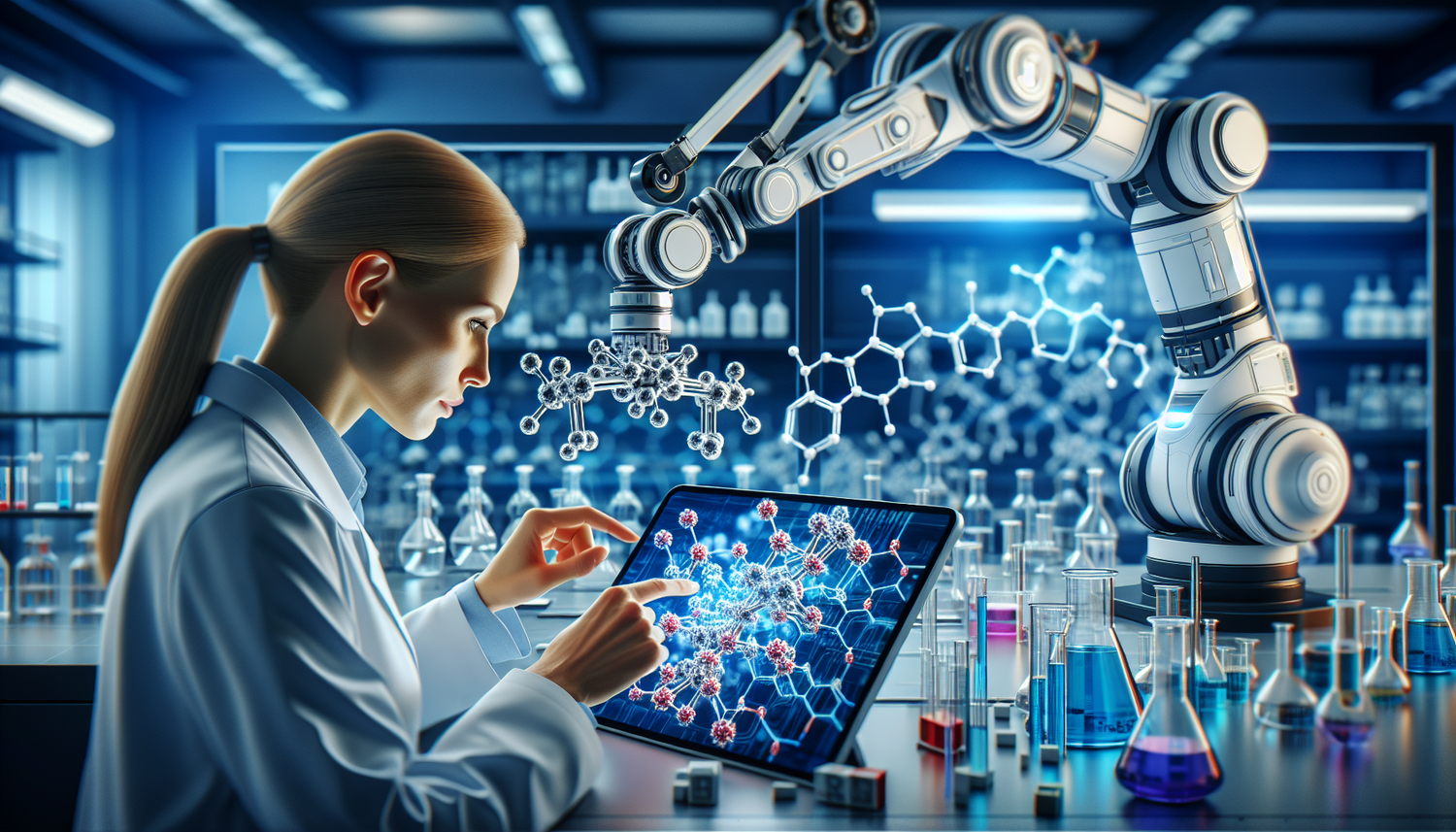
Artificial Intelligence (AI) is no longer limited to tech or software industries—it is making a huge impact in the chemical industry as well. From discovering new molecules to optimizing production and predicting reactions, AI is helping chemists and chemical companies work faster, safer, and more efficiently.
With so many AI tools available today, it can be hard to know which ones are best suited for chemistry. This guide explores AI tools designed for the chemical industry and how they can be applied across five key processes.
Why AI Is Transforming the Chemical Industry
Chemistry involves working with complex data, precise calculations, and often time-consuming experiments. Traditionally, chemists spend months testing new reactions, analyzing results, and optimizing processes. AI changes this by allowing simulations, predictions, and data-driven decisions in a fraction of the time.
Key benefits of AI in chemistry include:
-
Faster Research: AI can analyze large datasets and suggest experiments or molecules faster than manual research.
-
Cost Savings: Reduces waste of chemicals and resources during experimentation.
-
Improved Safety: AI can predict risky reactions before actual experiments.
-
Process Optimization: Helps in scaling production and improving yields.
-
Innovation: AI can identify new compounds or processes that humans might overlook.
The combination of chemistry and AI is enabling companies to innovate faster and compete globally.
5 Key Processes in the Chemical Industry and How AI Helps
AI tools can be applied to many areas in the chemical industry. The following are five key processes where AI is making a major impact.
1. Chemical Research and Discovery
Research and discovery involve creating new molecules, drugs, polymers, or materials. Traditionally, this process requires extensive lab work and trial-and-error experiments.
AI helps in several ways:
-
Molecule Prediction: AI can predict the structure and properties of new molecules.
-
Drug Discovery: AI identifies molecules likely to work as effective drugs.
-
Material Design: AI can suggest new polymers, catalysts, or composites with desired properties.
Popular AI Tools for Research and Discovery:
-
DeepChem: An open-source library for deep learning in chemistry and materials science.
-
IBM RXN for Chemistry: Uses AI to predict chemical reactions and plan synthesis pathways.
-
Schrödinger AI: Helps in molecular modeling and drug discovery simulations.
These tools speed up research, reduce failed experiments, and allow chemists to focus on promising candidates.
2. Chemical Reaction Optimization
After discovering molecules, chemists need to test reactions efficiently. Optimizing reactions involves selecting the right conditions—like temperature, pressure, and catalysts—for maximum yield.
AI can:
-
Analyze previous experiments to recommend optimal conditions.
-
Predict outcomes of new reactions before lab testing.
-
Suggest alternative reagents or methods to improve efficiency.
AI Tools for Reaction Optimization:
-
Chemputer: Automates chemical reactions and uses AI to optimize conditions.
-
DeepMatter: Provides predictive reaction analytics to save time and chemicals.
-
Chematica: Suggests reaction pathways and evaluates efficiency of synthetic routes.
This process reduces waste, saves time, and improves lab productivity.
3. Process Control and Production
In chemical manufacturing, maintaining consistent product quality is critical. Processes like mixing, heating, and chemical conversions need careful monitoring.
AI can help by:
-
Predicting production anomalies before they happen.
-
Monitoring chemical processes in real-time.
-
Optimizing flow, temperature, and other parameters for higher yields.
AI Tools for Process Control:
-
AspenTech AI: Integrates AI with process data to optimize chemical manufacturing.
-
Honeywell Forge: AI platform for industrial process monitoring and predictive maintenance.
-
Siemens MindSphere: Uses AI to manage operations and reduce downtime.
These tools help chemical plants operate efficiently, reduce energy consumption, and maintain product consistency.
4. Quality Assurance and Safety
Ensuring product quality and safety is essential in the chemical industry. AI can analyze large datasets to identify defects, contamination, or deviations in chemical products.
Applications include:
-
Predicting material failure or instability.
-
Detecting impurities in raw materials or final products.
-
Suggesting adjustments to maintain product standards.
-
Enhancing safety by identifying risky reactions or unsafe conditions.
AI Tools for Quality Assurance:
-
SAS Analytics AI: Analyzes chemical data to maintain quality standards.
-
DataRobot: Uses AI models to detect anomalies in production and product quality.
-
ABB Ability: AI-powered monitoring and predictive maintenance for chemical plants.
With AI, companies can maintain high standards and reduce accidents.
5. Supply Chain and Inventory Management
The chemical industry relies heavily on raw materials and complex supply chains. AI helps manage inventory, forecast demand, and reduce waste.
Key applications:
-
Predicting material shortages or surpluses.
-
Optimizing raw material orders and storage.
-
Coordinating production schedules with demand forecasts.
AI Tools for Supply Chain:
-
LLamasoft Supply Chain AI: Helps optimize chemical supply chains.
-
Blue Yonder: Uses AI to forecast demand and plan logistics.
-
Kinaxis RapidResponse: AI-driven supply chain and inventory management.
AI ensures that production runs smoothly and resources are used efficiently.
How to Choose the Best AI Tools for Chemistry
Selecting the right AI tool depends on the needs of your organization and the process you want to improve. Here are some tips:
Identify Your Goals
Are you focused on research, reaction optimization, production, or supply chain management? Knowing your main goal helps narrow down tools.
Check Data Requirements
AI tools need data to function effectively. Ensure you have sufficient and high-quality data to feed into the AI.
Evaluate Usability
Some tools are complex and require specialized knowledge. Startups or smaller labs may prefer tools with easy-to-use interfaces.
Consider Cost
Many AI platforms are expensive. Compare pricing with your expected ROI to make a smart decision.
Look for Industry-Specific Tools
AI solutions designed specifically for chemistry are often more effective than general AI tools.
Benefits of Using AI in the Chemical Industry
By implementing AI, chemical companies gain several advantages:
-
Faster Discovery: AI reduces the time needed for research and development.
-
Cost Efficiency: Optimizing reactions and production reduces waste and expenses.
-
Higher Quality: AI ensures products meet high standards consistently.
-
Safety Improvements: Predictive AI can prevent dangerous reactions.
-
Supply Chain Efficiency: AI forecasts and optimizes inventory and logistics.
-
Innovation Boost: AI uncovers new molecules, materials, and methods humans might miss.
The combination of these benefits helps companies remain competitive in a fast-paced industry.
Challenges of AI in Chemistry
Despite the advantages, AI adoption in chemistry comes with challenges:
-
Data Availability: Many chemical labs may not have enough digital data for AI to learn effectively.
-
Complexity of Chemical Systems: Chemistry involves many variables that AI models must accurately understand.
-
Integration with Existing Processes: Implementing AI tools into existing lab workflows can be difficult.
-
Cost of Tools: Advanced AI platforms can be expensive for smaller labs or startups.
Overcoming these challenges requires careful planning and collaboration between chemists and AI experts.
The Future of AI in the Chemical Industry
AI in chemistry is still growing, and the future looks promising:
-
Fully Automated Labs: Labs may soon run experiments automatically based on AI predictions.
-
Smart Chemical Plants: AI will optimize production in real time for efficiency and safety.
-
AI-Driven Discovery: Entirely new materials, drugs, and chemicals may be discovered primarily through AI.
-
Sustainability: AI can help reduce chemical waste and energy consumption in production.
As AI continues to improve, it will become an essential partner for chemists and chemical companies worldwide.
Conclusion
Artificial Intelligence is revolutionizing the chemical industry. From research and discovery to production, quality assurance, and supply chain management, AI tools are enhancing efficiency, safety, and innovation.
By using AI, chemical companies can:
-
Speed up R&D
-
Optimize reactions and processes
-
Improve product quality
-
Enhance safety
-
Reduce costs
-
Innovate faster
The key to success is choosing the right AI tools for your specific needs and integrating them into daily workflows responsibly.
For chemists and chemical companies, AI is not just a tool—it is a partner that opens new possibilities in research, production, and industry-wide innovation. With the right AI strategy, the future of chemistry looks faster, smarter, and more sustainable than ever.
Read Also: Keep your face towards the sunshine and shadows will fall behind you
Watch Also: https://www.youtube.com/@TravelsofTheWorld2













Leave a Reply