
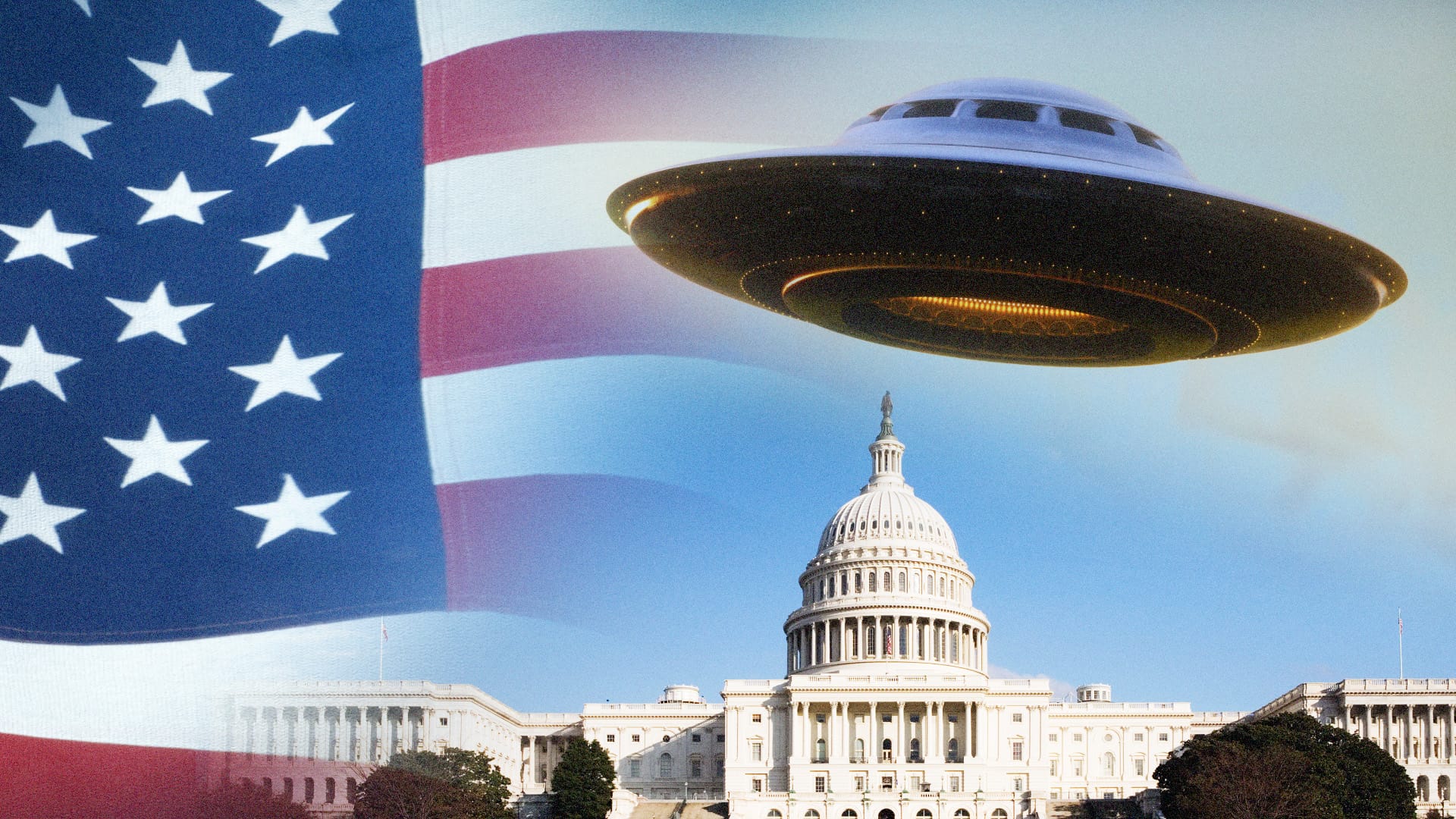
For many decades, UFOs have been surrounded by mystery, rumors, and conspiracy theories. Movies, television shows, and books have often shown aliens visiting Earth in flying saucers. Because governments rarely spoke openly about these sightings, many people believed that secret information about extraterrestrial life was being hidden.
In recent years, however, the United States government has started to change the way it talks about UFOs. Instead of treating the topic as science fiction or speculation, officials want to study these sightings using science and data. The goal is to understand what these objects really are and whether they pose any risk to national security or aviation safety.
Today, the term UFO is slowly being replaced with UAP, which means Unidentified Aerial Phenomena or Unidentified Anomalous Phenomena. This change reflects a more serious and scientific approach to studying unusual objects seen in the sky.
This article explains why the U.S. government wants to change the conversation about UFOs, how scientists and military officials are studying these objects, and what the future may hold for research into unexplained aerial sightings.
Why UFOs Have Always Attracted Attention
People have been fascinated by strange objects in the sky for centuries. Even before modern technology, historical records describe unusual lights or flying shapes seen by witnesses.
In modern times, UFO sightings became especially popular after World War II. Pilots, soldiers, and civilians reported seeing strange aircraft moving in unusual ways. These sightings often appeared in newspapers and later became common topics in science fiction stories.
One reason UFOs became so mysterious is that governments rarely shared information about them. Without clear explanations, rumors spread quickly. Many people started believing that governments might be hiding evidence of alien life or secret technology.
Surveys have shown that a large number of Americans think the government knows more about UFOs than it reveals publicly. This belief has helped conspiracy theories grow over time.
Because of this confusion and speculation, scientists and officials now believe it is important to treat the topic in a more serious and scientific way.
Changing the Term from UFO to UAP
One of the first steps the U.S. government took was changing the terminology.
Instead of “UFO,” officials now use the term Unidentified Aerial Phenomena (UAP). This new term helps remove the strong connection with aliens and science fiction.
The word “UFO” often makes people think immediately about extraterrestrial spacecraft. But in reality, a UFO simply means an object in the sky that has not yet been identified.
Using the term UAP encourages investigators to look at these sightings scientifically rather than assuming they are alien technology.
The change in language also helps pilots and military personnel report sightings without fear of being laughed at or dismissed.
Why the Government Is Taking UFOs More Seriously
There are several reasons why the U.S. government has started paying closer attention to unexplained aerial objects.
1. Aviation Safety
Military and commercial pilots sometimes report seeing strange objects flying near their aircraft. These objects could pose a safety risk if they collide with planes.
Studying UAP helps officials understand whether these sightings represent unknown aircraft, drones, or other hazards.
2. National Security
Another concern is that some unidentified objects could belong to foreign governments.
Countries like China or Russia may develop advanced aircraft or surveillance technology. If such technology enters U.S. airspace without being detected, it could create security risks.
This is why many experts say investigating UFO sightings is important for defense and security.
3. Scientific Curiosity
Scientists are naturally curious about unexplained phenomena. Studying unusual sightings using scientific methods could reveal new information about atmospheric events, advanced technology, or other natural phenomena.
NASA’s Role in UFO Research
The U.S. space agency NASA has also started taking a more active role in studying UAP.
NASA created an independent group of scientists to analyze available data on UFO sightings. Their goal is to understand how scientific tools can help identify these objects.
NASA officials have said they want to shift the conversation around UFOs “from sensationalism to science.”
The agency believes that treating the topic scientifically will reduce stigma and encourage more reliable reporting from pilots, scientists, and researchers.
NASA’s study found that many UFO sightings do not have enough detailed data to reach clear conclusions. More accurate observations and better data collection are needed to understand these events.
Pentagon Programs Investigating UFOs
The U.S. Department of Defense has been studying UFO sightings for many years.
One well-known program was the Advanced Aerospace Threat Identification Program (AATIP), which ran from 2007 to 2012. The project studied reports of unidentified flying objects and unexplained aerial movements.
Although the program ended, interest in UAP research continued within the military.
In 2022, the Pentagon created a new office called the All-domain Anomaly Resolution Office (AARO). This office is responsible for collecting and analyzing reports of unidentified objects in the air, sea, and space.
AARO works with several government agencies to gather data from radar systems, satellites, and pilot reports.
The goal is to build a better understanding of these sightings and determine whether they represent natural phenomena, foreign technology, or something else.
Congressional Hearings on UFO Sightings
In recent years, the U.S. Congress has also shown interest in UFO investigations.
Several hearings have been held where military pilots and intelligence officials shared their experiences with unidentified aerial objects.
Some pilots described seeing objects that moved extremely fast or changed direction suddenly. In many cases, these objects were detected by radar as well as by visual observation.
These hearings helped bring the topic into mainstream discussion and showed that the government is taking it seriously.
However, officials have repeatedly stated that there is no confirmed evidence that these objects are alien spacecraft.
The Challenge of Studying UFOs
Studying UFO sightings is not easy. Many reports involve objects that appear suddenly and disappear quickly.
Several challenges make scientific research difficult:
Limited Data
Many sightings are brief and lack detailed information. Without accurate measurements, it is hard to determine what the object actually was.
Human Perception
Human eyes can sometimes misinterpret objects, especially at night or at high speed. A balloon, drone, or satellite can sometimes appear very unusual from a distance.
Atmospheric Effects
Weather conditions and atmospheric phenomena can also create strange visual effects in the sky.
Because of these factors, scientists must carefully analyze each case before drawing conclusions.
How Technology Helps Investigate UFOs
Modern technology has improved the ability to study unexplained aerial phenomena.
Researchers now use tools such as:
-
Advanced radar systems
-
Satellite imaging
-
High-resolution cameras
-
Artificial intelligence for data analysis
Artificial intelligence can examine large amounts of data and help identify patterns in flight movements or radar signals.
This technology makes it easier to determine whether a sighting is caused by known aircraft, weather events, or other objects.
Reducing the Stigma Around UFO Reports
In the past, many pilots and scientists avoided talking about UFO sightings because they feared being ridiculed.
The new scientific approach aims to remove this stigma.
Officials encourage pilots to report unusual sightings without worrying about damaging their reputation.
This openness helps researchers collect more data and understand what is happening in the sky.
The more reliable reports scientists receive, the easier it becomes to identify patterns and explanations.
Are UFOs Evidence of Alien Life?
One of the biggest questions people ask is whether UFOs prove that aliens have visited Earth.
So far, scientists say there is no confirmed evidence that UFO sightings involve extraterrestrial spacecraft.
Most sightings eventually turn out to be ordinary objects such as:
-
Weather balloons
-
Drones
-
Aircraft
-
Satellites
-
Atmospheric effects
However, some cases remain unexplained simply because there is not enough information to identify the object.
Scientists say unexplained does not mean extraterrestrial—it only means more research is needed.
The Possibility of Life Elsewhere in the Universe
Although UFO sightings do not prove aliens have visited Earth, many scientists believe life could exist somewhere else in the universe.
Astronomers have discovered thousands of planets outside our solar system. Some of these planets may have conditions similar to Earth.
Because the universe is so large, scientists think it is possible that life exists somewhere beyond our planet.
However, the distances between stars are extremely large. Traveling between them would be very difficult with current technology.
This is one reason scientists remain cautious about claims that aliens have visited Earth.
Why Scientific Research Matters
Moving the conversation about UFOs from speculation to science has several benefits.
Better Understanding
Scientific investigation helps explain unusual events and reduce confusion.
Improved Safety
Studying unidentified aerial objects can help protect aircraft and monitor airspace more effectively.
Transparency
Open discussion and data sharing can reduce conspiracy theories and build public trust.
New Discoveries
Research into unusual phenomena may lead to new discoveries about atmospheric science, physics, or technology.
The Future of UFO Research
Interest in UFOs is likely to continue growing in the coming years.
Governments, scientists, and private organizations are all working to collect more accurate data about unidentified aerial phenomena.
Future research may involve:
-
More advanced satellite monitoring
-
Global cooperation between space agencies
-
Artificial intelligence analysis of sightings
-
Improved reporting systems for pilots
As technology improves, scientists may be able to explain more sightings that currently remain mysterious.
Conclusion
For decades, UFOs have been surrounded by speculation, rumors, and conspiracy theories. The lack of clear information allowed many myths about aliens and secret government programs to spread.
Today, the U.S. government and scientific organizations are trying to change that. Instead of treating UFO sightings as science fiction, they want to study them using careful research, technology, and data.
By shifting the conversation from speculation to science, researchers hope to better understand unexplained aerial phenomena and ensure the safety of airspace.
While there is still no evidence that UFOs are alien spacecraft, the effort to investigate them scientifically represents an important step forward.
As scientists continue to explore the skies and the universe beyond Earth, the search for answers about unexplained objects—and the possibility of life elsewhere—remains one of humanity’s most fascinating questions.
Read Also: Keep your face towards the sunshine and shadows will fall behind you
Watch Also: https://www.youtube.com/@TravelsofTheWorld24













Leave a Reply