
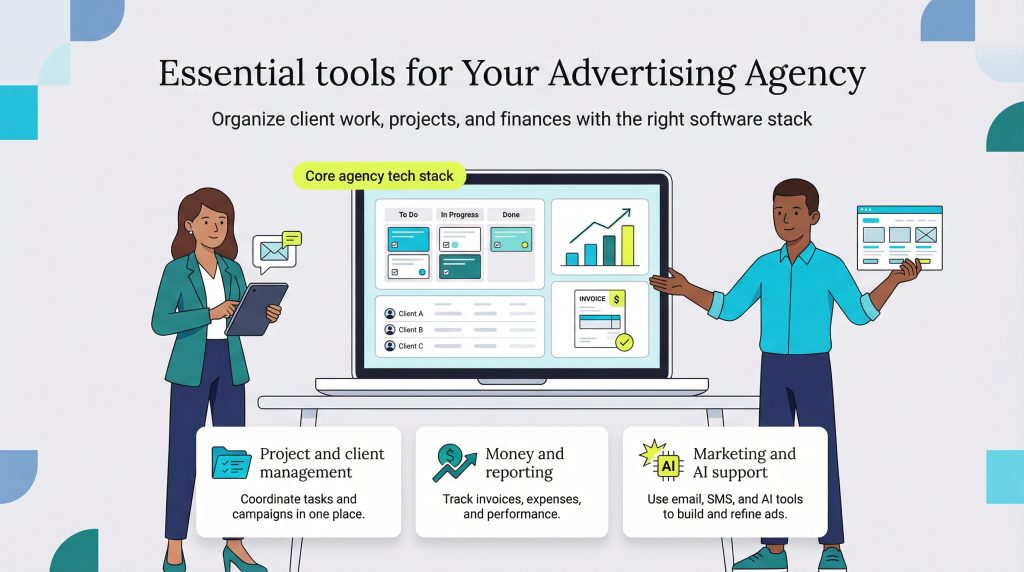
Starting an advertising agency can be exciting and rewarding, but it is also challenging. Many people are attracted to the idea because it looks creative, flexible, and profitable. You imagine working with big brands, launching campaigns, and building something of your own. While all of that is possible, success requires planning, skills, patience, and a clear strategy.
If you are thinking about launching an ad agency, this guide will walk you through the essentials — what an agency does, the steps to start one, the skills required, the costs involved, and how to grow in a competitive market.
What Does an Advertising Agency Do?
An advertising agency helps businesses promote their products or services. The goal is to reach the right audience and persuade them to take action — buy, sign up, visit a store, or contact the company.
Modern agencies usually offer services such as:
-
Brand strategy
-
Creative design
-
Social media management
-
Online advertising
-
Search engine marketing
-
Content creation
-
Media planning and buying
-
Analytics and reporting
Some agencies focus on traditional media like TV, radio, and print, while others specialize in digital platforms.
Why Start an Ad Agency?
People choose this business for many reasons:
-
Creative freedom
-
High income potential
-
Low startup costs compared to other industries
-
Ability to work with different clients
-
Opportunity to build a scalable company
-
Remote work possibilities
However, the industry is highly competitive, so passion alone is not enough.
Step 1: Choose Your Niche
Trying to serve everyone usually leads to weak positioning. Successful agencies often specialize in a specific area.
Examples of niches include:
-
Social media advertising
-
E-commerce marketing
-
Local business promotion
-
Healthcare marketing
-
Real estate marketing
-
B2B services
-
Startup growth marketing
-
Luxury brands
A niche helps you become known as an expert rather than a generalist.
Step 2: Define Your Services Clearly
Decide what you will offer from day one. Avoid promising everything unless you have a team that can deliver.
Common service models:
Full-service agency: Handles strategy, creative work, and advertising
Specialized agency: Focuses on one area such as paid ads or branding
Consulting agency: Provides guidance but not execution
Clear services make it easier for clients to understand your value.
Step 3: Build Your Skills and Knowledge
Even if you hire staff later, you should understand core marketing concepts. Key skills include:
-
Market research
-
Consumer psychology
-
Copywriting
-
Design principles
-
Data analysis
-
Campaign planning
-
Client communication
-
Sales and negotiation
Continuous learning is essential because marketing trends change quickly.
Step 4: Create a Business Plan
A business plan does not need to be complicated, but it should answer important questions:
-
Who are your target clients?
-
What problem do you solve?
-
How will you price services?
-
How will you attract customers?
-
What are your expenses?
-
What revenue do you expect?
This plan acts as your roadmap.
Step 5: Handle Legal and Administrative Setup
Register your business according to local laws. Choose a structure such as sole proprietorship, partnership, or company.
You will also need:
-
Business bank account
-
Contracts and service agreements
-
Invoicing system
-
Accounting setup
-
Necessary licenses (if required)
Proper documentation protects both you and your clients.
Step 6: Build a Strong Brand for Your Agency
Your agency’s brand is your first proof of capability. If you cannot market yourself well, clients may doubt your ability to market them.
Key branding elements:
-
Agency name
-
Logo and visual identity
-
Website
-
Portfolio or case studies
-
Social media presence
-
Clear messaging
Your website should explain who you help, how you help them, and why you are different.
Step 7: Create a Portfolio — Even Without Clients
Many new agencies struggle because they lack past work. You can still build a portfolio by:
-
Doing projects for friends or small businesses
-
Creating sample campaigns
-
Offering discounted services initially
-
Documenting results carefully
Real examples build trust faster than promises.
Step 8: Find Your First Clients
Getting initial clients is often the hardest part. Effective methods include:
-
Personal network and referrals
-
Freelance platforms
-
Social media outreach
-
Cold emailing businesses
-
Attending networking events
-
Content marketing
-
Partnerships with other professionals
Consistency matters more than any single tactic.
Step 9: Deliver Outstanding Results
Your reputation grows from results, not marketing claims. Focus on:
-
Clear communication
-
Meeting deadlines
-
Honest reporting
-
Understanding client goals
-
Continuous improvement
Happy clients become repeat customers and refer others.
Step 10: Build Systems and Processes
As you grow, managing projects manually becomes difficult. Systems help maintain quality and efficiency.
Important systems include:
-
Project management tools
-
Communication workflows
-
Reporting templates
-
Standard operating procedures
-
Client onboarding process
Strong processes allow you to scale without chaos.
Hiring Your First Team Members
Initially, you may work alone or with freelancers. As demand increases, consider hiring:
-
Designers
-
Copywriters
-
Media buyers
-
Account managers
-
Analysts
-
Sales representatives
Hire slowly and carefully. People costs can quickly exceed revenue if growth is unstable.
Pricing Your Services
Pricing can be tricky. Common models include:
-
Monthly retainer
-
Project-based fees
-
Hourly rates
-
Performance-based pricing
-
Percentage of ad spend
Choose a model that reflects the value you provide and supports sustainable income.
Challenges You Should Expect
Running an agency is not always glamorous. Common difficulties include:
-
Finding consistent clients
-
Managing cash flow
-
Handling demanding customers
-
Staying updated with trends
-
Competing with established agencies
-
Balancing creativity and business tasks
Understanding these challenges helps you prepare mentally.
How to Stand Out in a Crowded Market
To succeed long term, you must differentiate yourself. Ways to stand out include:
-
Specializing in a niche
-
Delivering measurable results
-
Offering exceptional customer service
-
Developing unique methodologies
-
Building a strong personal brand
-
Creating valuable content
-
Focusing on long-term relationships
Reputation is your most powerful asset.
Growth Strategies for Established Agencies
Once stable, agencies can expand by:
-
Adding new services
-
Targeting larger clients
-
Entering new markets
-
Building strategic partnerships
-
Investing in technology
-
Developing proprietary tools
-
Acquiring smaller agencies
Growth should be intentional, not accidental.
Is Starting an Ad Agency Right for You?
This business suits people who are:
-
Self-motivated
-
Comfortable with uncertainty
-
Good communicators
-
Problem solvers
-
Curious about markets and behavior
-
Willing to learn continuously
-
Resilient under pressure
If you prefer predictable routines, agency life may feel stressful.
Final Thoughts
Starting an advertising agency offers tremendous opportunities, but success does not happen overnight. It requires a blend of creativity, business skills, discipline, and persistence.
By choosing a clear niche, building strong capabilities, delivering real value, and maintaining excellent relationships, you can grow from a small startup into a respected agency. Focus on helping clients achieve meaningful results, and your own success will follow.
In the end, the most successful agencies are not just creative studios — they are trusted partners that drive business growth.
Read Also: Keep your face towards the sunshine and shadows will fall behind you
Watch Also: https://www.youtube.com/@TravelsofTheWorld24















Leave a Reply