
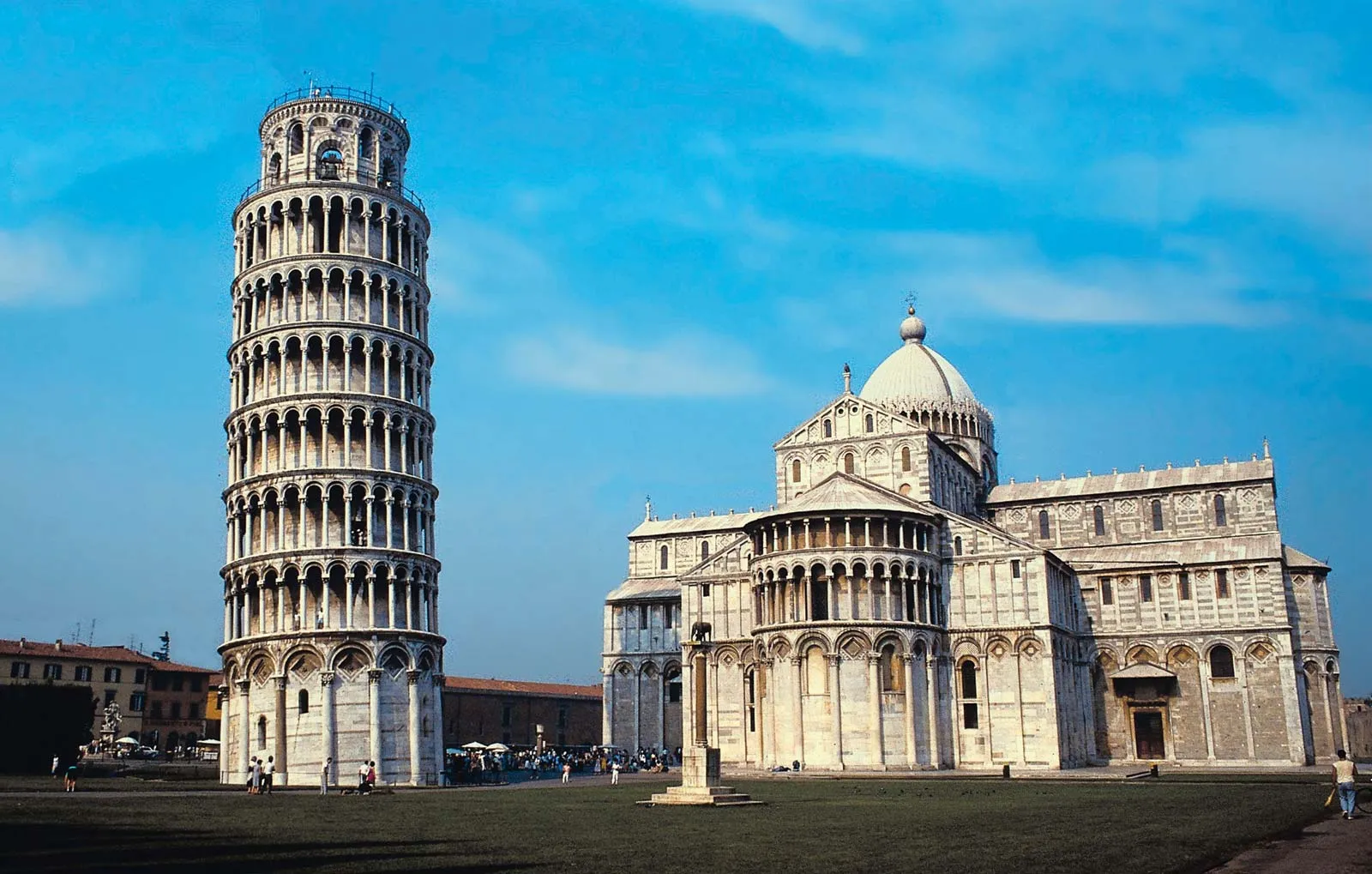
Pisa is known around the world for one of the most unusual and famous buildings in history: the Leaning Tower of Pisa. Its slight tilt makes it instantly recognizable, and it has become a symbol of the city and a major tourist attraction.
Despite its lean, the tower has stood for centuries, fascinating architects, engineers, and visitors alike. It is part of a larger complex called the Piazza dei Miracoli, or Square of Miracles, which includes the cathedral and baptistery. Together, these structures represent Pisa’s rich history and artistic achievements.
Why the Tower Leans
The tower’s lean is caused by unstable soil. When construction began in 1173, builders did not realize that the ground beneath the site was soft and uneven. After a few floors were built, the tower started to tilt to one side.
-
The soil under the foundation is a mix of clay, sand, and water.
-
As the tower grew taller, the weight pressed unevenly on the soft ground.
-
Builders tried to correct the tilt, but the lean continued and became a defining feature.
Over the years, engineers have stabilized the foundation to prevent further tilting, allowing the tower to remain safe for visitors.
Construction History
The construction of the Leaning Tower of Pisa took nearly 200 years, with several long pauses:
-
1173–1185: Construction of the first few floors began, and the lean became noticeable.
-
1272–1319: Construction resumed and more floors were added. Builders tried to correct the tilt by making upper floors slightly taller on one side.
-
1372: The final floor, with the bell chamber, was completed.
The long construction period allowed the soil to settle slowly, which helped prevent the tower from collapsing. This unplanned pause ultimately contributed to its survival.
Design and Architecture
The tower was designed as a freestanding bell tower, or campanile, for the nearby cathedral. Its architectural style is Romanesque, typical of medieval Europe.
Key features include:
-
Eight stories: The tower has eight levels, including the bell chamber at the top.
-
Columns and arches: Each level features columns and arches, creating a rhythmic and elegant appearance.
-
White marble: The exterior is made of white marble, giving it a bright and classic look.
Despite the tilt, the tower’s proportions and symmetry are remarkable, showing the skill of medieval builders.
The Tilt Angle
The tower currently leans at about 3.97 degrees after restoration work, though at its peak, it leaned more than 5 degrees. Engineers have spent decades stabilizing it using modern techniques such as:
-
Anchoring the foundation
-
Removing soil from under higher sides
-
Adding counterweights
These efforts ensure that the tower remains safe while preserving its historic tilt, which makes it unique in the world.
The Bell Chamber
At the top of the tower is the bell chamber, which contains seven bells. Each bell has its own name and tone, originally used to call people to church or announce time.
Visitors can climb a spiral staircase of 294 steps to reach the bell chamber. From the top, you can see:
-
The Piazza dei Miracoli
-
Pisa city streets
-
Surrounding Tuscan countryside
The view is especially beautiful at sunrise or sunset.
The Piazza dei Miracoli
The Leaning Tower is part of the Piazza dei Miracoli, a UNESCO World Heritage Site. Other notable buildings in the square include:
-
Pisa Cathedral: A large Romanesque church with impressive frescoes and a golden altar.
-
Baptistery: A round building used for baptisms, famous for its acoustics and dome.
-
Camposanto Monumentale: A historic cemetery with beautiful frescoes.
Together, these buildings form a remarkable ensemble, blending art, religion, and history.
Tourism and Visitors
The Leaning Tower attracts millions of tourists every year. People visit to:
-
Take photos pretending to “hold up” the tower
-
Climb the stairs to the top
-
Explore the surrounding square and museums
-
Learn about its history and engineering
Tickets to climb the tower are limited each day to preserve the structure and ensure visitor safety.
Cultural Impact
The Leaning Tower has influenced art, architecture, and popular culture. It appears in movies, advertisements, and souvenirs worldwide.
It has also inspired engineers and architects to study soil, foundations, and structural stability. The tower is both a tourist attraction and an educational example of medieval building challenges.
Restoration and Preservation
Over the centuries, the tower faced risks from earthquakes, erosion, and continued leaning. Major restoration efforts in the late 20th and early 21st centuries included:
-
Reducing the tilt by removing soil and stabilizing the foundation
-
Repairing cracks in marble and stone
-
Cleaning the exterior to restore its original brightness
These efforts ensure the tower will remain a part of Pisa for generations to come.
Fun Facts
-
The tower’s lean was noticed during construction, not afterward.
-
Galileo Galilei is said to have conducted experiments on gravity by dropping objects from the tower.
-
Despite its tilt, the tower has never collapsed.
These facts make the Leaning Tower a mix of history, science, and culture.
Visiting Tips
-
Best Time to Visit: Early morning or late afternoon to avoid crowds
-
Tickets: Required to climb the tower; can be booked in advance
-
Photography: The tower’s tilt allows for creative photos and unique perspectives
-
Nearby Attractions: Explore the cathedral, baptistery, and local shops
A visit to Pisa is incomplete without seeing this world-famous leaning bell tower.
Conclusion
The Leaning Tower of Pisa is a remarkable combination of history, architecture, and engineering. Its tilt makes it unique, and its survival over centuries demonstrates the skill and creativity of its builders.
Visitors today can climb its spiral staircase, admire the surrounding square, and marvel at the view of Pisa and the Tuscan countryside. As a symbol of the city and a piece of world heritage, the Leaning Tower continues to inspire and delight people from around the globe.
Read Also: Keep your face towards the sunshine and shadows will fall behind you
Watch Also: https://www.youtube.com/@TravelsofTheWorld24






Leave a Reply