
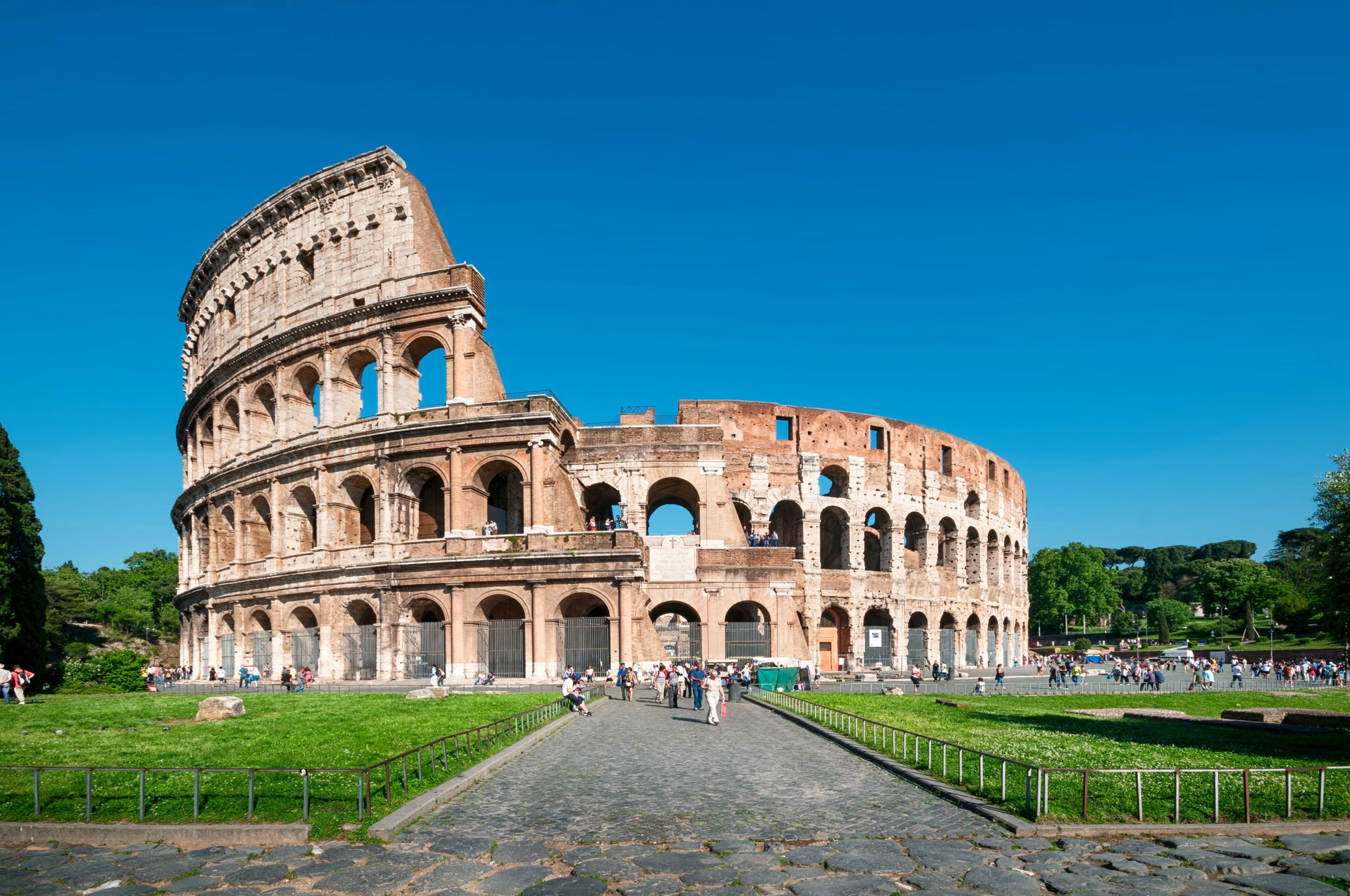
The Colosseum in Rome is one of the most famous landmarks in the world. Its large, round shape and ancient history make it a symbol of the Roman Empire and the city itself. People from all over the globe visit to see this remarkable building, which has stood for nearly 2,000 years. Even in ruins, it leaves a powerful impression and tells stories of the past.
It is located in the heart of Rome, near other famous sites like the Roman Forum and Palatine Hill. The Colosseum was the largest amphitheater ever built during ancient times, and it could hold tens of thousands of spectators. From a distance, its enormous arches and tiered structure show how advanced Roman engineering was.
Why the Colosseum Was Built
The Colosseum, also called the Flavian Amphitheatre, was built to entertain the people of Rome. Roman emperors wanted to show their power and give citizens a place to enjoy games, competitions, and public events. Construction began in 70 AD under Emperor Vespasian and was finished in 80 AD by his son, Titus. Later, Emperor Domitian added more features and improvements.
The arena hosted gladiator fights, mock sea battles, animal hunts, and public executions. These events were a way to entertain citizens and display the emperor’s generosity. Spectators could watch the games free of charge, which helped keep the population happy and loyal to the leaders.
Architecture and Design
The Colosseum is a marvel of ancient engineering. It is made mainly of stone and concrete. Its outer walls rise about 48 meters (157 feet) high, and the building measures approximately 189 meters long and 156 meters wide. The design allowed it to hold between 50,000 and 80,000 people at once.
The structure is elliptical, which made it perfect for spectators to see the action from every angle. The tiered seating was carefully planned, with the best seats reserved for important citizens, while ordinary people sat higher up. Entrance and exit corridors were well organized, allowing large crowds to move quickly.
The exterior features arches and columns in three classical orders — Doric, Ionic, and Corinthian — stacked on top of each other. This layering created both beauty and stability. The arches also made it easier to build such a massive structure while keeping it strong.
Gladiators and Games
Gladiators were professional fighters who competed in the arena. Many were slaves, prisoners of war, or criminals, but some volunteered for fame and prizes. Fights could be one-on-one or involve groups of gladiators. They used different weapons, armor, and fighting styles, depending on their training.
Animals were also part of the games. Lions, elephants, and bears were brought from Africa and the Middle East. Sometimes, the Colosseum was flooded to recreate naval battles, though this was only possible in the early years because later, the plumbing system could not support it.
While modern audiences might find these events cruel, in Roman times, they were considered entertainment, teaching courage, skill, and loyalty to Rome.
Engineering Wonders
The Colosseum had many advanced features for its time. It included a complex system of corridors and elevators to move animals, gladiators, and scenery into the arena. Trapdoors allowed sudden appearances, surprising the audience.
The building also had a retractable awning called the velarium. Sailors and workers used ropes to extend the large canvas over the top of the stadium, giving shade to spectators during sunny days. This required careful planning and teamwork to manage such a massive cover.
The drainage system beneath the arena prevented flooding and kept the space safe. Water management, combined with the strong structure of arches and concrete, allowed the Colosseum to last centuries.
Daily Life Around the Colosseum
During events, the surrounding area would be full of vendors, entertainers, and citizens. People sold food, drinks, and souvenirs. Street performers and musicians entertained crowds before the games began. Visiting the Colosseum was not only about watching fights but also a social experience.
Roman society valued public entertainment as a way to unite citizens and show the strength of the empire. Free admission and impressive spectacles made it a central part of city life.
Damage and Preservation
Over the centuries, the Colosseum suffered damage from earthquakes, fires, and stone removal. During the Middle Ages, parts of the building were taken to construct churches, palaces, and other structures. Despite this, much of the Colosseum remains standing, a testament to Roman skill and durability.
Today, preservation efforts help maintain the site. Experts study the remaining structure, repair damaged sections, and ensure visitor safety. Even as a ruin, it continues to attract millions of visitors each year.
Symbol of Rome
The Colosseum is more than a building; it is a symbol of ancient Rome and its empire. It reflects the wealth, power, and organization of Roman society. Its influence can be seen in modern stadiums, which borrowed ideas like tiered seating and wide entrances from the Colosseum.
It also serves as a reminder of human achievement and the passage of time. Generations have admired the building, and it remains one of the most photographed landmarks in the world.
Visiting the Colosseum
Today, visitors can explore both the interior and exterior. Walking through the arches, seeing the arena floor, and imagining the crowds of ancient Rome creates a strong connection to history. Guided tours explain the architecture, events, and the lives of gladiators, giving context to the impressive structure.
The surrounding area also includes the Roman Forum and Palatine Hill, making a visit to the Colosseum part of a larger journey into ancient Rome.
Cultural Impact
The Colosseum has inspired art, literature, and film. Many movies depict gladiator fights and Roman history, often using the Colosseum as a setting. Artists and writers have celebrated its grandeur, while architects study its design for inspiration.
It is also a symbol of endurance. Despite earthquakes, time, and human activity, the Colosseum continues to stand, reminding people of the ingenuity and vision of its builders.
Night Views and Lighting
At night, the Colosseum is illuminated with warm lights that highlight its arches and structure. The glow makes it look majestic and emphasizes its scale. Evening visits or photos provide a different perspective compared to daytime, with shadows adding drama to the ancient stone.
Special lighting is sometimes used for events or causes, such as turning the building purple for cultural celebrations or pink for health awareness campaigns.
Modern Connection
The Colosseum is still relevant today. Historians, architects, and tourists all find value in its lessons. Modern stadiums, arenas, and event spaces owe much to the Colosseum’s design. Its influence extends beyond architecture, affecting cultural appreciation of history and heritage.
It is also a reminder of the importance of preservation, showing how ancient structures can teach us about past societies and inspire future generations.
Final Thoughts
The Colosseum in Rome is a place where history comes alive. Its architecture, events, and cultural significance make it one of the most remarkable sites in the world. Walking through its arches or imagining the roar of ancient crowds allows visitors to experience a part of Roman life.
From its construction under Emperor Vespasian to its survival through earthquakes and centuries of change, the Colosseum remains a symbol of human creativity, engineering, and entertainment. It is a timeless reminder of how civilization can leave a mark that lasts for thousands of years.
Whether admired for its size, design, or historical importance, the Colosseum continues to capture the imagination of millions and stands proudly as one of the greatest monuments of the ancient world.
Read Also: Keep your face towards the sunshine and shadows will fall behind you
Watch Also: https://www.youtube.com/@TravelsofTheWorld24









Leave a Reply