
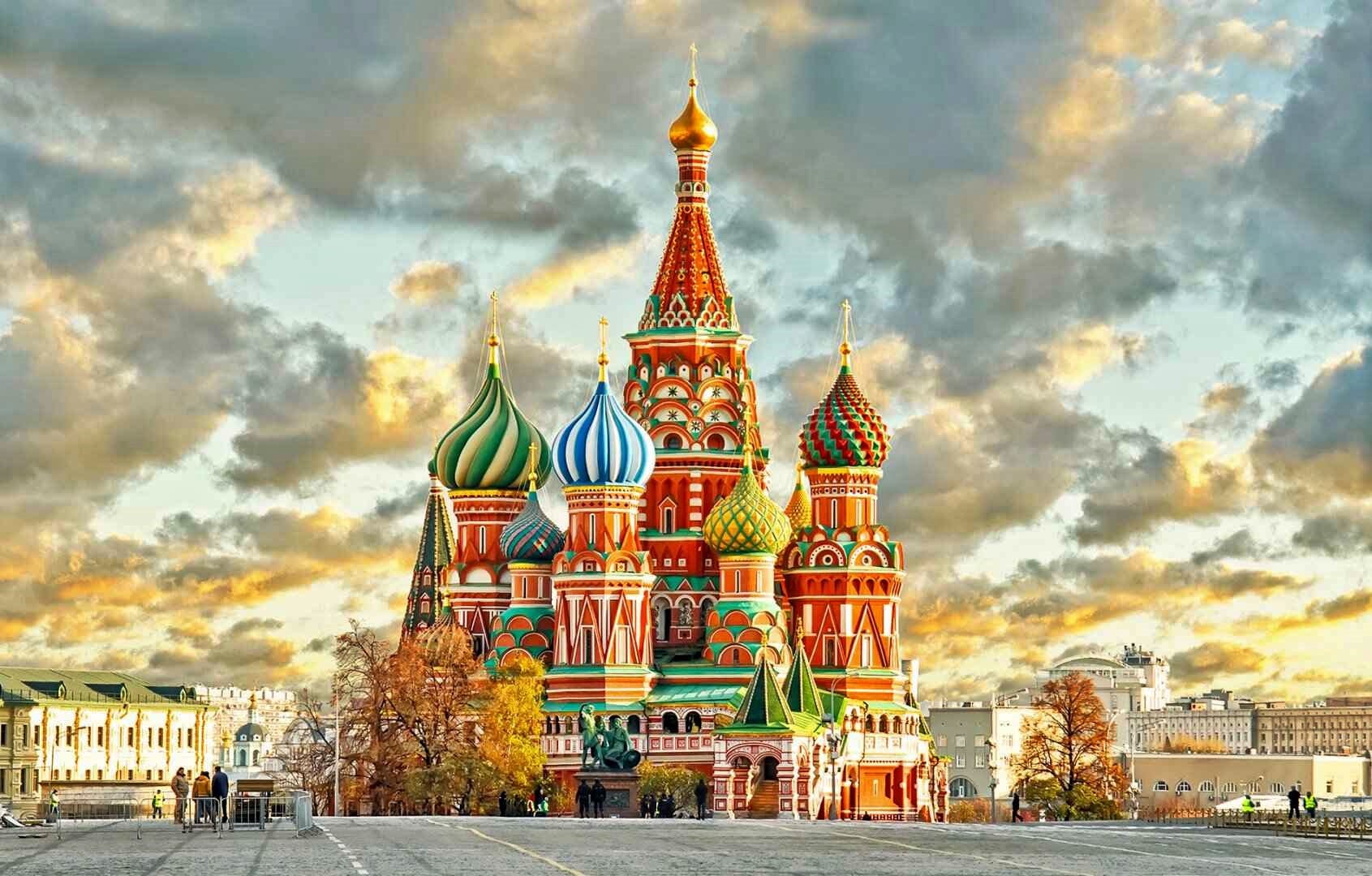
St. Basil’s Cathedral is one of the most famous buildings in the world. It stands at the edge of Red Square in the heart of the city. With its colorful onion-shaped domes, bright patterns, and fairy-tale look, the cathedral almost seems unreal, like something from a storybook. Many people see it as a symbol of Russia itself.
Even people who have never visited Moscow often recognize this building instantly. Its unusual design makes it different from almost every other church on Earth. Instead of one large dome, it has many smaller domes, each with its own color and pattern. From far away, it looks like a group of towers gathered together.
Why It Was Built
St. Basil’s Cathedral was built in the 1500s during the rule of Ivan the Terrible, one of Russia’s most powerful and feared rulers. He ordered the church to celebrate a major military victory — the capture of the city of Kazan in 1552. This victory helped expand Russia’s territory and strengthened Ivan’s rule.
Construction began in 1555 and was completed in 1561. At that time, Moscow was growing into an important political and religious center, and Ivan wanted a monument that would show the power of his kingdom and his faith.
Originally, the cathedral was not called St. Basil’s. Its official name was the Cathedral of the Intercession of the Most Holy Theotokos on the Moat. Over time, people began calling it St. Basil’s after a local holy man who was buried there. The shorter name became much more popular.
The Legend of the Blinded Architects
There is a famous story connected to the cathedral’s construction. According to legend, Ivan the Terrible was so impressed by the beauty of the building that he ordered the architects to be blinded so they could never create anything as magnificent again.
However, historians believe this story is not true. There is evidence that the main architect continued working on other projects afterward. Still, the legend remains popular because it fits the harsh reputation of Ivan the Terrible.
Unique Architecture
What makes St. Basil’s Cathedral truly special is its design. It does not follow the typical layout of most European cathedrals. Instead of one large structure, it is made up of several small chapels built around a central tower.
There are nine main domes in total. Each dome sits on top of its own chapel. The domes are shaped like onions — wide at the bottom and narrow at the top. This shape helps snow slide off easily during winter, which is useful in Russia’s cold climate.
Each dome has a different color and pattern. Some have stripes, some have zigzags, and others have swirling designs. Bright colors like red, green, blue, and yellow make the building stand out against the sky.
Originally, the cathedral was mostly white with gold domes. The colorful patterns were added later, especially in the 1600s and 1700s. Today, these colors are what make it so famous.
Inside the Cathedral
From the outside, St. Basil’s looks huge, but inside it feels surprisingly small and maze-like. Narrow corridors connect the different chapels. Some passageways are low and tight, making visitors feel as if they are walking through a hidden labyrinth.
Each chapel is decorated with religious paintings, icons, and detailed wall art. The ceilings are painted with beautiful patterns and scenes from the Bible. Because the building was designed for prayer rather than large gatherings, the rooms are not very spacious.
The central chapel is the tallest and most important part. It represents the main religious dedication of the cathedral. Other chapels honor different saints and events.
The Story of St. Basil
The cathedral’s popular name comes from Saint Basil the Blessed, a local holy man who lived in Moscow during the 16th century. He was known as a “holy fool,” someone who acted strangely but was believed to be deeply spiritual.
Basil lived a simple life, often walking barefoot and giving away everything he owned to the poor. Many people believed he had special insight and could predict the future. Even Ivan the Terrible respected him.
After Basil died, he was buried near the cathedral, and a chapel was later built over his grave. This connection led people to call the entire complex St. Basil’s Cathedral.
A Survivor Through History
St. Basil’s Cathedral has survived many dangerous moments throughout history. Fires, wars, and political changes threatened its existence more than once.
One famous story says that during Napoleon’s invasion of Moscow in 1812, French troops planned to destroy the cathedral as they left the city. According to legend, rain put out the fuses before the explosion could happen. Whether fully true or not, the cathedral survived the invasion.
In the 1900s, during the Soviet period, many religious buildings were destroyed or turned into non-religious spaces. There were even plans to remove St. Basil’s to make Red Square larger for military parades. Fortunately, these plans were never carried out.
From Church to Museum
Today, St. Basil’s Cathedral functions mainly as a museum, although religious services are still held there on special occasions. It is managed by the state but remains deeply connected to Russian religious history and culture.
Visitors from all over the world come to explore the interior, learn about its past, and admire the artwork. Guides often explain the meaning behind the icons, decorations, and architectural details.
A Symbol of Russia
Over time, St. Basil’s Cathedral has become one of the strongest symbols of Russia. When people think of Moscow, this building often comes to mind first.
It appears on postcards, travel posters, books, and documentaries. Artists and photographers love capturing it in different seasons — covered in snow during winter or shining under the summer sun.
Because it stands next to Red Square, it is also connected to many important historical events, celebrations, and national ceremonies.
The Beauty of the Domes
The domes are the most recognizable feature of the cathedral. Their shapes and colors create a playful yet majestic look. Each dome is unique, which gives the building a sense of movement and energy.
Some people say the domes look like flames rising into the sky. Others compare them to colorful candies or balloons. No matter the comparison, they leave a strong impression.
At sunset, the light reflects off the bright surfaces, making the cathedral glow warmly. In winter, snow resting on the domes creates a peaceful and magical scene.
Visiting Experience
Visitors entering Red Square often stop in their tracks when they first see St. Basil’s. Photos rarely capture how vibrant and detailed the building truly is in person.
Walking around the cathedral allows people to see each dome from different angles. No two sides look exactly the same. Small details — carvings, patterns, and textures — become visible up close.
Inside, the quiet atmosphere contrasts with the busy square outside. The narrow corridors encourage slow movement, giving visitors time to observe the artwork carefully.
Cultural Importance
Beyond religion, St. Basil’s Cathedral represents Russian history, art, and identity. It shows how architecture can express both faith and national pride.
The building also reflects a blend of influences — Byzantine traditions, Russian design, and creative imagination. Its style is so unique that it cannot easily be compared to other cathedrals.
Because of this, it has been recognized as a UNESCO World Heritage Site as part of the Kremlin and Red Square complex.
Night View
At night, the cathedral becomes even more enchanting. Soft lights illuminate the domes, highlighting their shapes against the dark sky. The surrounding square becomes calmer, allowing the building to stand out even more.
Many photographers prefer nighttime because the colors appear deeper and the atmosphere feels more dramatic. Reflections on wet pavement after rain can create stunning images.
Why It Feels Like a Fairy Tale
Unlike many grand cathedrals that look serious and heavy, St. Basil’s feels playful and imaginative. Its colors and shapes give it a dreamlike quality. Children often describe it as a castle from a fantasy story.
Yet behind this cheerful appearance lies a deep history filled with war, faith, struggle, and survival. This contrast makes the building even more fascinating.
Preservation and Restoration
Keeping a structure this old in good condition requires constant care. Experts regularly repair damaged paint, stone, and decorations. Weather, pollution, and time all affect the building.
Restoration teams work carefully to preserve the original design while strengthening the structure. The goal is to keep the cathedral looking as close as possible to its historic appearance.
Final Thoughts
St. Basil’s Cathedral is far more than just a beautiful building. It is a symbol of Russia’s past, a masterpiece of architecture, and a place filled with stories. From its creation under Ivan the Terrible to its survival through wars and political changes, it has witnessed centuries of history.
Its colorful domes, unusual layout, and rich decorations make it unlike any other cathedral in the world. Whether someone visits for religious reasons, historical interest, or simple curiosity, the experience is unforgettable.
Standing in Red Square and looking at St. Basil’s, many people feel a sense of wonder. It reminds us that human creativity can produce something truly magical — a structure that continues to inspire people hundreds of years after it was built.
Read Also: Keep your face towards the sunshine and shadows will fall behind you
Watch Also: https://www.youtube.com/@TravelsofTheWorld24









Leave a Reply