
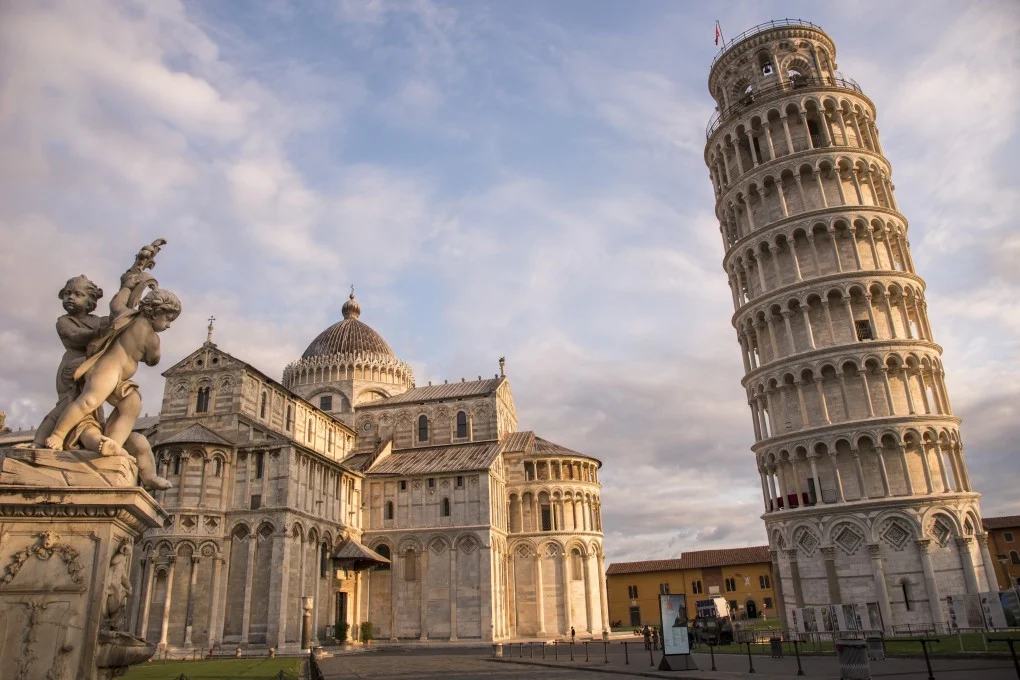
The Leaning Tower of Pisa is not a castle or a watchtower. It is actually a bell tower, also called a campanile. It was built to hold bells for the nearby cathedral.
The tower stands next to the Pisa Cathedral in a large open area filled with historic buildings and green lawns. Together, these structures form a beautiful religious complex that has existed for centuries.
Why the Tower Leans
The tower began to lean even before construction was finished. The main reason is the soft ground beneath it.
The soil in Pisa contains clay, sand, and water, which cannot support heavy weight very well. When builders placed the massive stone tower on this unstable ground, one side began to sink slightly. As more floors were added, the tilt became more noticeable.
Instead of tearing it down, builders tried to continue construction in a way that balanced the structure. This is why the tower curves slightly rather than leaning in a straight line.
When It Was Built
Construction began in 1173. However, the tower was not completed quickly. Work stopped several times because of wars and other problems. In total, it took nearly 200 years to finish.
Ironically, these long breaks helped save the tower. The pauses allowed the ground to settle before more weight was added. Without those delays, the tower might have collapsed.
Height and Structure
The tower stands about 56 meters tall, which is roughly the height of a tall modern building. It has eight levels, including the base and the bell chamber at the top.
Inside, there is a spiral staircase with hundreds of steps. Visitors can climb to the top for a stunning view of the city.
The tower is made of white and gray marble, giving it an elegant appearance. Its round shape and decorative arches reflect the Romanesque style popular in medieval Italy.
Bells at the Top
The tower houses several bells, each with its own tone. In the past, these bells were used to mark time, call people to prayer, and signal important events.
Because of the lean, ringing the bells had to be done carefully. Strong vibrations could potentially affect the stability of the structure.
Attempts to Fix the Lean
Over the centuries, engineers have tried many methods to prevent the tower from falling.
Some attempts made the situation worse, but modern techniques have successfully stabilized it. Engineers removed small amounts of soil from beneath the higher side, allowing the tower to straighten slightly without losing its famous tilt.
Today, the tower is considered safe for visitors.
A Symbol of Engineering Challenges
The Leaning Tower of Pisa is a powerful example of how nature can affect human construction. It shows that even skilled builders can face unexpected problems.
At the same time, it also demonstrates human creativity. Instead of abandoning the structure, people worked for centuries to preserve it.
Cultural Importance
The tower has become one of the most recognized landmarks in the world. It represents Italy’s rich history, art, and architecture.
Images of the tower appear in books, movies, advertisements, and travel guides. It is often used as a symbol of Europe’s medieval heritage.
Visiting the Tower Today
Today, millions of tourists visit Pisa each year to see the tower. Many enjoy taking photos that create the illusion of holding or pushing the tower upright.
Visitors who climb to the top experience:
-
A narrow spiral staircase
-
Sloping floors caused by the tilt
-
Beautiful views of the city
-
A close look at the bells
Because space inside is limited, entry is carefully controlled.
Surrounding Area
The tower stands in a large open square with other historic buildings, including the cathedral and a baptistery. The grassy area around them creates a peaceful and scenic environment.
Walking through this space feels like stepping into the Middle Ages.
Survival Through Time
Despite earthquakes, weather, and centuries of wear, the tower still stands. Its survival is remarkable considering its unstable foundation.
Careful maintenance continues today to ensure it remains safe for future generations.
Interesting Facts
Here are some simple and fun facts about the Leaning Tower of Pisa:
-
It began leaning during construction, not after completion.
-
The tilt once reached a dangerous angle before stabilization work.
-
The tower leans southward.
-
It has over 250 steps inside.
-
The tilt makes climbing feel unusual because one side is higher than the other.
Why People Love It
Part of the tower’s charm comes from its imperfection. Most famous buildings are admired for strength and symmetry. This one is famous for being flawed.
Its lean makes it seem almost playful, as if it is frozen in the act of falling. Yet it has stood for over 800 years.
A Lesson from History
The Leaning Tower of Pisa reminds us that mistakes can become treasures. What began as a construction problem turned into one of the world’s most beloved landmarks.
It also shows the importance of preserving historical structures, even when they are unusual or damaged.
Symbol of Pisa
For the city of Pisa, the tower is a source of pride. It attracts visitors from every corner of the globe, supporting tourism and keeping the city’s history alive.
Without the tower, Pisa would be far less famous internationally.
Conclusion
The Leaning Tower of Pisa is more than just a tilted building. It is a masterpiece of medieval architecture, a story of engineering challenges, and a symbol of resilience.
Standing gracefully despite its lean, it continues to fascinate millions of people. Whether admired for its beauty, history, or uniqueness, the tower remains one of the most unforgettable landmarks on Earth.
From a construction mistake to a global icon, the Leaning Tower of Pisa proves that sometimes imperfections create the most extraordinary wonders.
Read Also:Reykjavik’s Harpa: A Landmark of Design and Performance
Watch Also:www.youtube.com/@bollywoodshorts2124








Leave a Reply