
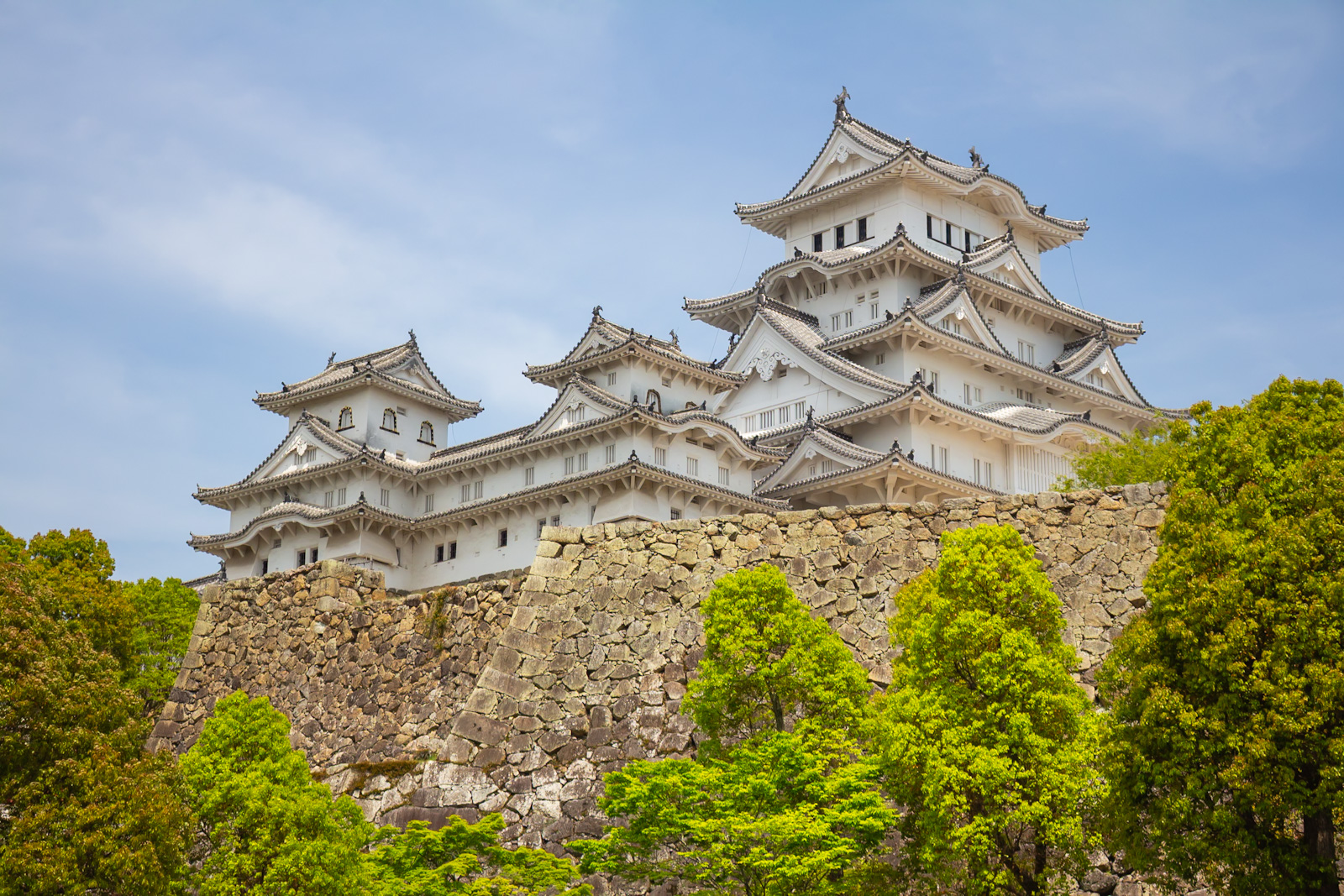
Himeji Castle is often called the “White Heron Castle.” This nickname comes from its bright white walls and graceful shape. From a distance, the castle looks like a white bird about to take flight. The white plaster also helped protect the wooden structure from fire.
Unlike many other castles that appear dark and heavy, Himeji Castle looks light, clean, and elegant. This unique beauty makes it stand out among Japan’s many historic fortresses.
When and Why It Was Built
The first fort on this site was built in the 1300s. However, the castle we see today was mainly constructed in the early 1600s. It was expanded and redesigned during Japan’s feudal era, a time when powerful warlords controlled different regions.
Castles were not just homes. They were military bases, government centers, and symbols of power. A strong castle meant protection from enemies and control over the surrounding land.
Himeji Castle was carefully designed to defend against attack. Every wall, gate, and pathway had a purpose.
Strategic Location
The castle sits on a hill, giving it a clear view of the surrounding area. From the top, guards could see enemies approaching from far away. This high position also made it harder for attackers to reach the main buildings.
The area around the castle once contained homes of samurai, merchants, and workers who supported the castle town. Today, the city has grown around it, but the castle still dominates the skyline.
Complex Defensive Design
One of the most interesting things about Himeji Castle is its maze-like layout. Getting to the main tower is not simple.
Attackers would have to pass through:
-
Narrow paths that twist and turn
-
Multiple gates placed at sharp angles
-
High stone walls
-
Hidden defensive positions
These features forced enemies to slow down and become confused, making them easy targets for defenders.
Some walls even have small openings where soldiers could shoot arrows or guns while staying protected.
The Main Tower (Keep)
The central building of the castle is called the keep. It rises high above the complex and can be seen from many kilometers away. This tower served as the last line of defense and the symbol of the lord’s authority.
Inside the keep, the structure is mostly wood. There are several floors connected by steep stairs. The rooms are simple, showing that the building was meant for defense rather than luxury.
From the top floor, visitors can enjoy a wide view of the city and surrounding mountains.
Materials and Construction
Despite its massive size, Himeji Castle is largely made of wood. The wooden frame is supported by thick pillars and beams. The outer walls are covered in white plaster, which gives the castle its bright color and also helps resist fire.
The base of the castle is made of large stone blocks carefully stacked together. These stone walls are slightly curved outward at the bottom, making them difficult to climb.
Building such a structure hundreds of years ago required great skill and effort. Workers used simple tools but achieved remarkable precision.
Life Inside the Castle
During its active years, the castle was home to a feudal lord, his family, samurai warriors, and servants. Life inside followed strict rules based on rank and duty.
Samurai trained in martial skills and guarded the castle. Officials handled administration and taxes. Servants cooked, cleaned, and maintained the buildings.
In times of peace, the castle was also a center of culture and politics. In times of war, it became a fortress ready for battle.
Survival Through History
Many Japanese castles were destroyed by wars, fires, or natural disasters. Himeji Castle is special because it survived almost untouched.
It lived through:
-
Feudal conflicts
-
Political changes
-
Bombing during World War II
-
Earthquakes
During the war, nearby areas were heavily damaged, but the castle itself escaped destruction. This survival makes it even more valuable as a historical treasure.
Restoration and Preservation
Over the years, the castle has undergone careful repairs to keep it strong and safe. Restoration projects aim to preserve the original design while protecting the structure from weather and aging.
Workers clean the white walls, repair wooden parts, and strengthen the foundation. These efforts ensure that future generations can continue to enjoy this historic site.
Cultural Importance
Himeji Castle is more than just an old building. It represents Japan’s feudal past, samurai culture, and traditional architecture.
It has become a national symbol of heritage and pride. Students learn about it in school, and visitors from around the world come to see it.
The castle also appears in movies, books, and artworks, further increasing its fame.
A World Heritage Site
Because of its historical and architectural value, Himeji Castle is recognized globally as an important cultural landmark. It is considered one of the best-preserved examples of traditional Japanese castle design.
This recognition helps protect the site and encourages tourism, bringing people from many countries to experience its beauty.
Visiting Himeji Castle Today
Today, the castle is open to the public. Visitors can walk through the gates, climb the steep stairs inside the tower, and explore the grounds.
Highlights include:
-
The main keep
-
Defensive walls and gates
-
Large courtyards
-
Scenic gardens nearby
-
Views from the top floor
During spring, cherry blossoms bloom around the castle, creating a breathtaking scene. The white walls against pink flowers make it one of Japan’s most photographed locations.
Interesting Facts
Here are some fun and simple facts about Himeji Castle:
-
It is Japan’s largest surviving feudal castle.
-
The complex includes many buildings connected by corridors.
-
The white plaster helps protect against fire.
-
No elevators are inside — visitors climb stairs just like people long ago.
-
The design focuses more on defense than comfort.
Symbol of Strength and Beauty
What makes Himeji Castle truly special is the balance between strength and elegance. It was built as a fortress but looks like a piece of art. Its clean lines, bright color, and towering shape give it a graceful appearance while still being highly defensive.
Few structures in the world combine beauty and military design so perfectly.
Connection to Samurai History
The castle reminds people of Japan’s samurai era, when warriors served powerful lords and lived by strict codes of honor. Although no samurai live there today, the atmosphere still carries the feeling of that time.
Walking through the wooden halls and stone paths can feel like stepping back hundreds of years.
Why People Love It
Visitors often say Himeji Castle feels peaceful despite its military purpose. The surrounding grounds are spacious, and the architecture is both impressive and calming.
Photographers, historians, and travelers all find something special here. Some admire the engineering, others the beauty, and many simply enjoy the sense of history.
Conclusion
Himeji Castle in Himeji is one of Japan’s greatest historical treasures. Its shining white walls, clever defensive design, and remarkable survival make it unique among the world’s castles.
Once a powerful fortress and home to feudal lords, it now welcomes visitors from everywhere. Standing tall after centuries of change, it tells the story of Japan’s past while continuing to inspire awe today.
Whether seen from afar or explored up close, Himeji Castle remains a symbol of strength, elegance, and timeless history.
Read Also:Reykjavik’s Harpa: A Landmark of Design and Performance
Watch Also:www.youtube.com/@bollywoodshorts2124









Leave a Reply