
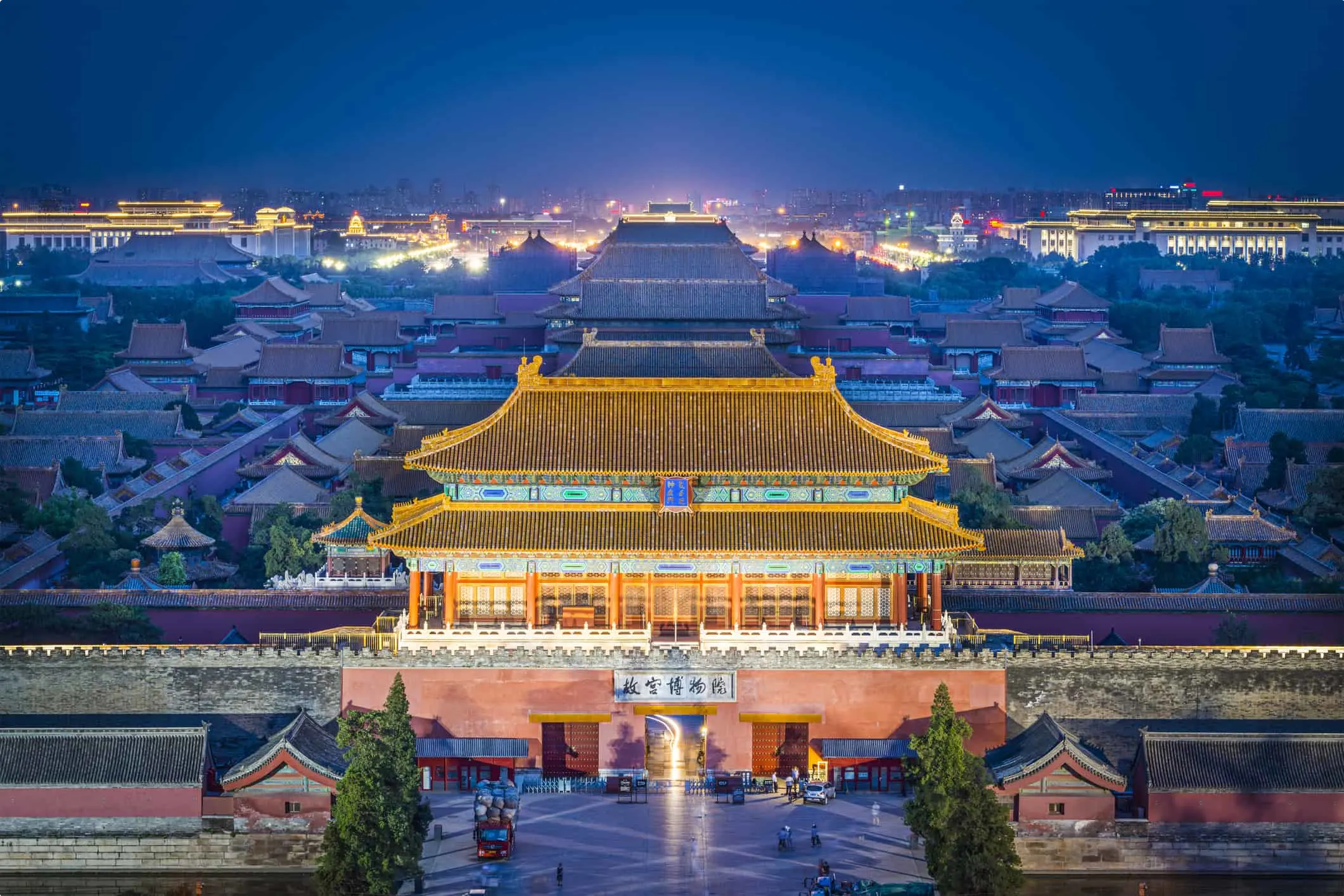
The Forbidden City is not just one building. It is a giant complex made up of hundreds of halls, palaces, courtyards, gates, and gardens. It looks like a small city inside walls. In fact, there are nearly 1,000 buildings and more than 8,000 rooms.
It was called “forbidden” because ordinary people were not allowed to enter. Only the emperor, his family, top officials, guards, and servants could go inside. If someone entered without permission, they could face serious punishment.
Today, the Forbidden City is open to everyone. It is now run as the Palace Museum, where people can see ancient treasures, furniture, art, and royal objects.
Who Built It and Why
The palace was built during the rule of the Yongle Emperor in the early 1400s. He moved China’s capital to Beijing and wanted a grand palace that showed power, order, and beauty.
Construction began in 1406 and took about 14 years. More than a million workers were involved, including builders, artists, carpenters, and laborers. Materials were brought from far away. Huge stones were dragged across ice in winter so they could slide more easily.
The result was a palace unlike anything else in the world at that time.
Location and Layout
The Forbidden City stands just north of Tiananmen Square. It is surrounded by a tall red wall and a wide moat filled with water.
The complex is carefully planned. It follows strict rules of balance and symmetry. Everything is arranged along a central line from south to north. Important buildings sit on this line, showing order and control.
The palace is divided into two main parts:
Outer Court
This area was used for official events. The emperor held ceremonies, met officials, and made important announcements here. Large halls stand in this section, built to impress visitors with their size and beauty.
Inner Court
This was the private living area. The emperor, empress, concubines, princes, and royal family lived here. Life inside was tightly controlled. Many servants and guards worked in this area.
Design and Architecture
The Forbidden City is famous for its traditional Chinese design. Every detail has meaning.
Colors
Red walls represent happiness and good fortune. Yellow roof tiles symbolize imperial power. In ancient China, yellow was reserved only for the emperor.
Roofs
The roofs curve upward at the corners. Many are decorated with small animal figures. These were believed to protect the buildings from evil spirits.
Materials
Most buildings are made of wood, not stone. Wooden beams and pillars support the structures. The floors in important halls are made of special bricks that sound like metal when tapped.
Courtyards
Large open courtyards separate the halls. These spaces were used for ceremonies and gatherings.
Life Inside the Palace
Life in the Forbidden City was very different from life outside.
The emperor lived in luxury but also in isolation. He had many servants and guards but very little freedom. His daily schedule was strict. He woke early, met officials, read reports, and made decisions for the empire.
The palace also housed thousands of people, including:
-
Empress and concubines
-
Princes and princesses
-
Eunuchs (male servants who could not have families)
-
Guards and soldiers
-
Maids and workers
Despite the large population, ordinary citizens never saw this world.
Security and Protection
The palace was designed to be extremely secure.
-
High walls surrounded the complex
-
A wide moat made entry difficult
-
Few gates allowed access
-
Guards watched entrances day and night
Even inside, movement was controlled. Many areas were restricted depending on rank.
Art and Treasures
Over the centuries, the palace collected an enormous number of valuable objects. These include:
-
Paintings
-
Calligraphy
-
Jade carvings
-
Ceramics
-
Gold and silver items
-
Royal clothing
-
Furniture
Many of these items are now displayed in museum exhibitions inside the palace.
The End of Imperial Rule
In 1912, China’s last emperor stepped down, ending thousands of years of imperial rule. For a short time, the former royal family was allowed to stay in part of the palace.
Later, they were forced to leave, and the complex became a public museum. Since then, the Forbidden City has been preserved as a national treasure.
Why It Is So Important
The Forbidden City is important for many reasons.
Historical Value
It was the center of Chinese government for centuries. Major decisions affecting millions of people were made here.
Cultural Significance
It shows traditional Chinese art, architecture, and beliefs. The design reflects ideas about harmony, order, and the role of the emperor.
Architectural Achievement
Building such a massive wooden complex without modern machines was an incredible achievement.
World Heritage Site
It is recognized globally as one of humanity’s great cultural landmarks.
Visiting the Forbidden City Today
Today, millions of visitors come each year. Walking through the gates feels like stepping back in time.
Visitors can see:
-
Grand halls with golden thrones
-
Peaceful gardens
-
Ancient artifacts
-
Decorative carvings and paintings
-
Traditional palace rooms
Because the area is so large, exploring the entire complex can take many hours.
Interesting Facts
Here are some simple facts that make the Forbidden City even more fascinating:
-
It is the largest palace complex in the world.
-
It covers about 180 acres.
-
The main gate faces south, which was considered lucky.
-
Dragons appear everywhere in decoration because they symbolize imperial power.
-
No building inside is taller than the main halls, showing respect for the emperor.
How It Got Its Name
The name “Forbidden City” comes from the idea that it was closed to ordinary people. In Chinese, its name means “Purple Forbidden City.” The color purple was linked to the North Star, which ancient Chinese believed was the home of the heavenly emperor.
Symbol of China’s Past
Today, the Forbidden City is more than just a tourist attraction. It is a symbol of China’s long history and rich culture. It shows how emperors lived, ruled, and viewed the world.
Even after hundreds of years, the palace still stands strong, telling the story of a powerful empire that shaped one of the world’s oldest civilizations.
Conclusion
The Forbidden City in Beijing is one of the greatest historical places ever built. Once closed to the public and filled with royal life, it now welcomes people from all over the world. Its massive size, beautiful design, and deep history make it truly unique.
Walking through its gates is like entering another time — a world of emperors, tradition, and ancient power. It reminds us how people lived long ago and how important history is in shaping the present.
Read Also:Reykjavik’s Harpa: A Landmark of Design and Performance
Watch Also:www.youtube.com/@bollywoodshorts2124





Leave a Reply