
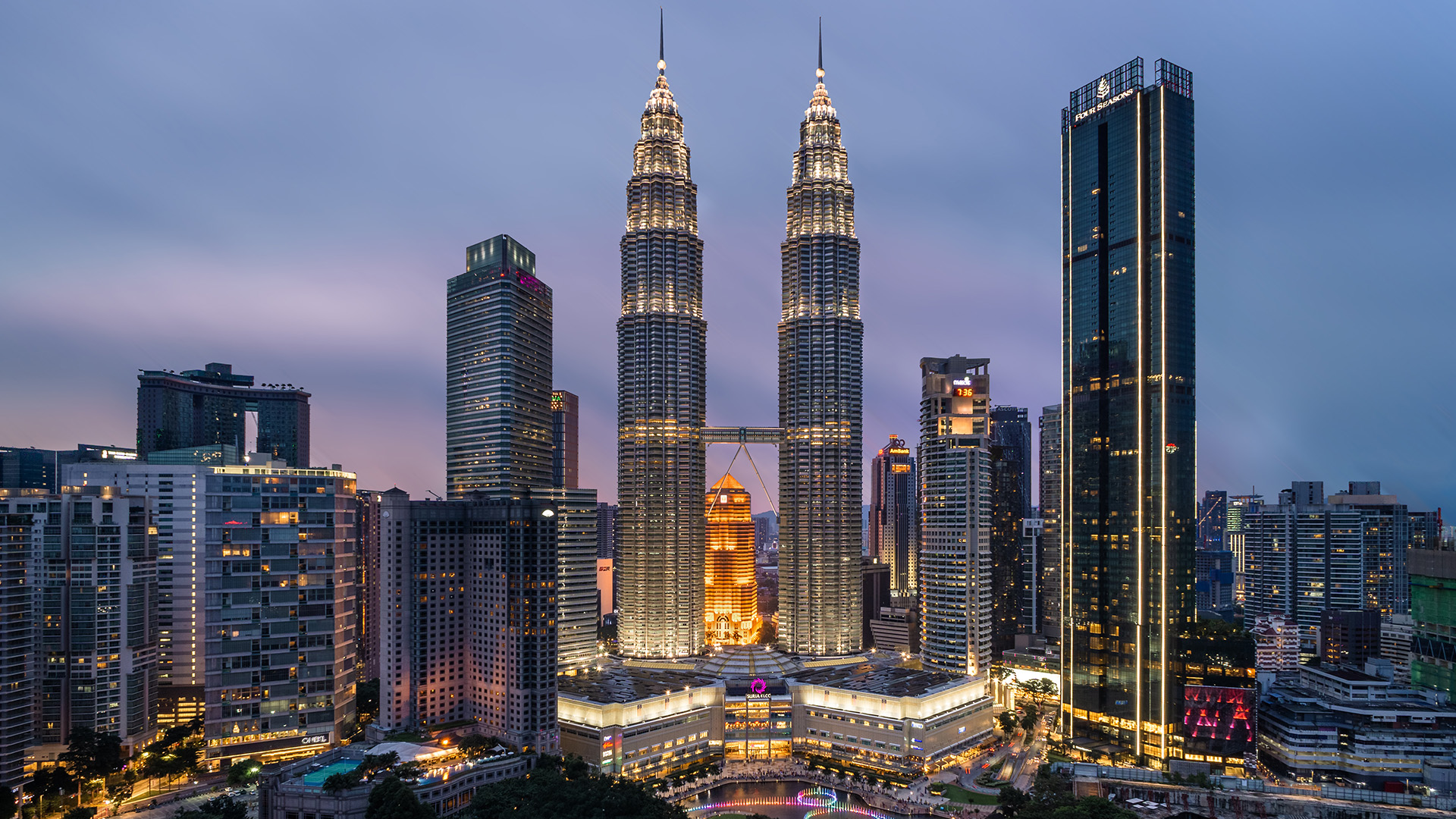
The Petronas Towers are two really tall buildings in Kuala Lumpur, Malaysia. People all over the world know them because they are beautiful, super high, and one of the most famous landmarks in Asia. When they were finished in 1998, they were the tallest buildings in the world. Even today, they are still the tallest twin towers on the planet.
These towers aren’t just tall buildings. They show how much Malaysia has grown. They represent pride, progress, and the country’s culture and tradition mixed with modern ideas. People from everywhere visit them each year.
Where They Are and Why They Matter
The Petronas Towers sit in the heart of Kuala Lumpur. Kuala Lumpur is the capital city of Malaysia, with busy streets, tall buildings, markets, and a mix of old and new styles. The towers stand in a part of the city called Kuala Lumpur City Centre (KLCC), which is a district full of business offices, parks, and places for visitors to explore.
These towers are more than just buildings. They are symbols of Malaysia’s hopes for the future. When people think of Malaysia, these twin towers often come to mind first. They are on postcards, posters, and travel videos from around the world.
How the Idea Began
The idea for the Petronas Towers started in the early 1990s. Malaysia wanted a big project that could show the world it was moving forward. The national oil and gas company, PETRONAS, wanted a headquarters building that would also put Malaysia on the global map.
To make this dream come true, leaders in Malaysia picked César Pelli, a famous architect, to design the project. Pelli wanted to mix modern and cultural designs — something modern looking, yet tied to Malaysia’s roots.
The towers were meant to be more than office buildings. They were meant to express identity — showing Malaysia’s culture, faith, and confidence in the future.
The Design and Style
What makes the Petronas Towers look so special is their design. Instead of just being two plain tall buildings, their shapes come from patterns found in Islamic art and architecture. Islamic patterns often use repeating shapes like stars and circles. Architects used these patterns to create a design that feels balanced and beautiful.
The towers have 88 floors each, and their plan is based on a shape called an eight‑pointed star — a symbol that represents balance and unity in many cultures. This star shape grows from the bottom to the top of the towers.
For the outside, the towers are covered in stainless steel and glass. That shiny surface reflects the sky and sunlight during the day and lights up at night, making the towers sparkle.
So, while the buildings look modern, they also carry cultural meaning — a mix of old and new.
Engineering Challenges and Construction
Building the Petronas Towers was not easy. When construction started, workers faced big problems — especially with the ground beneath the site. The soil in Kuala Lumpur was soft, and building something so heavy and tall on it was difficult. To solve this, engineers designed one of the deepest building foundations in the world. Piles were driven down more than 120 meters into the earth to make sure the towers stood strong and didn’t fall or shake.
The work began in March 1993. Excavators moved hundreds of truckloads of earth each night to dig deep down for the foundation. The foundation itself used millions of kilograms of concrete and steel.
Another huge task was the concrete pour. For each tower, more than 13,000 cubic meters of concrete was poured in one continuous session. That was one of the longest ever done in Malaysian history at the time.
After that, the steel frame and glass walls were built up floor by floor, sometimes hundreds of workers at a time working day and night.
How Tall Are They?
The Petronas Towers rise 451.9 meters (about 1,483 feet) into the sky. Each tower has 88 above‑ground floors and five basement levels.
When they were completed in 1998, they were the tallest buildings in the world. They held this record until 2004 when another building, Taipei 101 in Taiwan, became taller. Still, the Petronas Towers remain the tallest twin towers anywhere in the world.
The Skybridge — A Special Feature
One of the coolest things about the Petronas Towers is the Skybridge. This is a special bridge that connects the two towers on the 41st and 42nd floors, about 170 meters above the ground.
The Skybridge does more than just look cool. It gives people a way to move between the towers without going down to the ground floor. It also helps make the buildings more stable when winds push against them — because the bridge can slide a little to allow natural movement.
For visitors, the Skybridge is one of the most exciting parts of the towers. From up there, you can see the whole city around you — the parks, roads, and other buildings of Kuala Lumpur.
Inside the Towers
Even though most people think of the Petronas Towers as tall buildings for tourists, they are also serious working buildings. PETRONAS, the national oil and gas company, has its offices here. Besides offices, there are also business spaces, meeting rooms, and places for employees to work daily.
At the bottom of the towers, there’s a big shopping mall called Suria KLCC. This mall has shops, restaurants, cafes, and entertainment spaces. Locals and visitors alike enjoy spending time here before or after they go up the towers.
Around the towers is KLCC Park — a large green space with fountains, walking paths, trees, and a lake. It gives a peaceful break from the busy city streets. At night, there are light shows in the fountains that many people love to watch.
Tourism and Visiting
The Petronas Towers attract millions of people every year. Many visitors come just to take pictures of the tall buildings from outside. But a special treat for travelers is getting tickets to go inside and up to the Skybridge or the observation deck.
The observation deck on the 86th floor gives a breathtaking panoramic view of the whole city. From up there, you can see tall skyscrapers, parks, roads, and even mountain ranges far in the distance on clear days.
Inside, you’ll find museums and displays about the towers’ history and construction. These details help visitors understand how these giants were built and what they represent.
Awards and Recognition
People don’t just love the towers because they look good. Architects, engineers, and designers also admire them. Over the years, the Petronas Towers have won awards for design, innovation, and cultural significance.
These honors show that the towers aren’t only tall but also meaningful — combining beauty, strength, and deep symbolism.
Meaning and Legacy
Why do these towers matter so much? Part of the answer is simple: they are very tall and impressive. But there’s a deeper reason.
Malaysia sees the Petronas Towers as a sign of growth. When Malaysia built them in the 1990s, it was a time of expanding business, rising confidence, and a desire to show the world what the country could do.
The design also matters. By using shapes and patterns from Islamic art, the towers reflect Malaysia’s culture and traditions while still being modern and innovative. This blend of old and new makes the towers special — not just tall but meaningful.
For local people, the towers are a source of pride. For visitors, they are a must‑see place in Kuala Lumpur. And for architects and builders, they are a beautiful example of creativity and ambition.
Conclusion: A Symbol on the Skyline
To put it simply, the Petronas Towers are more than just buildings. They are:
-
A symbol of Malaysia’s ambitions and achievements.
-
A blend of tradition and modern design.
-
A major tourist attraction.
-
One of the most recognizable landmarks in the world.
Whether you love architecture, culture, or just cool places to visit, the Petronas Towers are unforgettable. They tell a story not just of steel and glass, but of heart, vision, and identity.
Read Also:Reykjavik’s Harpa: A Landmark of Design and Performance
Watch Also:www.youtube.com/@bollywoodshorts2124





Leave a Reply