
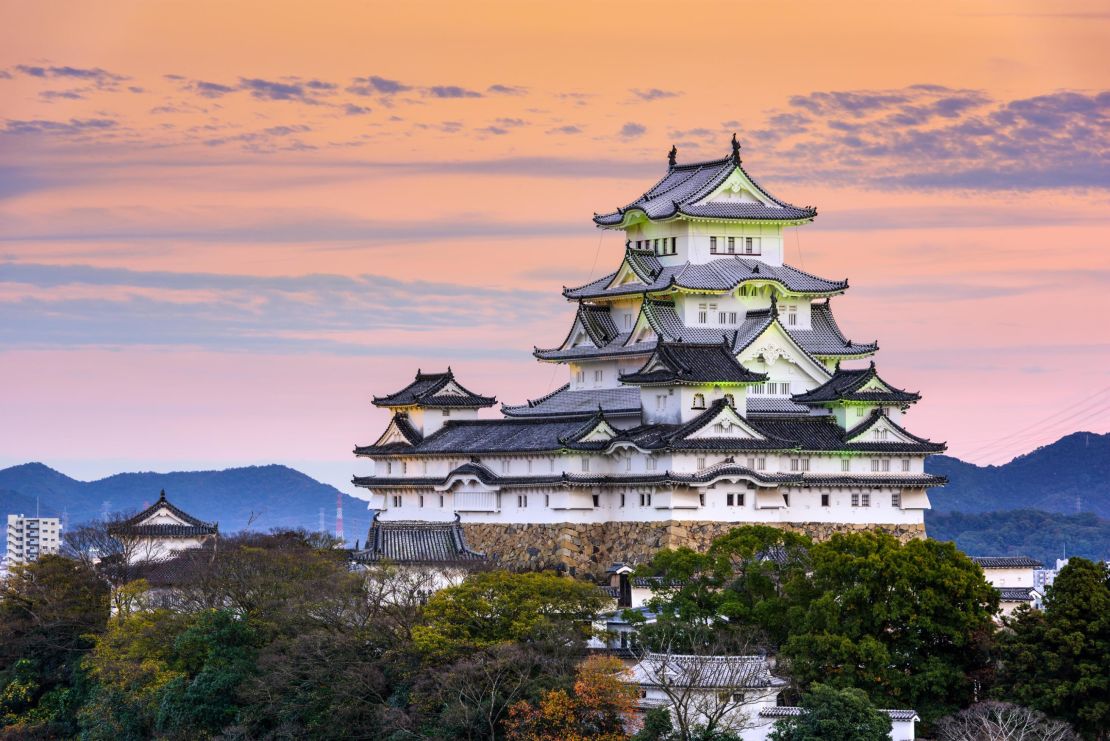
Imagine a giant white castle standing tall on a hill, looking clean and bright like it was just painted. You walk toward it and feel like you stepped into a fairy tale, or like a samurai might walk out at any moment. That is Himeji Castle — one of Japan’s most famous and beautiful castles.
Himeji Castle is sometimes called the “White Heron Castle” because it looks like a white heron (a big white bird) spreading its wings. The castle seems light and graceful even though it is very strong and big. It’s not just pretty — it’s also one of the best preserved castles in all of Japan.
In this long write‑up, I’ll take you through what Himeji Castle is, its history, how it was built, what you can see there today, why it is important, and some cool facts. I’ll keep everything simple, like I’m telling a friend about it.
Where is Himeji Castle?
Himeji Castle is in a city called Himeji, in Japan. This city is in the western part of Honshu — Japan’s main island. If you look at a map, Himeji is not very far from big cities like Osaka or Kyoto, so many travelers visit it on a day trip.
The castle sits on top of a small hill. From far away, you can see its white walls shining under the sun. The castle looks amazing no matter what season you visit — in spring with cherry blossoms, in summer with green trees, in fall with orange leaves, or in winter with snow.
How Old Is Himeji Castle?
Himeji Castle is very old. Its history goes back more than 400 years. But the first castle on that hill was built even earlier, in the 1300s — almost 700 years ago.
The castle we see today mostly dates from the early 1600s. That was the time when Japan was starting to become peaceful after many years of war. A powerful leader named Ikeda Terumasa made the castle much bigger and stronger. After that, the castle stayed almost the same for hundreds of years.
Why Was Himeji Castle Built?
Long ago, Japan did not have one government. Many different lords (called daimyo) ruled their own lands. Sometimes they fought each other. So castles were built for protection.
Himeji Castle was built to be strong and hard to attack. It was designed with walls, moats (wide water trenches), gates, and hidden paths — all to stop enemies. The people who built it were very smart and made many ways to trap or slow down attackers.
But over time, Japan became peaceful. In the 1600s, the shogun (the real ruler of Japan) brought peace. So Himeji Castle became less about war and more about showing power and beauty. Still, its design stayed strong.
How Big is Himeji Castle?
Himeji Castle is big. Really big. From the outside you see the main keep — the tall tower in the middle — but there are many smaller towers and buildings around it. Some people say it feels more like a castle town than just one building.
There are many walls and paths inside the castle grounds. You could walk around for hours and still not see everything. The castle has multiple levels — some parts are very tall. The main keep has six floors on the inside and seven levels on the outside.
Why is It Called the “White Heron Castle”?
The castle is covered in white plaster walls. This white color made people think of a white heron bird, because the walls look smooth, bright, and graceful, just like the feathers of the bird. In Japanese, “white heron” is shirasagi, so the castle is called Shirasagi‑jo.
The plaster was also useful because it is fire resistant. That means it helps protect the buildings from fires, which were a big problem in old Japan.
What Makes Himeji Castle Special?
Lots of castles exist in Japan, but Himeji Castle is special for many reasons:
1. Original Structure
Many Japanese castles were destroyed long ago by war, fire, or earthquakes. Himeji Castle survived all these things and stayed mostly original. That is rare.
2. Amazing Design
The design is smart. The paths twist and turn so invaders could get lost. There are hidden angles, steep stairs, and openings in the walls where defenders could drop stones or shoot arrows. Every detail had a purpose.
3. Big Complex
It’s not just one building. There are many houses, corridors, gates, and defensive walls inside. Walking through the castle is like walking through a maze.
4. World Heritage Site
In 1993, UNESCO named Himeji Castle a World Heritage Site. That means people around the world see it as something very important for culture and history.
A Quick Look at the History of Himeji Castle
Let’s go through history step by step, in easy words:
-
1300s: The first fort was built on the hill where Himeji Castle stands today.
-
1580s: A leader named Toyotomi Hideyoshi rebuilt it and made it stronger.
-
1600s: Ikeda Terumasa made the castle into what we see today — big, strong, and beautiful.
-
1600s–1800s: The castle stayed under different rulers, but no big wars touched it.
-
1868: Japan ended the shogun system and became modern. Many castles were destroyed, but Himeji Castle survived.
-
WWII: Many bombs were dropped around Himeji in World War II, but the castle remained standing.
-
1950s: Himeji Castle became a National Treasure of Japan.
-
1993: UNESCO called it a World Heritage Site.
-
2009–2015: The castle got a big renovation to repair and clean the buildings.
What You Can See at Himeji Castle
When you visit Himeji Castle today, there are many cool things to see:
1. The Main Keep
This tall tower is the most famous part. You can walk inside, go up the narrow wooden stairs, and see small rooms and old construction style. From the top, you can see the city.
2. Smaller Keeps and Towers
Around the main keep are smaller keeps connected by walls and paths. Each one is built for defense and looks beautiful.
3. Walls and Corridors
The walls have openings and holes for defense. The corridors twist and turn, making it hard for enemy soldiers to reach the center quickly.
4. Gates
There are big gates at different points. Some are simple, but some are huge with thick doors. These gates were made to slow down invaders.
5. Moats
Moats are wide channels around the castle. Some were filled with water. They made it hard for enemies to get close.
6. Cherry Blossoms in Spring
In spring, the castle is surrounded by pink cherry blossoms. This makes Himeji Castle look even more beautiful, like a painting.
The Path Inside: A Little Maze
When you enter Himeji Castle, you might think you are walking into a maze. The castle was built so people could not go straight to the top — even if they wanted to attack.
The paths go left and right, up and down. Sometimes you go through narrow corridors. The stairs are steep — so steep that in old days, only knights or soldiers could walk easily. Today tourists sometimes find the stairs hard too!
This design was not random. It helped defenders if enemies tried to invade. The defenders knew the paths, so they could move fast. But enemies would get confused.
The Walls and Defense Features
The walls of Himeji Castle are not smooth — they have small holes and openings. These are called sama (in Japanese), but you can think of them as tiny windows for defense. Soldiers could shoot arrows or guns through them without being seen.
There are also stone drop holes — little square holes above the paths where defenders could drop stones or boiling water on attackers.
The castle was made to protect, and every detail shows this.
Inside the Castle: Wood, Nails, and Beauty
When you go inside the main keep, you see old wooden floors and walls. Some wood is very old — hundreds of years old.
The castle builders used very advanced techniques for that time. There were no nails like we use today; instead, they used joinery — wood pieces connected so tightly they hold strong.
You might see old signs, old beams, and marks from history as you climb the stairs.
Why People Love Himeji Castle
People around the world love Himeji Castle for these reasons:
-
It looks beautiful. The white walls and roof shapes are elegant.
-
It feels like history. You can almost imagine samurai walking there.
-
It has amazing architecture. The design is smart and clever.
-
It survived time. Many old castles are gone, but Himeji still stands.
Many visitors say Himeji Castle is the best castle in Japan.
Fun Facts About Himeji Castle
Here are some cool little things you might like:
-
It survived earthquakes. Japan has many earthquakes, but the castle stayed standing.
-
No battles happened there for a long time. Even though it was a fortress, it never saw big war after it was completed.
-
It was used in movies. Many films and TV shows, including some Hollywood movies, used Himeji Castle as a location.
-
There are many levels. The main keep has multiple floors, each with its own purpose.
-
It was restored carefully. In the 2000s, workers used traditional techniques to fix the castle.
Visiting Himeji Castle Today
If you travel to Japan, Himeji Castle is a popular place to visit. Many tourists go there every year. In the castle town around it, you can find cafes, shops, and places to relax.
The best time to visit is often in spring, when the cherry blossoms bloom around the castle. But it is beautiful any time of year.
It can get busy, so many visitors go early in the morning to enjoy peace and take photos before many people arrive.
Tours are available in many languages, and there are information signs to help you understand what you are seeing.
Why It Matters to the World
Himeji Castle is not just important to Japan — it is important to the world. UNESCO — a group that protects world heritage — says the castle is an example of human creativity and history. People from many countries come to learn about it.
Studying Himeji Castle helps people understand:
-
How ancient builders worked without modern tools.
-
How castles were used for defense long ago.
-
How culture, art, and architecture can survive a long time.
It connects people to history.
Summary: Why Himeji Castle is Amazing
Let’s end with a simple recap:
-
Himeji Castle is one of Japan’s most beautiful and best‑preserved castles.
-
It was built over 400 years ago on a hill in Himeji city.
-
It looks like a white heron — elegant but strong.
-
The design is smart for defense and easy to get lost in.
-
It survived wars, earthquakes, and time.
-
It is a UNESCO World Heritage Site and a National Treasure of Japan.
-
Visitors love it for its beauty, history, and atmosphere.
When you stand in front of Himeji Castle, it feels like you are meeting history in person — not just reading it in books.
Read Also:Reykjavik’s Harpa: A Landmark of Design and Performance
Watch Also:www.youtube.com/@bollywoodshorts2124








Leave a Reply