
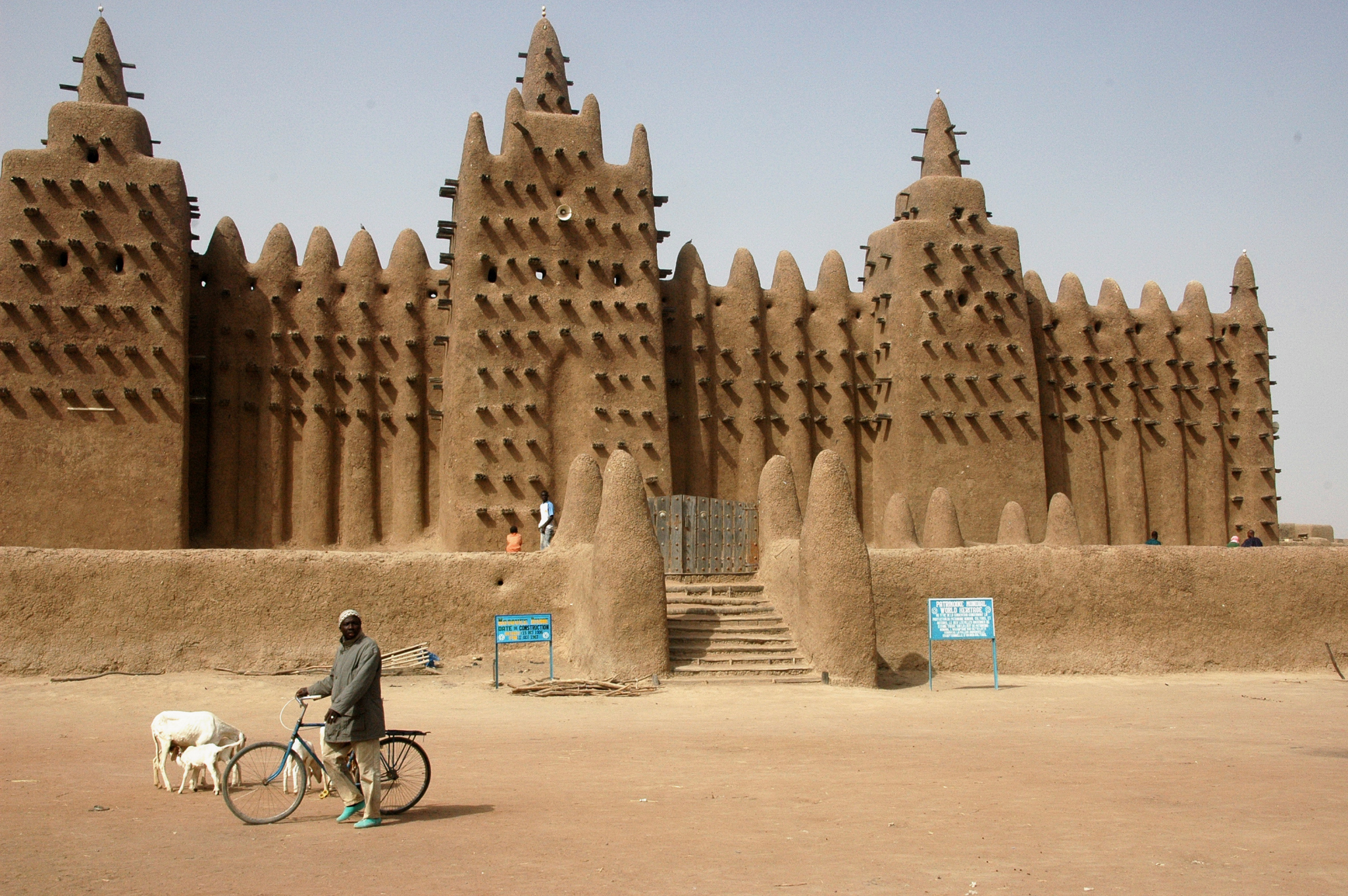
Great Mosque of Djenné is one of the most remarkable examples of mudbrick architecture in the world. Located in the city of Djenné, Mali, it is considered the largest mudbrick building globally and serves as a major center for Islamic worship, culture, and community life in West Africa.
Historical Background
The current structure of the Great Mosque was built in 1907 on the site of earlier mosques dating back to the 13th century. Djenné itself has been a key trading hub in the Sahel region for centuries, linking sub-Saharan Africa with North African and Mediterranean trade routes.
The mosque was constructed under the guidance of the French colonial administration while retaining traditional building methods and community-based practices. It represents both historical continuity and cultural identity, serving as the spiritual heart of Djenné.
Architectural Design
The Great Mosque is a striking example of Sudano-Sahelian architecture, characterized by the use of mudbrick, adobe plaster, and wooden support beams.
1. Exterior Features
-
Mudbrick Construction: The mosque is made entirely of sun-baked mud bricks (called “ferey”), coated with a layer of mud plaster to smooth surfaces and protect against erosion.
-
Minarets and Towers: The mosque features three tall minaret-like towers with pointed pinnacles, emphasizing verticality.
-
Buttresses and Wooden Stakes: Wooden beams called “toron” protrude from the walls, providing structural support and serving as scaffolding for annual maintenance.
-
Facade Symmetry: The mosque’s façade is symmetrical, with rows of engaged columns and pointed arches that give it rhythm and texture.
The use of local materials and traditional techniques links the mosque to its environment, climate, and cultural context.
2. Interior Spaces
The interior of the mosque is spacious, designed to accommodate large congregations:
-
Prayer Hall: A vast hall with rows of pillars made from mudbrick supports the roof and creates orderly prayer spaces.
-
Courtyards: Open areas allow for community gatherings and facilitate airflow in the hot climate.
-
Simple Ornamentation: Decorations are minimal but include carved motifs and patterns in plaster, reflecting local aesthetic traditions.
The interior emphasizes functionality, durability, and communal use.
3. Community Involvement
Construction and maintenance of the mosque are deeply rooted in community traditions:
-
Annual Plastering Festival: Each year, the citizens of Djenné participate in replastering the mosque to repair damage caused by rain and erosion.
-
Local Craftsmen: Skilled masons, known as “maçons,” lead the construction and ensure adherence to traditional techniques.
-
Cultural Education: The process teaches younger generations about architecture, communal responsibility, and cultural heritage.
This participatory approach makes the mosque a living cultural institution.
Symbolism and Religious Significance
The Great Mosque serves as both a religious and cultural symbol:
-
Islamic Faith: It is the center of religious life in Djenné, hosting daily prayers, Friday congregations, and Islamic festivals.
-
Cultural Identity: Represents the continuity of Sahelian architecture, linking modern life to historical traditions.
-
Community Unity: Maintenance and participation in mosque activities strengthen social cohesion and shared heritage.
The mosque embodies spirituality, tradition, and communal values, making it central to life in Djenné.
Engineering and Environmental Adaptation
Building and maintaining the Great Mosque requires innovative adaptation to local conditions:
-
Mudbrick Durability: The use of mudbrick and plaster provides insulation against extreme heat and protects against erosion.
-
Protruding Toron Beams: Function as scaffolding for replastering and offer structural reinforcement.
-
Rainwater Management: Sloped walls and periodic maintenance prevent water damage and ensure longevity.
These techniques reflect centuries of accumulated knowledge in sustainable architecture suitable for arid climates.
Urban Context
The mosque is located in the central market square of Djenné, a UNESCO World Heritage site:
-
It dominates the cityscape and serves as a focal point for the town’s social, economic, and religious activities.
-
Surrounding structures are also made of mudbrick, creating architectural harmony and continuity.
-
Its presence reinforces Djenné’s identity as a historical center of trade, learning, and Islamic culture.
The mosque integrates seamlessly with its urban and cultural context.
Tourism and Visitor Experience
The Great Mosque of Djenné attracts scholars, architects, and tourists interested in architecture and cultural heritage:
-
Visitors can observe the intricate mudbrick construction and monumental form from outside (interior access is limited to worshippers).
-
The annual replastering festival offers a unique opportunity to witness community engagement and traditional techniques.
-
Guided tours provide insight into the mosque’s history, design, and cultural significance.
It is both a living religious site and a world-famous architectural treasure.
Awards and Recognition
The mosque has received international recognition for its architectural and cultural significance:
-
UNESCO World Heritage Site: Listed in 1988 for its historical and cultural importance.
-
Global Architectural Influence: Studied for sustainable construction, vernacular design, and community-led maintenance.
-
Symbol of African Heritage: Recognized worldwide as an outstanding example of traditional African architecture.
Its influence extends beyond Mali, inspiring architects and cultural preservationists globally.
Architectural Legacy
The Great Mosque of Djenné demonstrates the power of local materials, traditional knowledge, and community participation:
-
Shows how architecture can thrive in harsh climates using sustainable methods
-
Preserves centuries-old Sahelian design principles
-
Strengthens cultural identity and collective memory
-
Inspires contemporary architects to explore vernacular, climate-responsive design
Its enduring legacy highlights the fusion of form, function, and cultural meaning in architecture.
Conclusion
The Great Mosque of Djenné is more than a building; it is a cultural and spiritual icon. Its mudbrick walls, towering minarets, and community-driven maintenance reflect centuries of Sahelian tradition, Islamic faith, and sustainable design.
As both a living place of worship and a UNESCO World Heritage site, the mosque continues to inspire architects, historians, and visitors, standing as a testament to the enduring power of culture, faith, and community in shaping architecture.
Read Also:Reykjavik’s Harpa: A Landmark of Design and Performance
Watch Also:www.youtube.com/@bollywoodshorts2124





Leave a Reply