
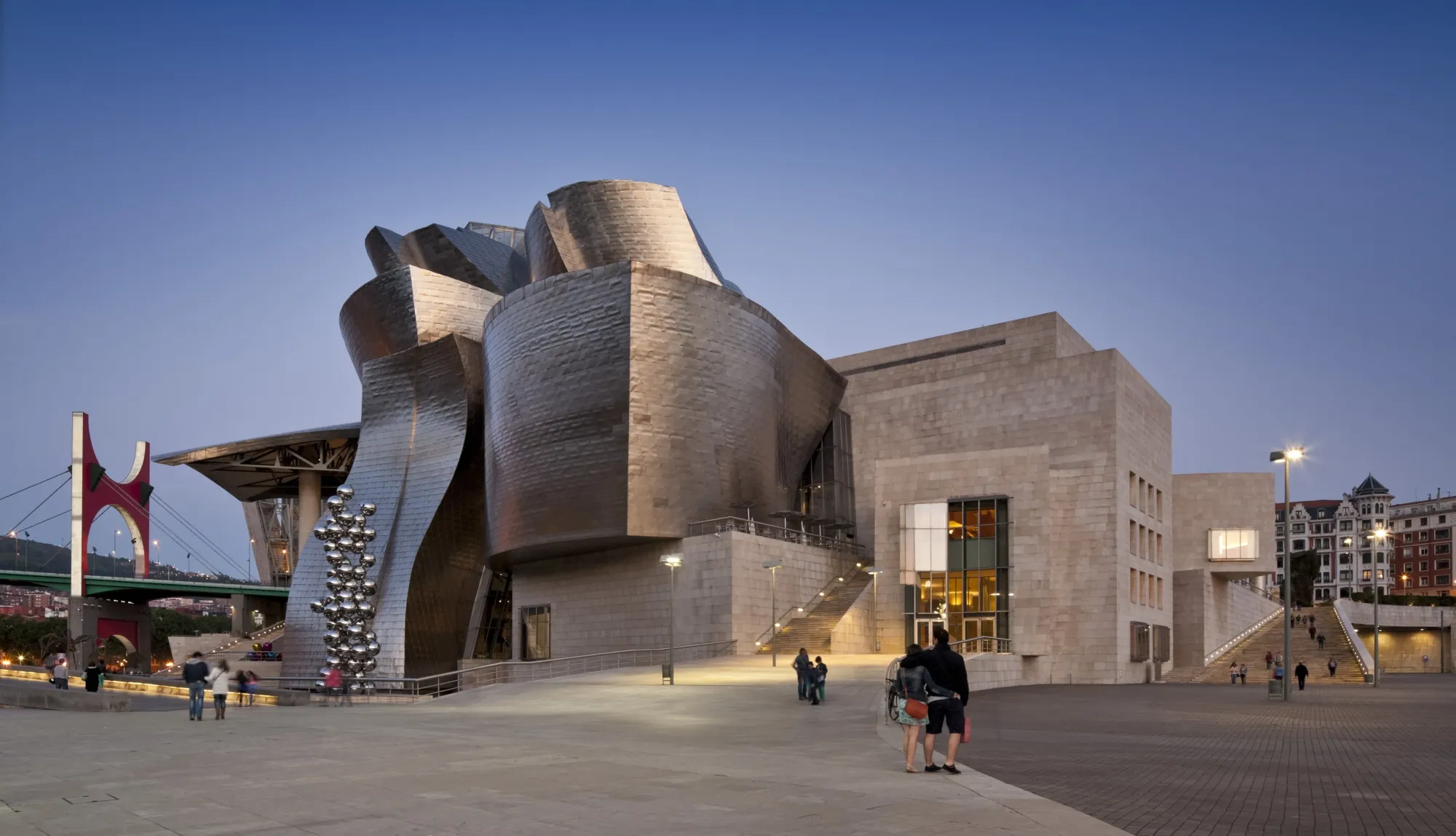
Guggenheim Museum Bilbao is one of the most famous contemporary art museums in the world, known not only for its impressive art collections but also for its groundbreaking architecture. Opened in 1997, it transformed the city of Bilbao, Spain, into a cultural and architectural destination. Designed by architect Frank Gehry, the museum is celebrated as a masterpiece of modern architecture.
Historical Background
The Guggenheim Museum Bilbao was part of a broader effort to revitalize the industrial city of Bilbao. Once a hub of steel and shipbuilding, the city faced economic decline in the late 20th century. Local leaders collaborated with the Solomon R. Guggenheim Foundation to build a museum that would attract tourists, foster culture, and stimulate urban regeneration.
The museum opened on October 18, 1997, and quickly became a symbol of Bilbao’s transformation. Its combination of art, architecture, and urban development has been studied worldwide as a model for cultural regeneration.
Architectural Design
The Guggenheim Museum Bilbao is renowned for its innovative design, which breaks away from traditional museum architecture.
1. Form and Materials
The building features sweeping, curving forms inspired by ships, waves, and organic shapes. Titanium panels cover the exterior, reflecting light and giving the museum a shimmering, futuristic appearance. Glass and limestone complement the titanium, providing contrast and transparency in key areas.
2. Interior Spaces
Inside, the museum offers vast galleries and flexible exhibition spaces. The design allows for both large-scale installations and more intimate artworks. Natural light filters through skylights and large windows, creating a dynamic environment that changes throughout the day.
3. Integration with the Environment
The museum is situated along the Nervión River, and its design interacts with the surrounding urban landscape. Walkways, plazas, and outdoor sculptures create a seamless connection between the museum and the city. Gehry’s design considers both visual impact and public accessibility, making the museum part of Bilbao’s daily life.
4. Sculptural and Artistic Elements
Many of the museum’s spaces serve as architectural sculptures in themselves. The curved walls, flowing forms, and dramatic angles encourage visitors to explore and experience the building as an artwork. Iconic pieces, such as Richard Serra’s The Matter of Time, are integrated into the architecture, creating a dialogue between art and structure.
Cultural and Artistic Significance
The Guggenheim Museum Bilbao is not only an architectural icon but also a major cultural center. Its exhibitions feature contemporary and modern art from around the world, including painting, sculpture, installations, and multimedia works.
The museum has contributed to:
-
Global recognition: Making Bilbao a key destination for art and culture.
-
Artistic innovation: Hosting groundbreaking exhibitions and installations.
-
Cultural exchange: Collaborating with international artists and institutions.
Its combination of art and architecture demonstrates how buildings can elevate the cultural impact of a city.
Economic and Urban Impact
The museum’s opening led to what is often called the “Bilbao Effect,” showing how iconic architecture can transform a city economically and socially. Key impacts include:
-
Increased tourism, attracting millions of visitors each year
-
Growth in local businesses, hotels, restaurants, and retail
-
Urban renewal projects along the river and surrounding neighborhoods
-
International attention and cultural prestige for Bilbao and Spain
The museum’s success highlights the potential of architecture as a driver for urban and economic development.
Awards and Recognition
The Guggenheim Museum Bilbao has received numerous awards and accolades for its design, including:
-
Recognition from architectural institutes for innovation and creativity
-
Praise for integrating art, urban planning, and environmental design
-
Inclusion in global lists of the most important buildings of the late 20th century
Frank Gehry’s work on the museum has influenced contemporary architecture worldwide, inspiring other landmark buildings and museums.
Visitor Experience
Visitors to the Guggenheim Museum Bilbao experience a combination of art, architecture, and urban exploration. Features include:
-
Vast galleries for rotating and permanent exhibitions
-
Outdoor sculpture installations along riverfront walkways
-
Educational programs, workshops, and guided tours
-
Cafes, shops, and public spaces integrated into the museum complex
The design encourages visitors to explore the building and city simultaneously, creating an immersive cultural experience.
Architectural Legacy
The Guggenheim Museum Bilbao has become a reference point for modern architecture. Its influence includes:
-
Inspiring other museums and cultural centers worldwide
-
Demonstrating the power of innovative design in urban regeneration
-
Challenging traditional notions of museum spaces and architecture
-
Highlighting the relationship between form, material, and environment
The museum remains a key example of how architecture can transform not only a building but also a city and its identity.
Conclusion
The Guggenheim Museum Bilbao stands as a testament to the power of architecture and art to inspire, transform, and engage. Its iconic titanium curves, dynamic forms, and integration with the urban landscape make it a masterpiece of modern design.
Beyond its architectural significance, the museum has revitalized Bilbao, attracting millions of visitors, fostering cultural exchange, and demonstrating how innovative design can shape cities and communities. The Guggenheim Museum Bilbao remains a symbol of creativity, innovation, and the enduring impact of visionary architecture.
Read Also: Keep your face towards the sunshine and shadows will fall behind you
Watch Also: https://www.youtube.com/@TravelsofTheWorld24







Leave a Reply