
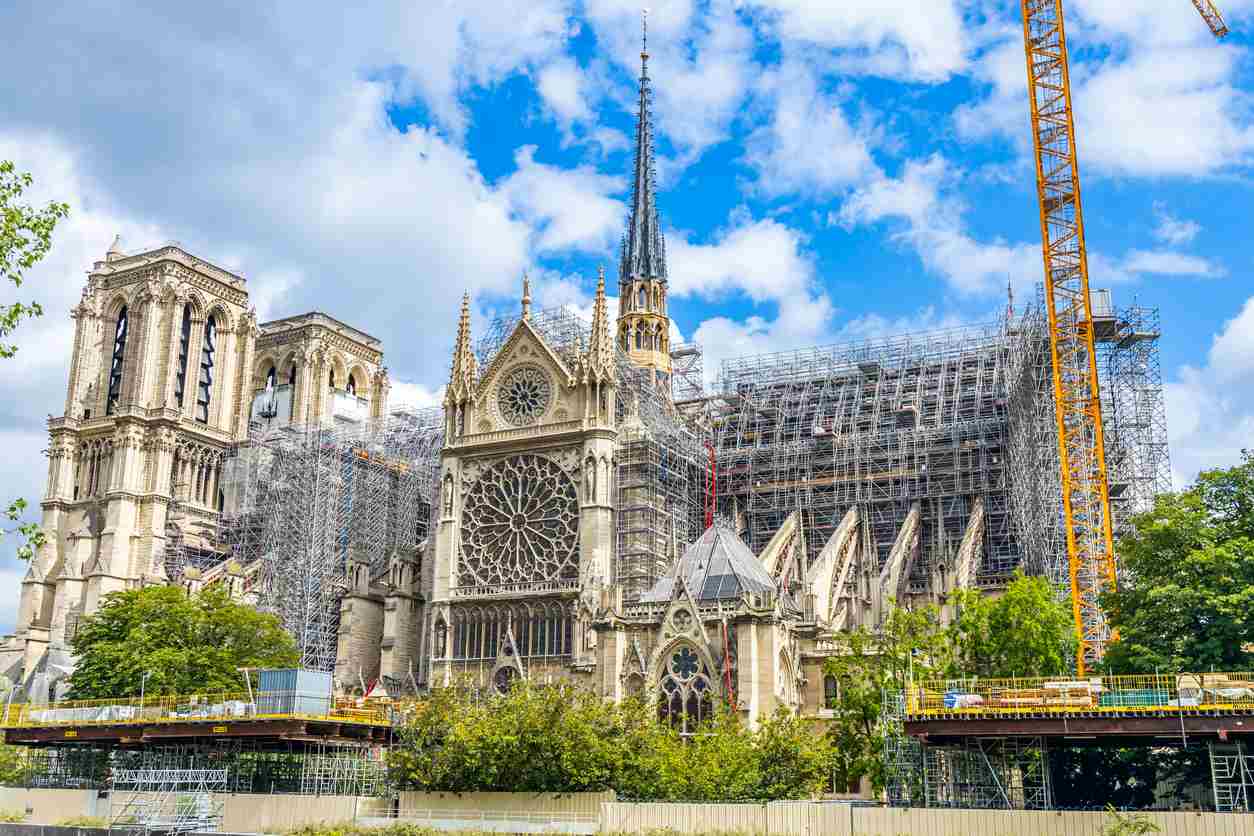
Notre Dame Cathedral is one of the most famous cathedrals in the world and a symbol of Paris. Located on the Île de la Cité in the heart of the city, it is an iconic example of French Gothic architecture. For centuries, Notre Dame has inspired visitors with its soaring spires, intricate sculptures, and breathtaking stained glass.
Historical Background
Construction of Notre Dame began in 1163 under Bishop Maurice de Sully and continued over nearly two centuries, completing in 1345. The cathedral was built on the site of earlier churches, creating a long history of religious importance at that location.
Notre Dame has witnessed centuries of French history. It survived wars, revolutions, and political changes while remaining a center of Catholic worship in Paris. The cathedral was also central to cultural life, inspiring literature, music, and art, including Victor Hugo’s famous novel The Hunchback of Notre Dame, which helped spark preservation efforts in the 19th century.
Architectural Features
Notre Dame is a prime example of Gothic architecture, known for its height, light, and elaborate decoration.
1. Facade and Towers
The cathedral’s west facade features two massive towers standing approximately 69 meters tall. These towers contain bells, including the famous Emmanuel Bell, which has rung for significant historical events.
The facade is decorated with sculptures of biblical figures, kings, and saints. The central rose window above the main entrance is a hallmark of Gothic design, showcasing stunning stained glass artistry.
2. Flying Buttresses
Notre Dame was one of the first cathedrals to use flying buttresses extensively. These external supports allowed the walls to be thinner and taller, creating large windows for natural light while maintaining structural stability.
3. Stained Glass Windows
The cathedral’s stained glass windows, particularly the three rose windows, are masterpieces of medieval art. They depict biblical stories, saints, and symbolic imagery, filling the interior with colorful light that changes throughout the day.
4. Interior Design
Inside, the nave stretches over 130 meters in length with soaring vaulted ceilings. Columns and arches guide the eyes upward, creating a sense of grandeur and spiritual elevation. Chapels, altars, and religious artworks line the interior, reflecting centuries of devotion and craftsmanship.
Religious and Cultural Significance
Notre Dame is not only an architectural marvel but also a key religious center. It has hosted coronations, royal weddings, and important religious ceremonies. The cathedral is the seat of the Archbishop of Paris and remains central to Catholic life in France.
It also played a cultural role, inspiring artists, writers, and musicians for generations. Hugo’s The Hunchback of Notre Dame highlighted the cathedral’s beauty and helped protect it from neglect during the 19th century.
Surviving Challenges
Notre Dame has faced numerous challenges over the centuries. It suffered damage during the French Revolution when many religious symbols were destroyed or defaced. Restoration efforts began in the 19th century under architect Eugène Viollet-le-Duc, who repaired and reconstructed parts of the cathedral.
In April 2019, a devastating fire broke out, causing the collapse of the spire and severe damage to the roof. Restoration is ongoing, with efforts to preserve the cathedral’s original Gothic features while implementing modern safety measures.
UNESCO World Heritage and Preservation
Notre Dame is part of the UNESCO World Heritage site that includes the banks of the Seine in Paris. This recognition reflects its architectural, historical, and cultural significance. Preservation work continues to maintain its structure, sculptures, and stained glass for future generations.
Tourism and Modern Day
Notre Dame attracts millions of visitors each year. Tourists explore its towers, admire the rose windows, and walk through the historic nave. The cathedral is a symbol of Paris and a major landmark along the Seine River.
Even after the 2019 fire, it remains a powerful symbol of resilience and cultural identity. Restoration projects aim to reopen the cathedral fully, preserving its historical significance while allowing the public to experience its beauty.
Architectural Legacy
Notre Dame influenced the development of Gothic architecture across Europe. Its innovative use of flying buttresses, pointed arches, ribbed vaults, and large windows set a standard for later cathedrals in France and beyond.
The cathedral demonstrates how architecture can combine structural innovation, artistic expression, and spiritual purpose, creating a building that inspires awe for centuries.
Conclusion
Notre Dame Cathedral in Paris is more than a building; it is a living monument to human creativity, faith, and resilience. Its centuries-long construction, remarkable Gothic design, and rich history make it one of the world’s greatest architectural treasures.
Visitors are drawn not only to its beauty but also to its story—a story of devotion, survival, and cultural significance. Through restoration and preservation, Notre Dame continues to inspire and stand as a symbol of Paris and global heritage.
Read Also: Keep your face towards the sunshine and shadows will fall behind you
Watch Also: https://www.youtube.com/@TravelsofTheWorld24









Leave a Reply